Summer reading that isn’t ‘Fifty Shades of Grey’
As of last Wednesday, I’ve read Fifty Shades of Grey. Took me all of about a day, ish. I couldn’t get my hands on a copy for awhile (I’d been on the local library’s waiting list for forever) and finally one of my good friends who loves the series was kind enough to buy me the first novel.
I’m not going to take a stand for or against the series, whether it’s too explicit etc. etc., simply because I don’t feel strongly either way. It was definitely an entertaining read, and I flew through it. What I find really fascinating though is that the trilogy is “poised to become one of the fastest-selling series in recent years, with 20 million copies sold in the United States and 31 million worldwide since March,” according to an article by CNN a few weeks ago. It’s hard to sell books. That’s a lot of books.
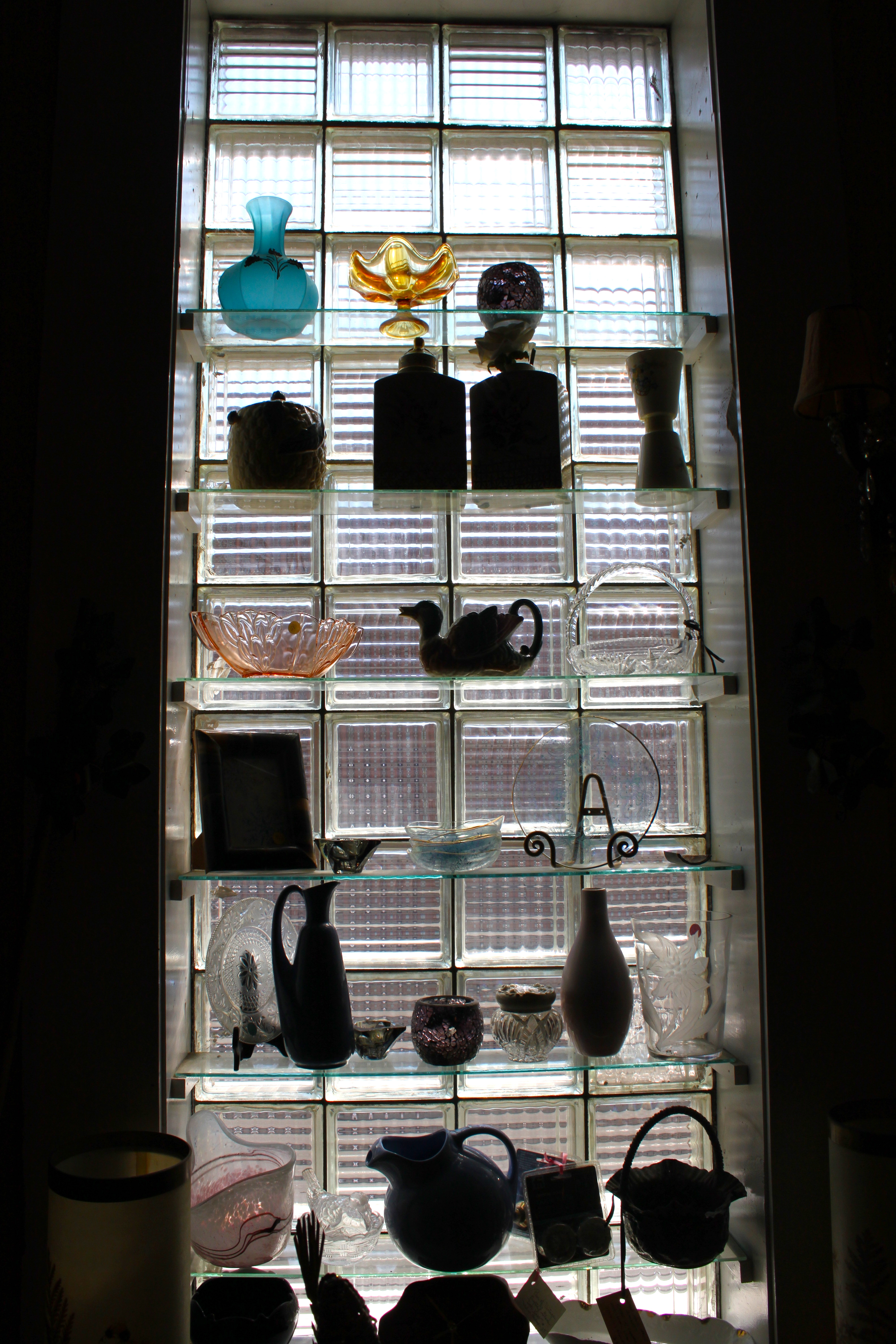
Still, I probably won’t go out of my way to read the rest. I do think a summer reading list should be more substantial than just Fifty Shades maybe topped with The Hunger Games— if you’re interested in beefing up your bookshelf, this diagram from Teach.com is great for pointing you in that direction.

I’m in love with these…
Small finds: Pickwick Book Shop

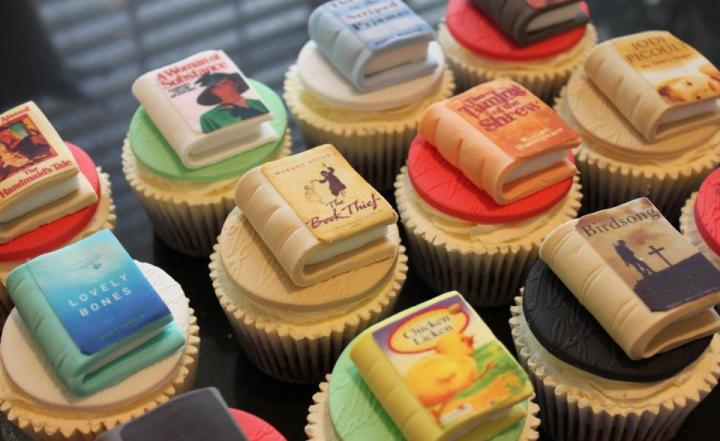
I took a short ride with my family to Nyack, New York yesterday and was pleased to find there a used bookstore called “Pickwick Book Shop.” This place was literally OVERFLOWING with books– stacks upon stacks upon stacks, some so high they were out of reach. And lots of nooks and crannies everywhere, the way I imagine a book shop should be.
Nyack-Piermont Patch calls Pickwick Book Shop “one of the last great used bookstores.” According to Patch, the owner, Jack Dunnigan, used to shop at the store as a child, and bought the place in 1975. It has been open since the 50s.
I really loved looking through the book shop, especially trying to pick out the older books from the piles. I ended up buying a 1963 edition of “Prefaces to Shakespeare: Antony & Cleopatra and Coriolanus,” as well as a few vintage-looking cards with images of New York City. The place actually reminded me a lot of the famous Shakespeare and Company in Paris, except I have the sense Pickwick is much less organized. I wonder how (and, frankly, if) the owner keeps track of all this inventory!
If you’re ever in the area, or on the hunt for first editions, I’d suggest you check this place out. Just make sure to leave yourself an hour or two!


Inside and Outside
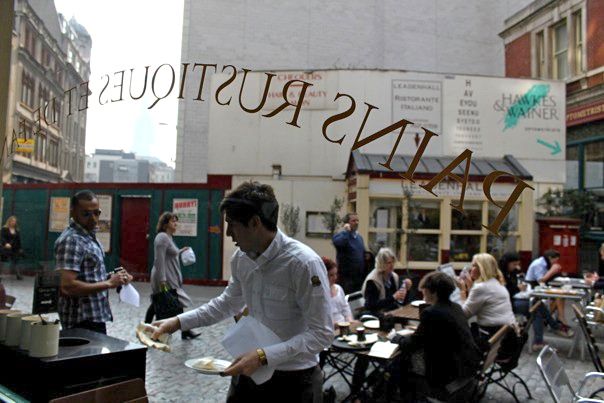
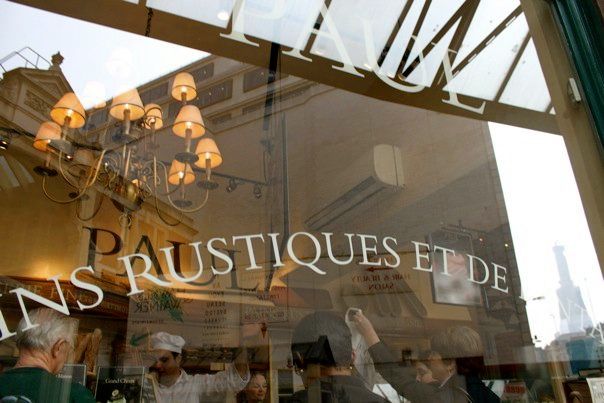 Taken at PAUL Patisserie in London. Oh, how I wish I was back there now…
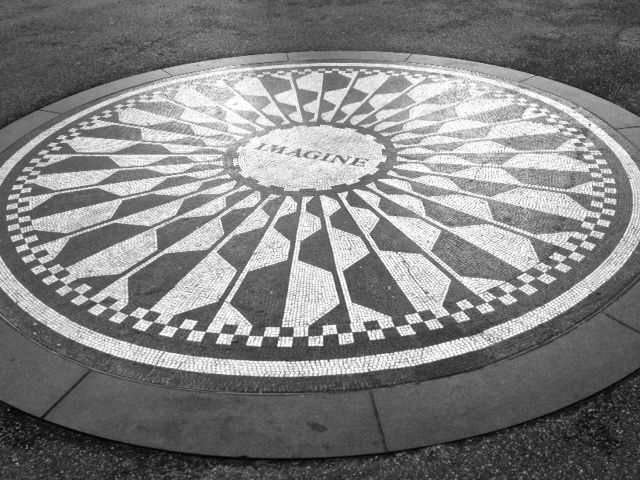
Imagine.
I visited Strawberry Fields in Central Park with some close college friends the morning after our first post-grad reunion. I’d never seen the “Imagine” mosaic in person, but a poster of it hung in our college dorm room for a few years! Sitting on a park bench with our bagels, chatting about life and watching the dogs and strollers pass by, it was the perfect New York morning.
College essay: “Girl Before a Mirror”
Looking for some writing inspiration one day, I found this document deep in the caves of my hard drive. “Girl Before a Mirror,” inspired by Pablo Picasso’s painting, was the college essay I used for the Common Application. I believe it was also the essay I wrote for Notre Dame. After four years studying English literature and journalism, it’s kind of strange looking back on it now and noticing all the things I would change in structure and content, even though I know it was the absolute best I could do at the time.
In my essay I write, “people change in such small increments that most do not even realize it until they look back years later.” I’m surprised at my 18-year-old perceptiveness — this is something I still believe is true. Throughout college — day by day, month by month — I didn’t realize how much I was changing. Looking back on myself now, I can see that I have.
I know it was me writing the words in “Girl Before a Mirror,” but I also know I’ve grown so much since then, and would say things differently now. Four years later, however, I still like the themes I addressed, and am still affected by the “Girl Before a Mirror” painting. I’m thinking of using some of these ideas as a basis for another essay, except this time analyzing self-image from the perspective of a college graduate. I’ll be sure to post it when it’s done! (Scroll down to read my college essay.)

Source: netbrawl.com
Girl Before a Mirror
Girl Before a Mirror. Pablo Picasso’s famous painting, depicting a girl in front of a mirror, reaching towards an image that does not look like her at all. Though the mirror can reflect the girl’s physical appearance, it cannot control the way she perceives herself.
This painting is on the cover of my first journal, a blank book I purchased at the Museum of Modern Art while visiting as a nine-year-old. I was drawn to it because of its bright colors and abstract shapes, but understood nothing about the meaning of the cover. Eight years have gone by since I sat in the back seat of the old Dodge minivan, on the ride home from New York City, writing my very first journal entry. Since then, I have completed five journals, and am in the middle of my sixth.
People change in such small increments that most do not even realize it until they look back years later. My journal entries allow me to follow my gradual change. A typical entry in my first two journals discloses that I had eaten an egg omelet and chicken fingers, cleaned my room, and had a play date with Katie. My second and third, written in middle school, detail my quest to be, look, and act like everyone else. I cringe when I notice that even my handwriting changed: I capped my a’s simply because other girls in school were doing it. The more mature tone of writing in my fourth, fifth, and sixth journals, all written in high school, reveal my increase in confidence and individuality. For the first time, specific events in my life yielded to my emotions in importance. More poetry weaved itself into my entries. I abandoned any hesitations, and sometimes went weeks writing solely in a stream-of-consciousness style.
Quite honestly, I had never previously considered recording my daily thoughts until seeing that journal in the MoMA gift shop. However, a painting that was once an eye-catching display of bright colors and abstract shapes now conveys an important message– the experience of continuing my journals, over eight years, has had a significant impact on my perception of myself. Like many other teenagers, and like the young woman in Picasso’s painting, it is difficult to scrutinize myself in a mirror. I may not see the true image. A glass mirror can only portray a person at one moment in time. But my journals are reflections of who I am: over years, through changes. The image of myself they present is not so fleeting — it will not disappear as soon as I walk away.
When I was younger, I used to wonder why painters would labor hours on self portraits, when they could take a photograph in just a moment. Through writing in my journals I have realized that the hours spent creating and defining oneself, are hours spent knowing oneself. After a satisfying read-through at night, I admire my journal covers: two carefully beaded by the hands of an Indian craftswoman, another with velvet binding given to me as a gift, still others selected from the shelves of Barnes and Noble. But the vibrant Girl Before a Mirror, illustrating a young girl’s struggle to see herself, is still my favorite.
622 Jefferson Street
Below I’ve posted the first three sections of one of my short stories, “622 Jefferson Street.” I wrote it as my final assignment for an Advanced Fiction Writing class at Notre Dame this past spring semester, but I’ve been working on it in one form or another for about a year. The tone, style and even plot line are still in flux, but I’ve given myself a few months’ distance. I’d appreciate any comments you might have– positive or critical! And please contact me if you’re interested in reading the full manuscript.
***
622 Jefferson Street
The 1200 block of Jefferson Street surprised me. It’s hard to tell what a neighborhood’s like from the aerial view on Google Maps, but when I got there I couldn’t believe how beautiful the houses were. Old Victorians with extravagant molding, long windows and the sad remnants of wraparound porches. Somehow, the houses looked vaguely familiar, but I’d never been to Ohio before and I’d definitely never been here.
The houses were beautiful but twenty years past their prime, stripped of paint and porches, roofs so thin a bird’s claw could puncture them. If you looked close enough you could see entire structures sinking an inch or two into the dry earth, the ground coughing up bits of dust from the pressure.
If you looked even closer you could see folding lawn chairs — the old rattling kind made of rainbow vinyl and plastic — and on those lawn chairs, people. The people only watched what was in front of them. The people stared right into the dusk, their eyes dark and full and steady.
I pulled up slowly, grazing the curb. When I got out, a bunch of teenagers were messing around in the street, cursing and kicking around empty cans of Coke. I walked briskly past them. They stared at me but said nothing; I became intensely aware of the way my skirt’s material gathered under my ass each time I took a step. The can rolled towards me in slow motion and I kicked it to the side with my heel. I didn’t look back. I loved the way that skirt hugged my curves but 1208 Jefferson Street was no home for pencil skirts.
The empty tin sound of the can-kicking didn’t resume until I’d made it two blocks down.
I had gotten the call around 5:30 p.m. to head out to the East side of the city. Fifth fire in two days, Shirley said. Still burning so I better move fast. Fast fast fast fast, I know you’re on the late shift and it doesn’t start till six but it’s red hot and will be out soon, we need a photo Jules, the photog couldn’t get out there — his kid’s sick with the stomach bug — so we’ll need you to take a shot on your phone. You’ve got one of those smarty-pants phones, right? Always better to capture something in action than post-action, right Jules? I mean, who wants to see a burnt-down house, a pile of ashes, when you can see a burning one?
Shirley advised me to park way back on the road away from the cop cars, which meant I would have to walk through the neighborhood. Jeez, this wasn’t one of the best neighborhoods — she should have warned me. That’s the thing about Shirley, I love her but she’s been off the streets so long she doesn’t know how bad it’s gotten around here. Considering there’ve been 17 shootings this summer and 13 in August alone, she should realize. But Shirley, she just remembers when she was the cops reporter back in the eighties and the bad part of the city was a quarter square mile thick with bodies and blood, all of it gang violence. As long as you stayed away from that you were safe.
But it’s not like that anymore. Things around here are always smoking, or burning, or disappearing altogether. The violence goes wherever the heat goes and the heat is everywhere. And Google Maps doesn’t tell you where the “good” and “bad” neighborhoods are in Norge. Google knows, I’m sure, but Google has to be objective. Google has to be PC.
I had one more block to go until the fire. The house looked totally fine from a distance, which was the strangest part. All of the damage must have been shrouded in smoke.
At the end of the road I saw police lights, flashing violently behind a shade of ash and smoke. The closer I got, the lights became stronger and the fire weaker.
I felt around my purse for my notebook and tucked it under my arm.
I couldn’t help but view the scene as swarming dots of darkness and color.
***
“It will get easier, don’t worry, Jules,” Shirley told me that night after I came in from the Jefferson Street house fire, my hair disheveled and reporter’s notebook essentially illegible. Soaking wet. It looked like I’d fallen right into the hose’s stream, and I hoped that’s what Shirley thought, but honestly, my water bottle just opened in my bag. God damnit.
I’d already lost three iPhones that way and I really needed to stop doing that.
“After awhile, you’ll hardly think twice about the fires,” Shirley said.
I nodded at my editor without really looking at her, and when she walked away took an excessively large bite from my cardboard vending machine sandwich. The turkey was about an inch think, a slab of salt and rubber. The bread was hard. Probably sitting in there since the 70s when they installed the vending machine. I was absolutely famished, though, with that clawing gurgliness in my stomach, so I ate it anyway.
“You’re a brave soul,” the court reporter, Kelly, said to me as she walked past my desk. I looked up to smile at her but my mouth was stuffed with bread and meat. I tried to do that thing where you smile with your eyes, but because my mouth was all contorted with sandwich, I’m pretty sure it just looked creepy. So much for making good impressions on your coworkers. She sort of stood there awkwardly, waiting for my response as I tried desperately to swallow, but the bread was just too dry to slide down that easily. Not my fault, but how do you tell someone that?
Finally, I managed to get some words out.
“Um, thanks Kelly. I really appreciate it.”
It was my first fire, my first real one anyway, and I was glad I was getting some recognition.
“Even if I were actually starved, like actually starved, I wouldn’t buy one of those sandwiches,” she said. “That’s intense, Jules.”
***
For a few days I didn’t think much about the Jefferson Street house fire. The Norge Daily News kept me busy running around to drownings and shootings across the city, picking up reports from the station downtown.
I didn’t dwell on it much, but it seemed everyone else did. The people in Norge were scared, more so than ever, and they definitely had a right to be. I could see it in the way they stood — the broad-shouldered men in circles crushing beer cans in their hands and the cowering women, huddled together on the edges of their lawns. It was only mid-August, and already 20 shootings had happened in the city. Most of it gang violence, of course, but not all. And the drive-by shootings were the most frightening. One man was shot to death at night on his way out of McDonald’s, only one bite out of his 99-cent burger, still hot and fresh in his hand.
How do you stand all the death? My mom, an accountant where I grew up in suburban Boston, asked me one afternoon while I Skyped her at a picnic table during lunch. But the truth was, I didn’t always mind it. There was job life and there was life life. And shootings don’t always mean death, of course, there were only three homicides of those 20 shootings. Covering violence is exciting, horrible to say but it’s true. And there’s a certain distance a police reporter has to have, kind of like a doctor doing major surgery, who knows his patient might not survive — you can’t be attached to everyone you get to know.
“Overpass”

Photo: “Overpass,” taken at sunset last summer on a Route 17 overpass near my house. Makes NJ look not so bad, right?
Gets me thinking.
Somehow this song always gets me thinking. About life’s big questions, and which ones I should try to tackle in my writing. “I Will Follow You Into the Dark” is quite well-known — perhaps Death Cab for Cutie’s most famous song. I’ve been listening to it for years and it never gets old.
The song definitely represents sadness and uncertainty, but it doesn’t necessarily make me “sad.” Just pensive. More willing to delve into parts of me I might otherwise close off. The words are honest, which makes me want to be.
I’ve found it’s so hard to make writing both “happy” and interesting. I want to experience happy things, but lately I don’t want to write happy things. I want to write about struggles I encounter within me and observe around me, small and large. There are so many things we don’t face in conversation but can face with written words.
Sometimes I feel everyone, including myself, is trying to be so perfectly zipped up, put together and presentable, all while wishing everyone else wasn’t so put together and presentable. We are too busy “doing great” or “having wonderful weekends” to mention our kid has been sick or we’re having a really tough time in school. We’d rather put on a mask than put someone out. It’s only to close family and friends that we might say “I’m okay,” or “I’m doing fine, but not great.”
We uphold honesty as a virtue but actually being honest can make us feel selfish and needy. Why is that?
Faith. Life. Death. Love. The song posted below is so powerful since it touches on life’s most difficult themes- and its wide appeal reminds us that everyone wrestles with them, even those who have “got it all figured out” on the surface.
“Colors of Awe”

Photo: “Colors of Awe,” taken at the Centre Pompidou modern art museum in Paris, France. Published in Notre Dame’s Spring edition of The Juggler.
Pozie poems: moving poetry, inspiring messages

“moving poetry made with loving hands and minds in NYC“
Hard economic times typically spur dismal messages by struggling artists, but the artists behind Pozie poems want to set optimism in motion.
The idea for these brightly-colored mobile poems was born out of the 2008 financial crisis, founders Rion and Kay Merryweather said.
“The mood was very somber in NYC and we knew we had to do something to help,” said the husband and wife team.
Words like “bold,” “confident,” “enjoy” and “love” are painted on colorful wooden boards and linked together to create inspiring messages that change slightly as the mobiles move. At about $30, these Pozie poems make beautiful, simple and creative gifts or conversation pieces. And the top part is a chalkboard for you to write whatever word (words) you want!
You can purchase and view Pozie poems here on Etsy.

 SKETCHING A STORY