Why Jersey’s Fabulous

Because this is my blog, and because I’m from Jersey, and because the debate never ends, here’s further proof as to why my state’s fabulous.

If you need more convincing than this video (seriously, watch it!) I’ve come up with ten common misconceptions about New Jersey. Read on, skeptics.

1. Jersey is one big slab of turnpike.

NOT TRUE! Jersey is actually 15% farmland, and its nickname, the ‘Garden State,’ isn’t just a joke. The Pine Barrens, a densely forested area in southern Jersey, makes up 22% of the state. The turnpike is one of the most heavily traveled highways in the U.S., and the sites alongside it aren’t NJ’s best. But most people who have this conception of NJ have never driven OFF the highway. I could say the same thing about any other state, if all I did was pass through.

2. What exit are you from?

Yeah, I’ve maybe heard that one twice in my life, and it was because someone was asking me for directions.

3. The Jersey Shore is actually like the “Jersey Shore”

Wrong, again. The Jersey shore encompasses 127 miles of beautiful coastal land along the Atlantic. Most of it is filled with summer homes, restaurants, and hotels– it’s a huge family vacation destination. Seaside Heights, where “Jersey Shore” is filmed, is a 0.8 square mile borough, hardly representative of the shore as a whole. And maybe you’ve heard that only two of them are actually from Jersey.
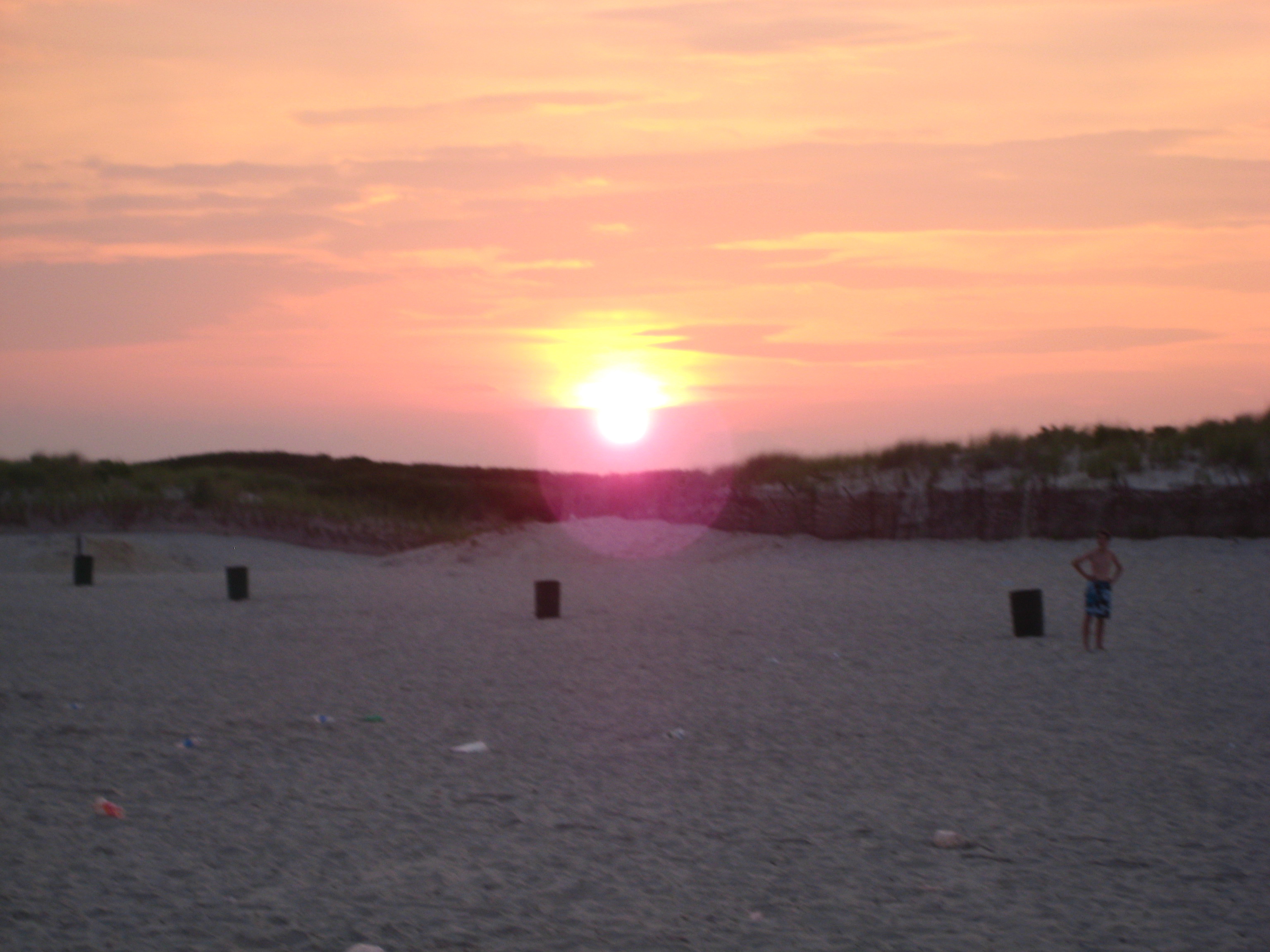
The "real" Jersey Shore.

4. No one of cultural relevance comes from New Jersey.

Frank Sinatra, Thomas Edison, Yogi Berra, Bruce Springsteen, Brian Williams, Meryl Streep, Jon Bon Jovi—you guessed correctly. They are all Jersey born and raised.

5. “Joisey.”

No. Just, no.

6.  Jersey’s main industry is oil refineries. 

If you’re an avid Sopranos watcher, I can understand why you’d think this. But New Jersey is actually an economic powerhouse– the second richest state in the nation and a leader in telecom, pharmaceuticals and agriculture. The economy also heavily depends on, gasp, tourism!
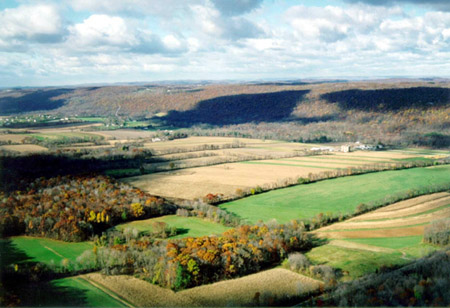
Look at all that farmland! Washington Township, Morris County

7. New Jersey drivers are the worst.

Substitute “New York” in the above statement and it becomes true.

8. The only people who like living in NJ grew up there.  

False. New Jersey has the highest population density of any state in the nation, and for a reason. The state is also one of the most diverse. People come here from all over the world for our schools and vibrant metropolitan area. If you live in New Jersey, at least four major cities are easily accessible: New York, Philadelphia, Boston and Washington, D.C.

9. You don’t have to pump your own gas. 

100% true! Love it.

10. Other things you might find interesting…

The first baseball game ever was played in Hoboken, New Jersey, and the first college football game was played in New Brunswick between Rutgers and Princeton. Over 100 Revolutionary War battles took place in the state. New Jersey has more shopping malls and diners than any other place in the world. It is also the birthplace of the drive-in movie, the boardwalk, the postcard, the zipper, the light bulb, and FM radio.

Jersey may not be perfect, but it’s got a lot to offer. So before you judge, actually go there.

I’ll meet you at exit 163.

Dear Photograph

My friend Laura introduced me to the blog Dear Photograph, which showcases pictures taken of pictures from the past in the present.

Photo Courtesy: Dear Photograph

Some are funny: There’s a reason we had to paint those stairs blue.

Some are cute: The bike I have now goes a little faster.

Some are just touching: Thank you for everything we ever had.

But all the photographs make you think about the relationship between time and place, how quickly people grow and change while places can stay exactly the same.

In a CBS interview founder Taylor Jones said:

“What I’ve learned from blogging is people relate with emotion so if you’re making a blog it has to be good content, content that is going to be able to spread.”

He said he’s gotten “tons of emails” from people who say the blog  has given them a reason to see their parents and look through old photographs together.

To submit, upload your photos to  http://dearphotograph.com/submit  or email them to DEARPHOTOGRAPH@GMAIL.COM

© All Rights Reserved by Dearphotograph.com and the original owners.

Classics & Cocktails

In honor of my 21st  birthday I’m dedicating this post to two vastly different but wonderfully related things: classic literature and classic cocktails.

It’s no secret that 20th century writers of the World War II era were about as dedicated to their drinking as they were to their novels.  Cigarettes and alcohol fueled expatriates like Hemingway and Stein as they scribbled down the beginnings of what would later become American classics.

According to David A. Embury in his 1948 book, The Fine Art of Mixing Drinks, (a classic in its own right) there are six basic cocktails: Martini, Manhattan, Old-Fashioned, Daiquiri, Side Car, and Jack Rose.

I had the pleasure of trying a few of them last night…

The Hemingway Daiquiri

The famous author is known for his minimalist style, short sentences, and of course his Daiquiri drinking. Hemingway might have sipped this drink from his apartment while looking over the Paris streets. Here’s how you make it:

1 1/2 oz light rum

1/4 oz maraschino liqueur

3/4 oz lime juice

1/4 oz grapefruit juice

Shake with ice and strain into a chilled cocktail glass.


Jake’s Jack

Another Hemingway-related favorite is the Jack Rose cocktail, famous from its appearance in The Sun Also Rises.  Jake, the narrator, drinks a Jack Rose in a Paris hotel bar while awaiting the arrival of Lady Brett Ashley.

1 1/2 oz apple brandy

1 tsp grenadine syrup

juice of 1/2 limes

Shake all ingredients with ice, strain into a cocktail glass, and serve.

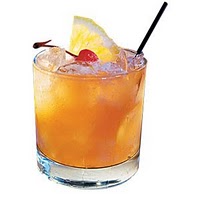
 Sherwood Anderson’s Old Fashioned

Faulkner and Hemingway looked up to Anderson as a literary role model; they also took up his fondness for cocktails. Anderson called the Old Fashioned his “personal poison,” which turned out to be tragically true. He died after swallowing a toothpick at a cocktail party, eventually causing a fatal infection in his stomach.

2 oz blended whiskey

1 sugar cube

1 dash bitters

1 slice lemon

1 cherry

1 slice orange

Combine the sugar cube, bitters, and 1 tsp. water in an old-fashioned glass. Muddle well, add blended whiskey, and stir. Add a twist of lemon peel and ice cubes. Add slices of orange and lemon and top with the cherry. Serve with a swizzle stick.

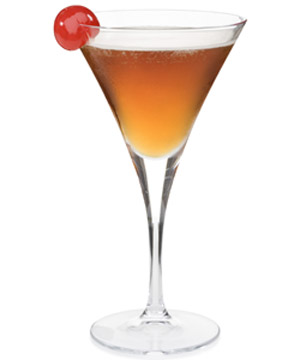
Gatsby’s Manhattan

“I believe that on the first night I went to Gatsby’s house I was one of the few guests who had actually been invited. People were not invited– they went there.” 

F. Scott Fitzgerald had a talent for displaying the lives of the fabulously rich, and the hidden moral decay behind them. In The Great Gatsby, parties held every weekend on Long Island offer a glimpse into that fantastic, unattainable lifestyle. The blurring nature of drunkenness fits right in to Fitzgerald’s themes of disillusionment and an out-of-reach American Dream.


1 1/2 ounces 100-proof rye whiskey

1 3/4 ounces sweet vermouth

1/2 ounce Grand Marnier

3 dashes Angostura bitters

1 lemon twist, for garnish

Pour the whiskey, vermouth, liqueur, and bitters into a mixing glass. Add large cold ice cubes and stir for 40 revolutions. Strain into a chilled cocktail glass. Garnish with the lemon twist. Drink the Manhattan post haste.

The Sidecar

.

Gatsby’s partygoers might have also enjoyed a citrusy Sidecar, one of the most popular cocktails to emerge from the Prohibition era.

1 1/2 oz bourbon, Cognac or Armagnac

3/4 oz Cointreau

1/4 oz lemon juice

Pour the ingredients into a cocktail shaker with ice cubes. Shake well. Strain into a chilled cocktail glass.

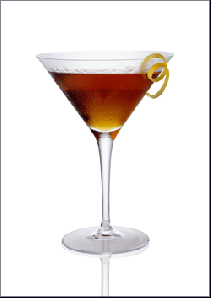
Dorothy Parker’s Martini

 There’s a certain sophistication about a martini that can’t be found in any other cocktail. Martinis have always been a drink of class. But the classic martini is easy to make and equally easy to ruin. It’s also easy to drink too many, as Dorothy Parker admits…

“I love to drink Martinis, two at the very most, three I’m under the table, four I’m under my host.”

 2 oz. gin

1 oz. dry vermouth

2 dashes orange bitters

Ice cubes

Stir ingredients briskly with ice, then strain into a chilled glass. Twist a small strip of lemon peel over the drink.

Writer’s Block

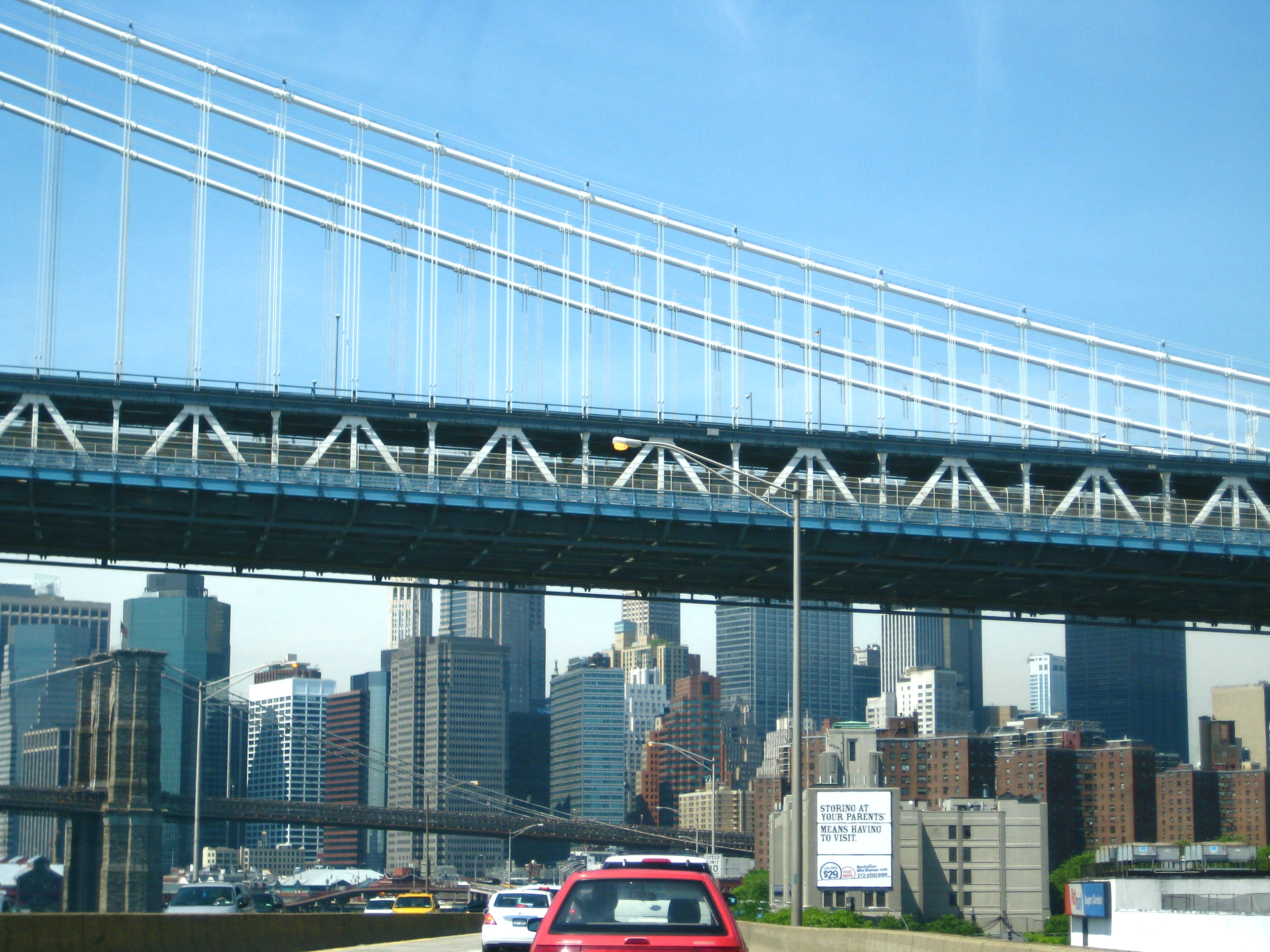
Taken on FDR Drive on my way to Brooklyn!

Like I said, lately I’ve been thinking a lot about my next longer piece of fiction. This is always the hardest part, coming up with an idea. “It’s not about what you write– it’s how you write it” might be a writer’s anthem, but still, there’s definitely merit in writing that presents a fresh, new idea.

How do you make an old story fresh, or a new story relatable? How do you avoid writing what hundreds of people have already written?

One thing I know for sure is that I want to write in the vignette style. Some of my favorite works of fiction are written this way– Jhumpa Lahiri’s Interpreter of Maladies and Sandra Cisneros’s The House on Mango Street. I love how vignettes allow for multiple perspectives on a common theme, and let the writer flip through time effortlessly. There’s also something poetic about a series of vignettes, because each one is pretty brief. Sometimes a never-ending chunk of text, no matter how amazing the writing, is exhausting. Vignettes let the reader and writer breathe.

I’m a fan.

But what to write about?

Right now I’m at that stage when ideas are still forming; for a moment they’re immensely exciting and I can’t wait to put pen to paper. Then the feeling fades. What was I thinking?  I can’t write about that. Whoosh. Off to the trash.

When I was younger, I always saw fiction as a total escape from my  suburban life, a chance to travel outside the bubble. I wrote about things I had no experience with: flappers from the 1920s, a drug-abusing mother, children with mental disabilities, a quirky New York City coffee shop. I want my new work to fall closer to home. I’ve found that good fiction writing always involves opening up somewhat. Fiction doesn’t have to be based on your life, but on some level it has to be based on your experiences.

Much of my family history lies in Brooklyn, N.Y. My grandfather (mother’s father) grew up in an Irish tenement in Brooklyn in the 1930s and 40s. My father grew up in Brooklyn Heights in a Jewish neighborhood in the 50s and 60s. People usually think of Brooklyn through its context with Manhattan, but for those who grow up there, Brooklyn is its own entity, harboring a history and character independent of “The City.”

When I think of Brooklyn I think of rising housing prices, veganism, the Brooklyn Bridge, trendy bars, artists’ studios, and hipsters. The Brooklyn I see is totally different from my father and grandfather’s Brooklyns. My story would be set only partly in Brooklyn, and would not be focused on history, but it would be interesting to somehow show the area’s development through the lense of a modern-day 20-something-year-old.

Sparknotes of a book that’s not written:

Vignettes/Flashbacks. Brooklyn. Manhattan. Midwest. Social Networking. Newspapers. 9/11.

I’ll elaborate on the other themes in a later post. Vague, I know, but let’s see where this takes me…

Waiting in Hoboken

Lately I’ve been thinking a lot about my next work of fiction, going through old stories and poems for inspiration. I stumbled across this poem in my files, and it seems appropriate since the ten year anniversary of 9/11 is approaching.  After 9/11 my family and I went to Hoboken to see the Tribute in Light  and I remember feeling emptier after going than I had before– I wondered how people found comfort in lights that could be switched on and off in a second. Back then, I couldn’t understand the point of a tribute that only drew attention to what was lost, and the eeriness of those blue-light towers has always resonated with me.

Waiting in Hoboken

Dusty nighttime,

two blue columns

from another world

pierce the sky and draw

long, swaying paths

in the charcoal water.

a woman gasps

well isn’t that extraordinary

I feel

so close I could swim,

I feel

as long as these

blue lights can float

atop the river,

I can follow them back

to the

get on defense!

call of my soccer coach

and the

dog-walking hey kiddo!

of my next door neighbor,

escape the debris,

and I hear their voices

scuttling cross the Hudson.

it’s a school night, let’s go

say good-bye

to the river

home

the towers have fallen,

and no one speaks

my language.