“I’m going off the high dive, are you guys watching?”
My brother and I nodded vigorously as our uncle climbed the stairs to the highest diving board and waved to us from the top. He took his time, raising long arms into perfect formation above his head, bouncing a few times on the board before swan-diving into the greenish manmade lake below.
“That’s our uncle Billy!” we declared proudly as other kids looked on. We held our breath for what felt like hours waiting for him to emerge again and when he finally did, raced to the edge of the water to hug his legs. He was so much fun.
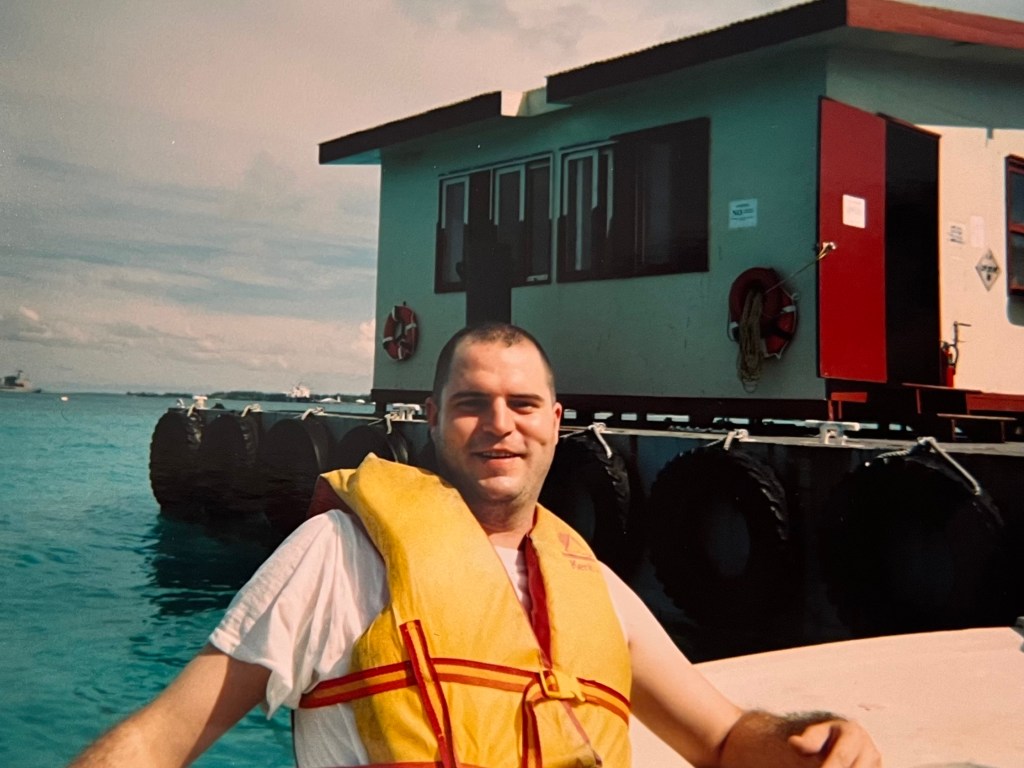
Billy could move fluidly from the realm of adults to the realm of children—it seemed he didn’t belong neatly in either world. I remember watching Nickelodeon together splayed out on my grandparents’ 1970s chocolate brown shag carpet, laughing as Keenan and Kel bantered on the television. Despite being six foot three he could immediately get on our level.
I didn’t know about alcoholism back then or the way it snakes through generations—my great-grandfather on my mom’s side had also been an alcoholic. I didn’t know Billy had first tasted beer at 11, started struggling with drinking at 14 and was trying to escape the bottle ever since. If he knew how deep the dependency went at the time, he didn’t show it.
In the decades since that day at the pool, Billy moved across the world, from Long Island to the South Pacific to Spain and back again. His final stop was an apartment just 10 blocks from mine in Manhattan. I remember his excitement at being neighbors and his joy with setting up his own place.
But in the 700-plus days he lived in my neighborhood I only saw him twice.
***
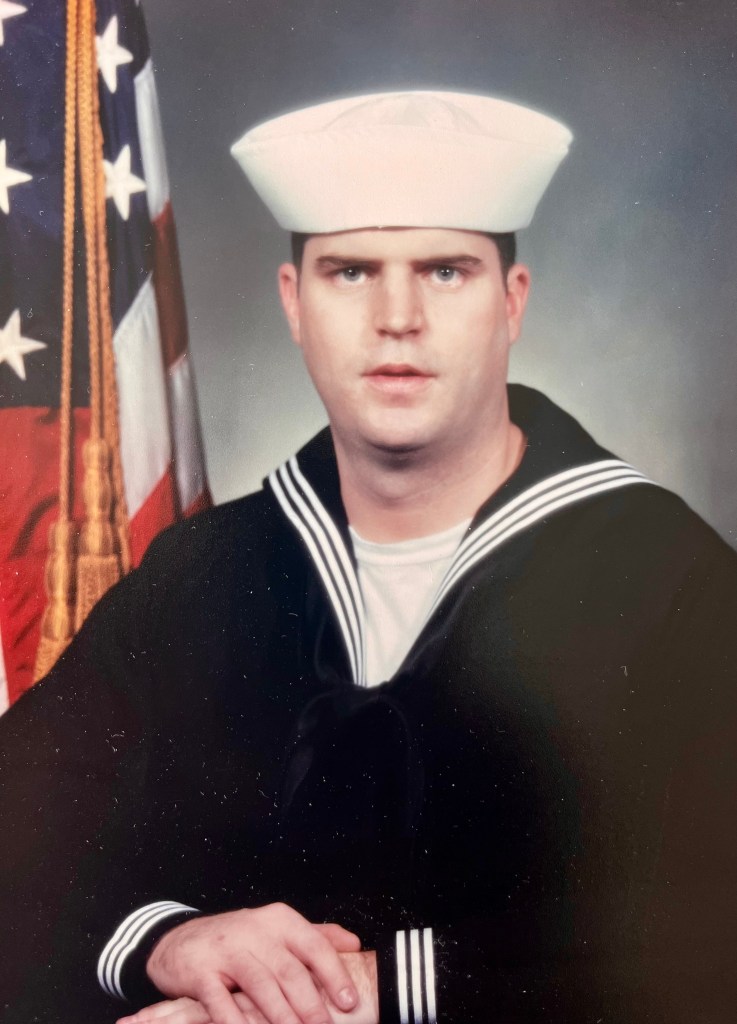
When I was about ten years old, a new photo of Billy in a Navy uniform appeared suddenly in our living room. He looked handsome and healthy, but his serious expression was nothing like that of the fun-loving uncle I remembered. I later found out Billy’s drinking had worsened around that time and my grandmother wanted him out of the house. That’s how the phase of his life in the Navy began.
My memories of Billy during those years are choppy, like a file cabinet filled with scattered, torn documents. After training he’d been sent to Diego Garcia, a remote island in the Indian Ocean that had been a refueling station for the Middle East in the wake of 9/11. Off in Diego Garcia, there wasn’t much else to do other than drink. I imagined it then as a paradise; I imagine it today more like a prison.
Following Diego Garcia, he was stationed in Spain, where he met a lovely woman and had a daughter. But his drinking continued, complicating his relationship with both. To stay physically close to his daughter who he loved dearly, he lived for many years in the south of Spain, where he had a small apartment to go home to at night but often appeared homeless, spending most days on the streets. He’d occasionally get sober and find a job, but it was never long before the drinking pulled him under yet again, powerful as the ocean.
Billy described his last few years in Spain as “surreal” and “Kafkaesque.” He was beaten, robbed and propositioned. The drinking ravaged his body. He went from being six feet tall, broad-shouldered, and healthy to thin, graying, and hunched, his feet slowly losing feeling from the neuropathy.
My mom was ten years older than Billy, and from the time he was a child she looked after him, like another parent. They shared an extraordinary bond, and no matter where Billy was in the world, he was never far from her thoughts.
One weekend my mom texted him to check in. He replied, “Doing bad, but I try to give civil compliments on the street to civil people.”
That was a constant with Billy: wherever he was in the world, he found community. People didn’t see an alcoholic on the street; they saw a kind, intelligent, funny, and deeply caring man who’d been dealt a hard hand in life.
Still, Billy’s internal organs were rapidly shutting down, which no amount of kindness or friendship could stop. Pancreatitis, gastritis, chronic double vision, rotten teeth, hypotension, broken shoulder, chronic rib fractures—the list kept going. His landlord would find him each night to fireman-carry him home.
In March 2018, my family decided they needed to go to Spain to rescue him once and for all. He didn’t want the help, but clearly only had a few weeks to live without an intervention. “Billy had been struggling and was literally near death but never wanted to be a burden,” my mom remembers.
My dad and uncle Pat flew to Spain to lead the rescue mission. My dad remembers spotting Billy sitting in front of a church, messy, dirty, and unshaven. As he approached, people came out of shops one by one because they realized the Americans were there to take Billy home.
Just before my dad and uncle stepped away, two nicely dressed women from a fancy boutique near his “spot” came out to hug Billy good-bye. To them, his filth didn’t matter. This was their friend.
***
Even when Billy was back stateside and living nearby, he’d again shifted to another world, one I couldn’t quite access. I’d sporadically get tough-to-decipher texts from numbers I didn’t recognize. Sometimes he wouldn’t answer back, and I guessed he’d lost his phone again, or had been borrowing one from a stranger. I often thought of him but was also scared of running into him because the Billy I knew was bright and sunny. I had never seen him during a bender and didn’t want to.
Our lives only intersected a few times when he lost his keys because I kept a spare. I remember one afternoon he met me outside my apartment to get the key, his beard overgrown, clothes rumpled, carrying a ripped plastic takeout bag stuffed with personal belongings. I tried not to feel embarrassed, but my discomfort lingered. I could sense my doorman watching.
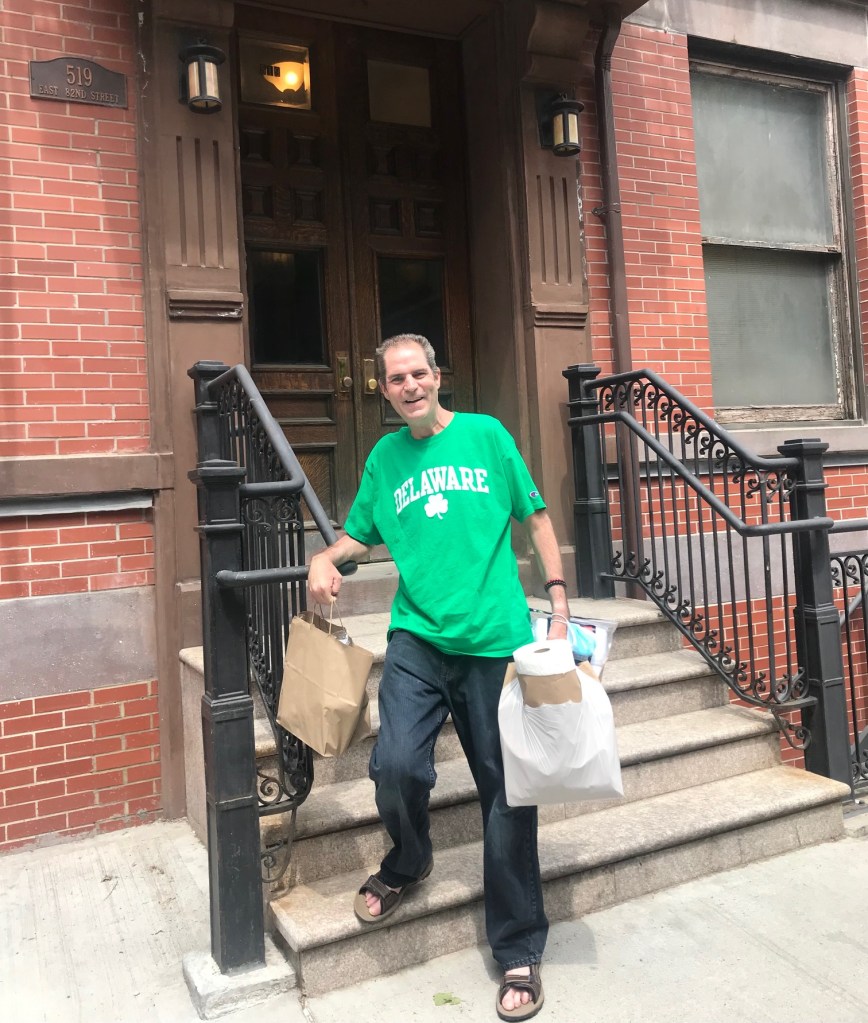
“This is my uncle,” I wanted to explain. “This isn’t a random guy approaching me on the street.” But the words stayed trapped inside me. It felt like we were two balloons that if released, would immediately drift in different directions.
When my uncle died in the summer of 2023, I was 3,000 miles away in Lisbon, Portugal. I’d spent most of July reading on park benches and my uncle’s declining health had only been on the fringes of my mind. He’d survived the brink of death so many times, I thought he might be invincible. But all the drinking-induced ailments had finally caught up to him.
He was 51 years old.
Only after Billy passed did I realize he’d spent the last two years of his life on a city bench just 10 blocks from where I lived. Billy never told me he spent his days there; I never asked. His friend Howard, who’d attended a local temple and had gotten to know Billy over the years, reached out to my mom when he saw remembrances posted on “Billy’s” bench.
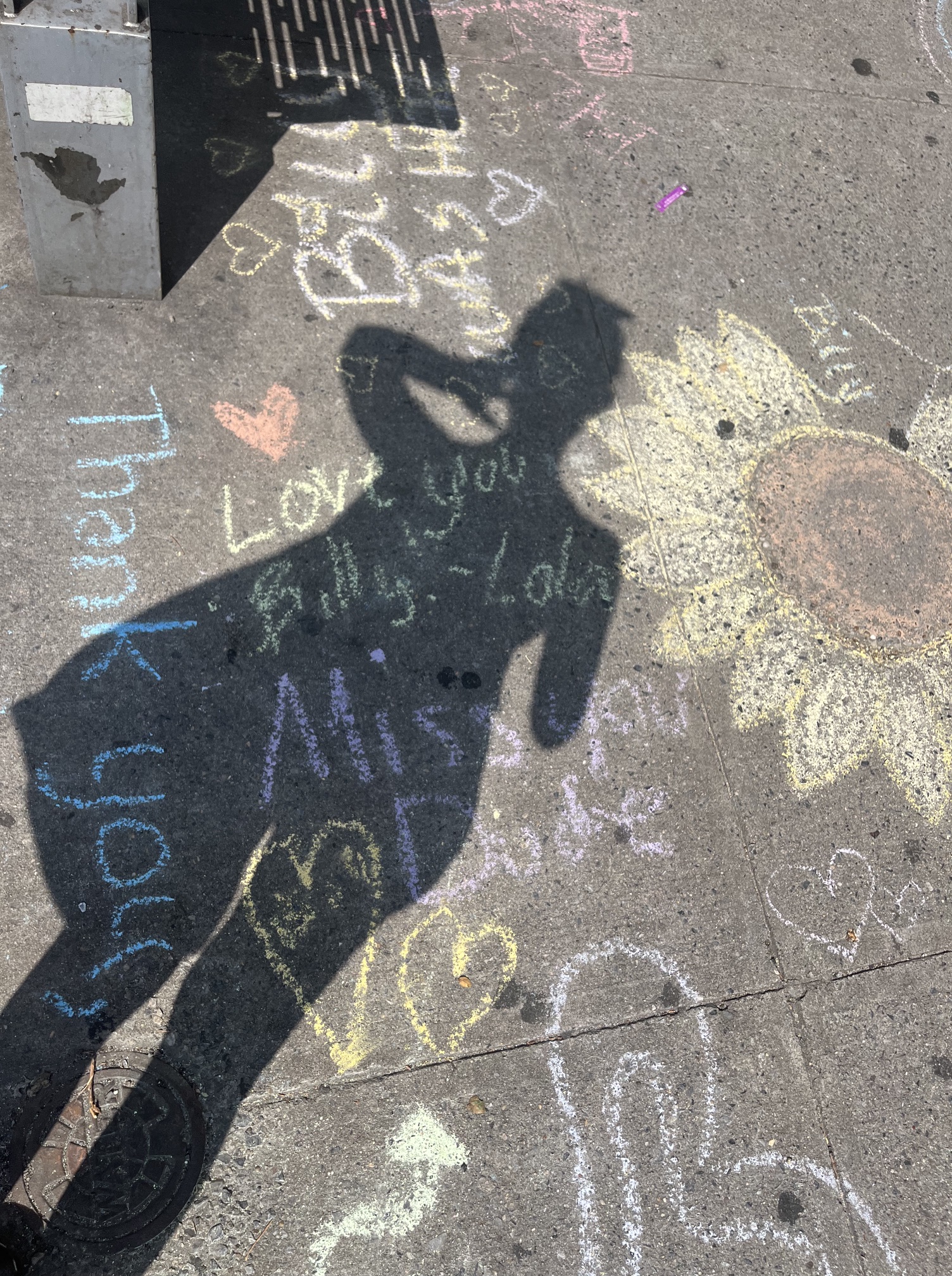
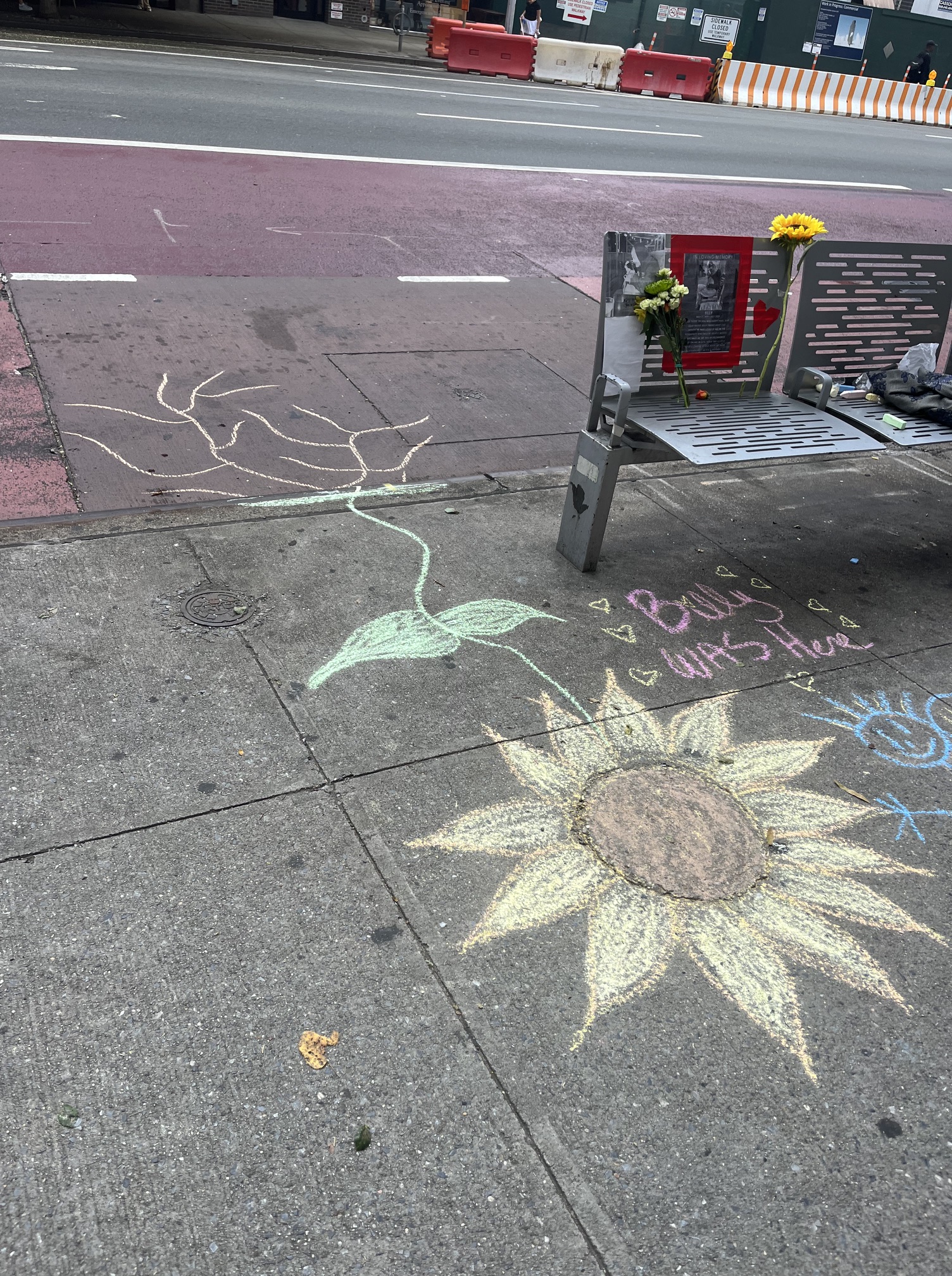
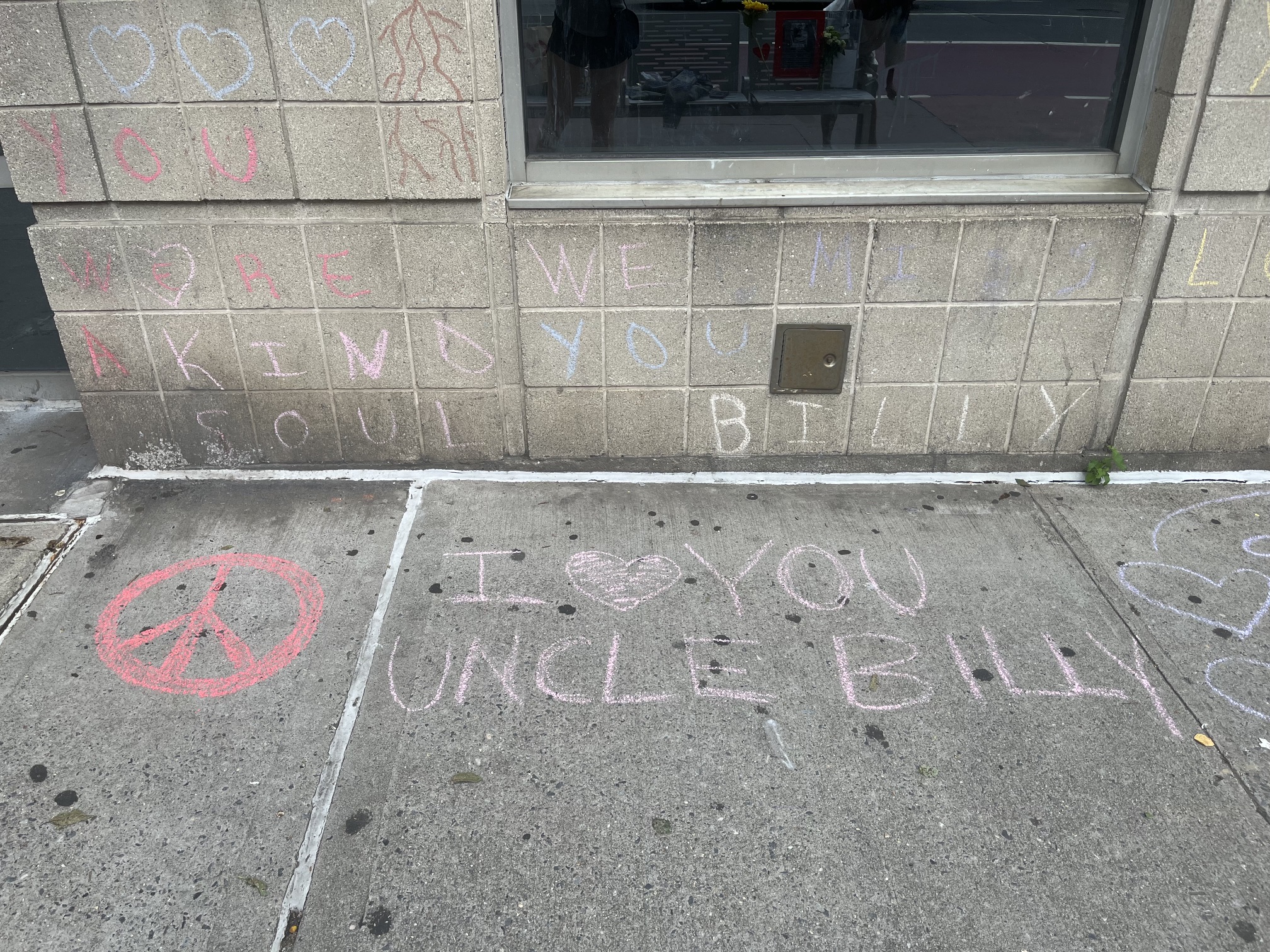
So when I arrived home from Lisbon I wandered the 10 blocks down, hoping to feel close to him. I saw chalk memorials expanding across the sidewalk and even up the side of a building, like nature reclaiming the land.
Every few minutes someone would stop, ask about Billy, express their sorrow. I thought the first few times were a coincidence, but I ended up speaking with 20 people in an hour that evening who all had different stories to tell about Billy and what he meant to them. It showed me not only Billy’s kind spirit, but the loneliness so many people face, even those who on the surface have everything you’d want in life—a job, a family, a safe place to live.
That day I met a wonderful woman named Jessica who explained she’d been close friends with Billy. She drew a sunflower on the sidewalk, undeterred by the fact that it was washed away each night.
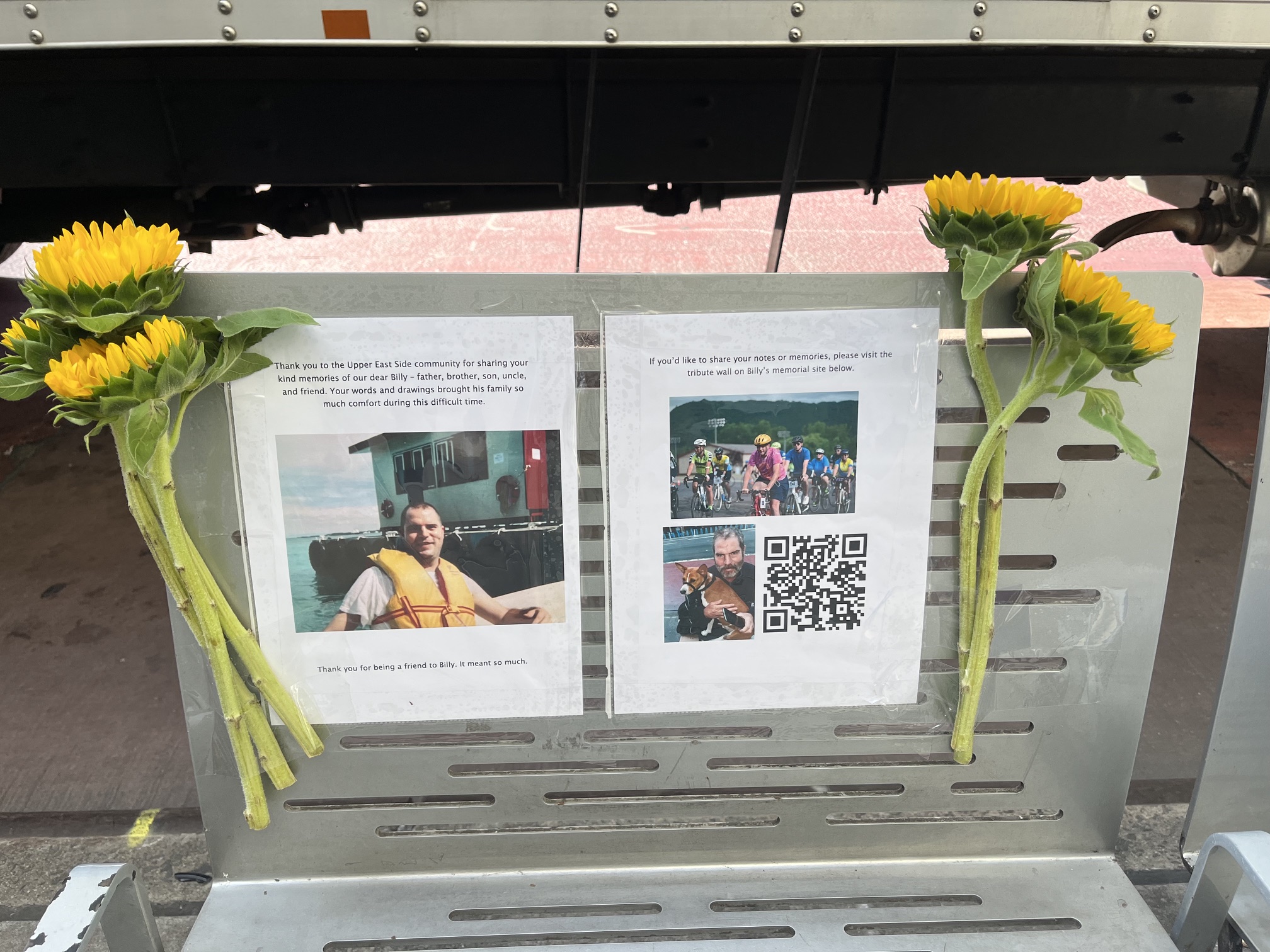
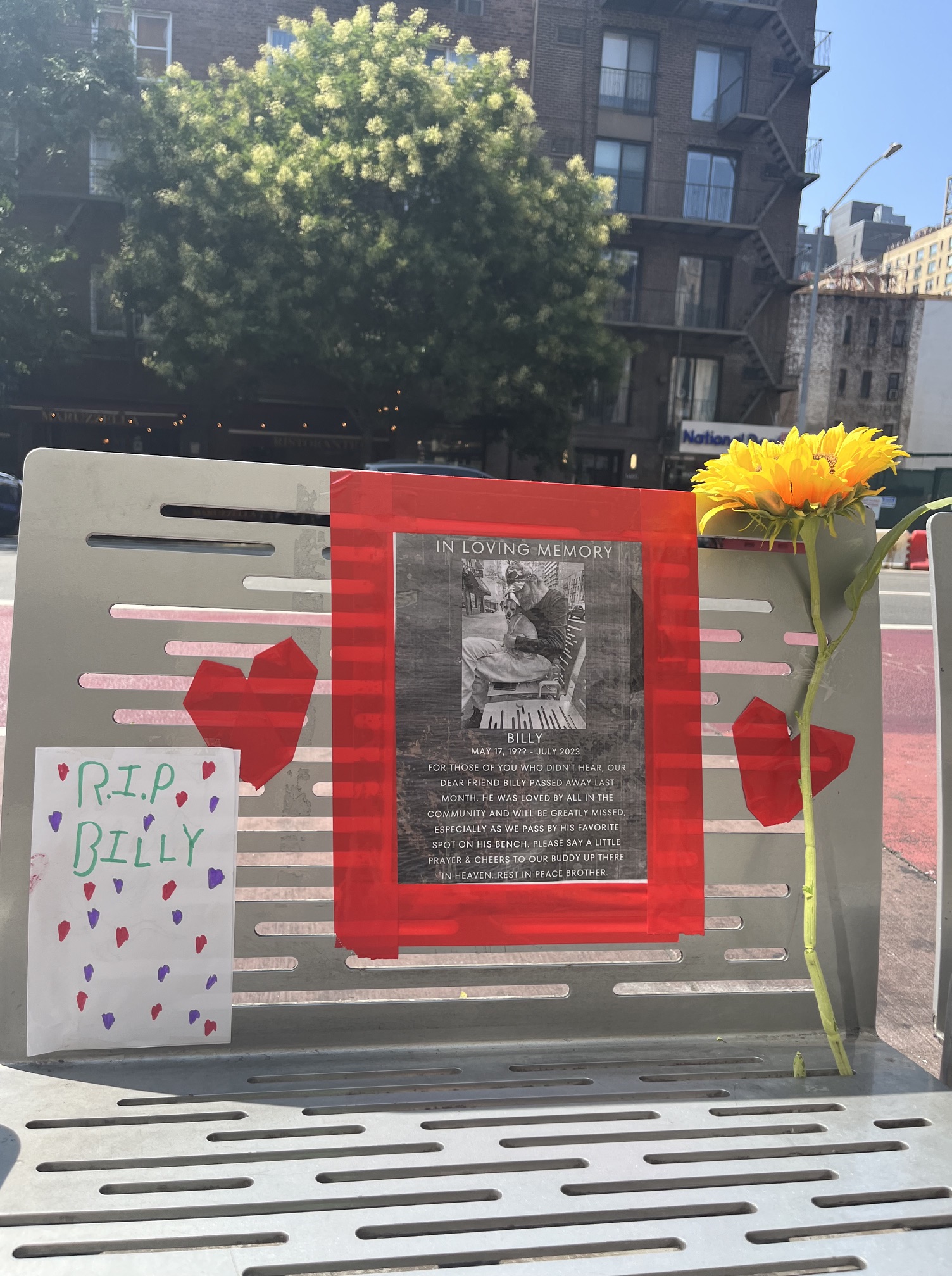
A few days later I pasted a QR code on the bench to his memorial site and watched in awe as message after message appeared from Upper East Side acquaintances. These were people from all walks of life. Parents. A grandmother visiting. Young professionals who had just moved to the city. All of them leaving their interactions with Billy in better spirits.
“You left a big hole in the neighborhood after you left us Billy,” Mike wrote. “I hope that you can see from the other side how many people in the neighborhood care.”
“I would see Billy every morning on 77th street getting coffee and we would chat briefly,” Laura remembered. “He always helped me get my day started with positive energy.”
“He was so kind to each of us, but especially to our children,” wrote Rod and Charlie. “I recall Billy’s excitement when the kids showed off their medals won at the martial arts tournament.”
All of these people in the Upper East Side saw Billy for who he was. They knew about his love of dogs, the Giants, and his close relationship with my mom. And yet, at the same time he’d built these friendships with strangers, he’d disappeared from his family. I felt deeply guilty for not reaching out to him those last few years, but also hurt he hadn’t reached out to me, as if these new friends were more important. I wonder if it just became too hard to face us, those of us who’d witnessed his long struggle.
Occasionally I’ll sit on Billy’s bench for a few minutes, pushing away the empty Dunkin’ bags and debris, and try to see the world from his perspective. The city shuffles around me almost as if he were never here, but I know his memory is now seeded in hundreds of New Yorkers, and his stories will sprout again and again. As people rush by, I can see all the versions of Billy—the diving, the laughing, the silly, the sick, the young, the weathered—passing right in front of me.
I’m comforted knowing I loved them all.

