College essay: “Girl Before a Mirror”

Looking for some writing inspiration one day, I found this document deep in the caves of my hard drive. “Girl Before a Mirror,” inspired by Pablo Picasso’s painting, was the college essay I used for the Common Application. I believe it was also the essay I wrote for Notre Dame. After four years studying English literature and journalism, it’s kind of strange looking back on it now and noticing all the things I would change in structure and content, even though I know it was the absolute best I could do at the time.

In my essay I write, “people change in such small increments that most do not even realize it until they look back years later.” I’m surprised at my 18-year-old perceptiveness — this is something I still believe is true. Throughout college — day by day, month by month — I didn’t realize how much I was changing. Looking back on myself now, I can see that I have.

I know it was me writing the words in “Girl Before a Mirror,” but I also know I’ve grown so much since then, and would say things differently now. Four years later, however, I still like the themes I addressed, and am still affected by the “Girl Before a Mirror” painting. I’m thinking of using some of these ideas as a basis for another essay, except this time analyzing self-image from the perspective of a college graduate. I’ll be sure to post it when it’s done! (Scroll down to read my college essay.)

Pablo Picasso, “Girl Before a Mirror”
Source: netbrawl.com

Girl Before a Mirror

Girl Before a Mirror. Pablo Picasso’s famous painting, depicting a girl in front of a mirror, reaching towards an image that does not look like her at all. Though the mirror can reflect the girl’s physical appearance, it cannot control the way she perceives herself.

This painting is on the cover of my first journal, a blank book I purchased at the Museum of Modern Art while visiting as a nine-year-old. I was drawn to it because of its bright colors and abstract shapes, but understood nothing about the meaning of the cover. Eight years have gone by since I sat in the back seat of the old Dodge minivan, on the ride home from New York City, writing my very first journal entry. Since then, I have completed five journals, and am in the middle of my sixth.

People change in such small increments that most do not even realize it until they look back years later. My journal entries allow me to follow my gradual change. A typical entry in my first two journals discloses that I had eaten an egg omelet and chicken fingers, cleaned my room, and had a play date with Katie. My second and third, written in middle school, detail my quest to be, look, and act like everyone else. I cringe when I notice that even my handwriting changed: I capped my a’s simply because other girls in school were doing it. The more mature tone of writing in my fourth, fifth, and sixth journals, all written in high school, reveal my increase in confidence and individuality. For the first time, specific events in my life yielded to my emotions in importance. More poetry weaved itself into my entries. I abandoned any hesitations, and sometimes went weeks writing solely in a stream-of-consciousness style.

Quite honestly, I had never previously considered recording my daily thoughts until seeing that journal in the MoMA gift shop. However, a painting that was once an eye-catching display of bright colors and abstract shapes now conveys an important message– the experience of continuing my journals, over eight years, has had a significant impact on my perception of myself. Like many other teenagers, and like the young woman in Picasso’s painting, it is difficult to scrutinize myself in a mirror. I may not see the true image. A glass mirror can only portray a person at one moment in time. But my journals are reflections of who I am: over years, through changes. The image of myself they present is not so fleeting — it will not disappear as soon as I walk away.

When I was younger, I used to wonder why painters would labor hours on self portraits, when they could take a photograph in just a moment. Through writing in my journals I have realized that the hours spent creating and defining oneself, are hours spent knowing oneself. After a satisfying read-through at night, I admire my journal covers: two carefully beaded by the hands of an Indian craftswoman, another with velvet binding given to me as a gift, still others selected from the shelves of Barnes and Noble. But the vibrant Girl Before a Mirror, illustrating a young girl’s struggle to see herself, is still my favorite.
Gets me thinking.

Somehow this song always gets me thinking. About life’s big questions, and which ones I should try to tackle in my writing. “I Will Follow You Into the Dark” is quite well-known — perhaps Death Cab for Cutie’s most famous song. I’ve been listening to it for years and it never gets old.

The song definitely represents sadness and uncertainty, but it doesn’t necessarily make me “sad.” Just pensive. More willing to delve into parts of me I might otherwise close off. The words are honest, which makes me want to be.

I’ve found it’s so hard to make writing both “happy” and interesting. I want to experience happy things, but lately I don’t want to write happy things. I want to write about struggles I encounter within me and observe around me, small and large. There are so many things we don’t face in conversation but can face with written words.

Sometimes I feel everyone, including myself, is trying to be so perfectly zipped up, put together and presentable, all while wishing everyone else wasn’t so put together and presentable. We are too busy “doing great” or “having wonderful weekends” to mention our kid has been sick or we’re having a really tough time in school. We’d rather put on a mask than put someone out. It’s only to close family and friends that we might say “I’m okay,” or “I’m doing fine, but not great.”

We uphold honesty as a virtue but actually being honest can make us feel selfish and needy. Why is that?

Faith. Life. Death. Love. The song posted below is so powerful since it touches on life’s most difficult themes- and its wide appeal reminds us that everyone wrestles with them, even those who have “got it all figured out” on the surface.

Blue Bottle coffee: ‘so good it’s almost beer’

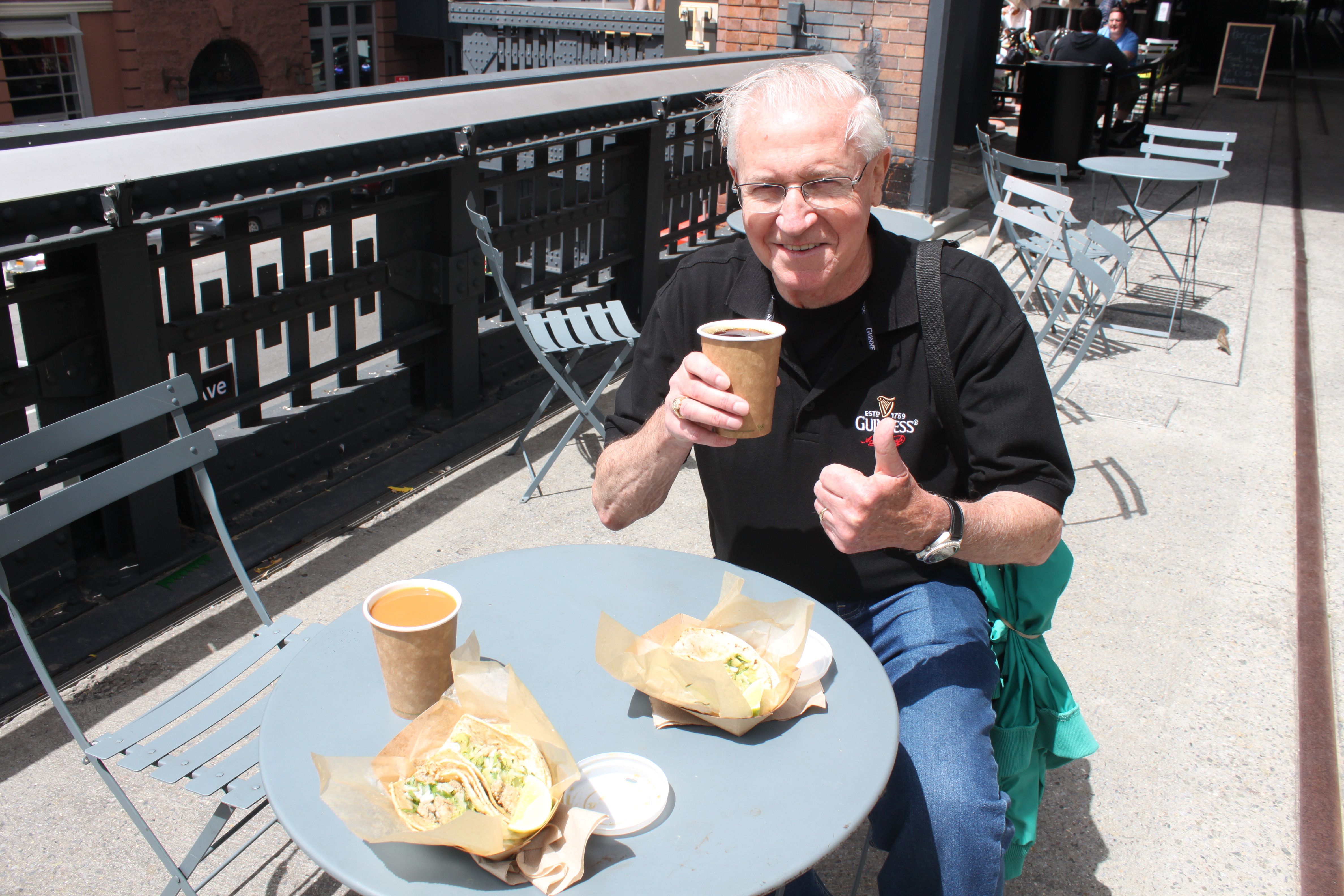
It’s a warm, breezy afternoon in summer and my grandpa and I are strolling along New York City’s High Line park.

We’ve walked about 15 blocks when we come across some vendors selling art and a few scattered food carts. One is Blue Bottle Coffee, a California-based organic coffee brand that also has a few shops in Manhattan and Brooklyn.  You probably shouldn’t judge a coffee shop by its barista, but the guy behind the cart has that scruffy, indie look that makes me think he takes his coffee seriously.

“Let’s try it out,” Papa says. “I’ve heard it’s good.”

Of course, I’m not going to object. It smells amazing. I wonder though, realistically, how anyone has time for Blue Bottle.

There is no line when Papa and I order our Three Africans Blend drip coffees, but it takes almost five minutes to make them. Not exactly conducive to New Yorkers on the move, but I guess when you’re strolling on the High Line you’re supposed to be relaxed.

With our coffee slowly dripping through the filter, it’s awkward not to make small talk. The barista starts telling us how the Blue Bottle brand has a “cult-like” following in San Francisco, but is just beginning to catch on in New York City.

“In San Francisco,” he says, “Where people only have to be at work at ten, ten-ish, they’ll wait on line forever for a cup. It’s different here.”

Honestly, I can’t imagine people having the patience for that in New York. After all, a cup of coffee is a cup of coffee, even if it’s a really really good cup of coffee.

But we have plenty of time today, and  by this point I’m pretty sold by the scent of the coffee grounds, picked up and swirled around by the High Line breeze.

We finally get our coffee and sit down at a little table in the sun near 15th street. It’s about 75 degrees — if it were any warmer drinking hot coffee might not be enjoyable, but it’s perfect in this weather.

Papa takes a sip first.

“It almost tastes like beer it’s so good,” he says says, smiling.

I start laughing. My Irish grandfather loves his beer. I actually know what he means though — the coffee is so thick and rich-tasting, it’s almost filling.

I take a sip.

“Wow, this is good.”

Now I have to rationalize the high price.

“Starbucks lattes are like $3.75,” I say. “I mean, $2.90 for a cup? It’s still not as bad as being a latte person.”

We talk and talk about how delicious this coffee is. One of the best things about loving coffee is talking about how great your cup of coffee is with another coffee-lover who is genuinely enjoying his or her cup.

“I think this is one of the best cups of coffee I’ve ever had,” Papa says.

“Really?! The best you’ve ever had?”

 I’m thinking this is a pretty big deal for him to say, after a lifetime of drinking the stuff.

“Well, not the best, but close.”

Papa has never been a gourmet coffee drinker, preferring a cup of Dunkin’ Donuts black or the dark roast from Wawa. His all-time favorite — a 7-Eleven blend — was tragically discontinued a few years ago, and he’s been searching for a replacement ever since. He would never willingly step foot in a Starbucks; he thinks their coffee has too much of a burnt taste, which I agree with even though I buy it all the time.

Needless to say, I’m pretty happy about his newfound love for the trendy Blue Bottle.

We continue walking along the High Line, savoring our Three Africans Blend for the next 15 minutes until the coffee’s the same temperature as the outside air. It still tastes good.

That night I arrive home to an email from Papa, informing me of Blue Bottle’s dangerous new Rockefeller Center location.

“How can any one be able to save money working near a Blue Bottle coffee kiosk?” he writes. “There ought to be a law against this type of temptation.”

Lights and Fireflies

Tonight I almost tripped over a firefly.

Well, not exactly. I was out for a run and it was around 9 at night. By that time, nearly the only light in my suburban neighborhood comes from scattered lampposts and the flickering of televisions in living room windows. Which means it’s hard to see uneven sidewalks elevated by tree roots, especially if you’re distracted by the first firefly of the season.

Every year I look forward to that first firefly – it’s as if the illuminated case holds within it all the wonders of childhood summer: dripping popsicles and ice cream cones, late night sprinklers, playing out in the streets and watching thunderstorms from my bedroom window. My birthday.

But now it’s a different kind of summer, because for first time in years I’m totally and completely free. And of course, this may be my last summer in that sense.

Having just graduated from college, I’ve been struggling to accept that sense of freedom, since my previous life was defined by never being free. I can’t accept summer for what it is, an open in-between period when it’s acceptable to spend hours shopping or tanning at the pool. I can’t accept that I should relax. (But should I?)  

Apparently, there’s no need to power walk to the pantry just to get a handful of crackers and get back to work. I can sleep in if I want to, and accompanying my mother on a long trip to the grocery store will make no difference in my plans for the day, and will certainly not set me back from the nonexistent pile of work I still need to get done.

Because my goals — write more often, keep up with the news, spend more time with my family — are all rather vague “self-improvement” goals that do not have a set timeline. But I have this irrational fear that by letting down my guard, by not filling my free days with something like the antithesis of relaxation, I’ll lose the drive that powered me through my college years.

As I continued my run tonight, which itself had been an escape from my too-relaxing book and movie, I realized this summer is so unlike “real life” that it’s hard to define what my ideal summer would even be. By the time I made my way back up the road, careful to watch for tree roots, the fireflies had retreated to wherever they go between dusk and dawn.

I opened the door to my house, greeted by central air and the possibility of spending the rest of my night doing whatever I feel like.

It’s summer and I’m not sure what that will mean.

Praying for headlights

–Published 4/16/12 in The Observer.

“Wagon Wheel” by Old Crow Medicine Show is one of those songs college students love.

The moment that distinctive introduction blares from the speakers, arms link, glasses clink and the room erupts in cheering.

In true spring break road trip style, “Wagon Wheel” played multiple times on our drive from South Bend down to South Carolina a few weeks ago.

The first time it came on, I was behind the wheel and we had just crossed the Kentucky-Tennessee state line. We had all been silent for awhile, enjoying the green and gold scenery that unfolded before us. The open road softly rose and fell as we sped at 80 miles per hour south down I-75.

The lyrics of “Wagon Wheel” filled the empty space between us, representing all the things we were thinking, but hadn’t said.

In my head, I tried to define what the song is about. On one level, the song is about freedom — having the freedom to pursue what matters most. It’s about remembering the people and places you care about after being away for a long time.

As a senior in college, this aspect of the song seems especially relevant. I’ve spent months abroad and summers away in different cities. In four years, my younger siblings have grown up, and people in my childhood neighborhood have moved out. Like the narrator, I’ve gone away to mature, and will return both different and the same.

“Wagon Wheel” is also about the beauty of simplicity — that life can be reduced to a single person, a single car and a single desire. You don’t need to know the song to relate to it — the music reflects some reality about the future we all can find truth in.

On our way back to South Bend after spring break, “Wagon Wheel” came on again while I was driving. This time, it was about 10 p.m., dark and raining, and the song had a much more sobering effect.

I realized then that the song is bittersweet, even sad. Loneliness and regret infuse the lyrics because the past still weighs him down. It’s possible that after all those years of longing, after seventeen-straight hours of driving, his vision for a new life could be shattered.

At its core, however, “Wagon Wheel” is about faith. It’s about having faith that the one you love will still be there when you come home, about having faith that you can drive straight into the unknown and everything will end up okay.

With May 20 quickly approaching, I feel like I’m speeding at 80 miles per hour towards graduation, and after that, the unknown. But before then, I hope to share a few more swaying “Wagon Wheels” at Finny’s, indulging in one of those rare moments when we all feel exactly the same thing.


Tribute to Yaya

In honor of my grandmother Yaya’s birthday — April 2, 1936 — I’m posting a poem I wrote about her that I read in this year’s Notre Dame Literary Festival.

This slideshow requires JavaScript.

Today, Yaya would have been 76.

My grandmother, Dorothy Coyne, was one of the best people I’ve ever known. She wasn’t a stereotypical grandmother– we weren’t greeted in her house by the smell of baking cookies (she rarely baked) and her voice wasn’t hushed and gentle. She loved dancing and the bustle of cities. She hated the beach and staying on the phone any longer than was necessary. She was spunky, stylish and confident, and when she had an opinion she made sure it was heard. I admired those things about her.

I can look back to countless nights sitting around my grandparents’ kitchen table with my siblings or spread out across her plush brown carpet, listening to Yaya tell story after crazy story. Like the time in 9th grade the nuns caught her smoking in the bathroom, and she and her friends filled their mouths with powdered soap to mask the smell but ended up with foaming, bubbling mouths as they explained themselves before the principal. Somehow, her stories always reached  a level of pure absurdity; she’d have our entire family keeling over with laughter.

Those stories brought us together. Those stories were the best.

But above everything else, Yaya was a beautiful and loving woman, deeply committed to her family. Four years later, sitting around the kitchen table or spread out across that carpet, trying to imitate the high-pitched inflection of her voice, her stories still leave us hysterical with laughter.

We love and miss you, Yaya.

Yaya

There are times I wonder:
had you dyed your hair
that mahogany-red
one last time,
would you still be
alive today?

Because once you let
that hair go dead and gray,
everything else followed.
spunky-bright cheeks
turned pale in submission,
spine collapsed beneath
the winter sky,
and withered fingers hung
from your hands like
dead leaves.

Yaya, if I could trace the
tracks of your spider-veins
back to the start of this nonsense—
I would.

Then, you could tell me
about the time
you poured shampoo
on Billy’s pancakes,
or when the
hair-dye
turned your hair
“freaking eggplant”

Love for Charleston

Cities, I think, are absolutely fascinating.

Especially the idea that the people, culture, architecture and industry of cities across the United States can vary so drastically.

The United States Custom House in Charleston, reflects the city's past as one of the busiest port cities in the nation.

A few weeks ago, I visited Charleston, S.C. during my spring break. It was my first time in Charleston, but also my first time in a true Southern city. I grew up right outside of New York City and attend school a few hours from Chicago, so my conception of a city has always been a place filled with sky-high buildings, honking cars and rushed, unfriendly people.

Charleston was definitely not that kind of place.

Famous Antebellum homes along the Promenade of The Battery. This type of architecture characterized buildings in the Old South from the time of the American Revolution to the beginning of the Civil War. Many of the homes are historic landmarks.

Charleston has a true Southern flavor, which I loved. Not only do people wave or smile at you on the street, but doormen pause to help tourists with directions and drug store owners actually let people use their bathrooms.

Southern charm is a real thing.

Crazy.

The city of Charleston has a very relaxed, quaint feel. Old buildings and narrow cobblestone streets reflect Charleston's preservation of traditional Southern culture.

Of course, the city itself is gorgeous, with its beautiful, pastel-colored Antebellum homes situated right on the water. The historic architecture and city layout gave Charleston a European feel, more so than anywhere else I’ve been on the East Coast.

The Battery in Charleston. Across the harbor sits Fort Sumter, where the first shots of the Civil War were fired.

This vibrant metropolis holds close to its roots — so much of the city’s past remains present. Old stone blocks  even sit on street corners, once used to help men mount their horses, now active reminders of a genteel past.

And if I wasn’t already in love with the place, some key scenes in The Notebook were shot in Charleston. 

SAD

Seasonal affective disorder (SAD) plagues six of every 100 people in the United States, according to statistics by the American Academy of Family Physicians.

The main age of onset of SAD is between 18 and 30 years old.  The disorder is related to seasonal variations of light (or lack thereof).

No wonder it  affects so many students at Notre Dame.

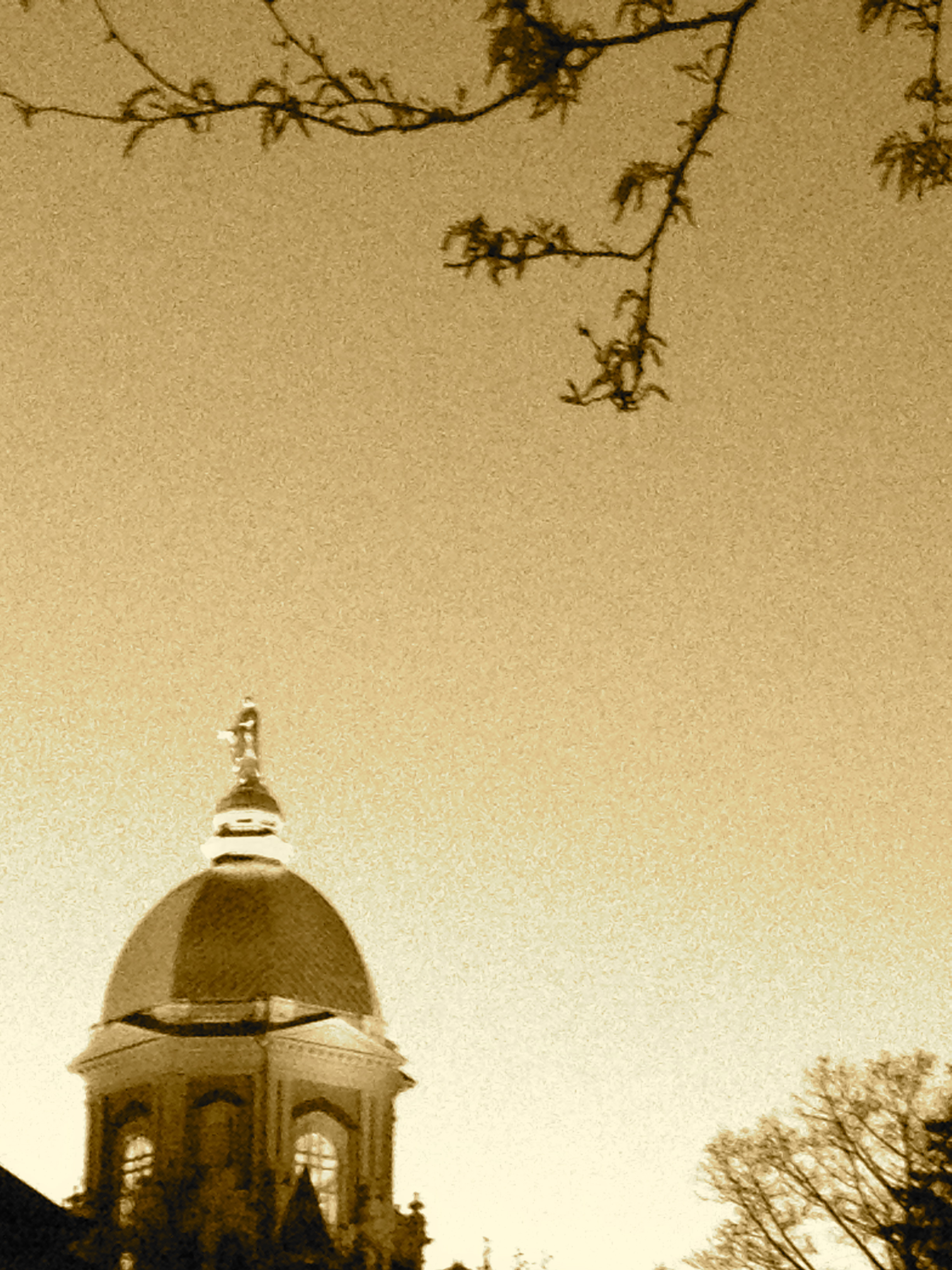
That’s a pretty dramatic  shift of scenery. Beautiful, as the white pathway and  snow-covered dome are. But best viewed through a photograph or the warmth of a LaFortune window.

Check out The Observer‘s archives on Seasonal Affective Disorder here.

Farewell, Toledo.

On May 25 I arrived in Toledo,  Ohio, a city where I knew no one and didn’t remotely know my way around.  On August 12 I left, knowing the city more intimately than I could have imagined, but not coming close to feeling like it was “home.”

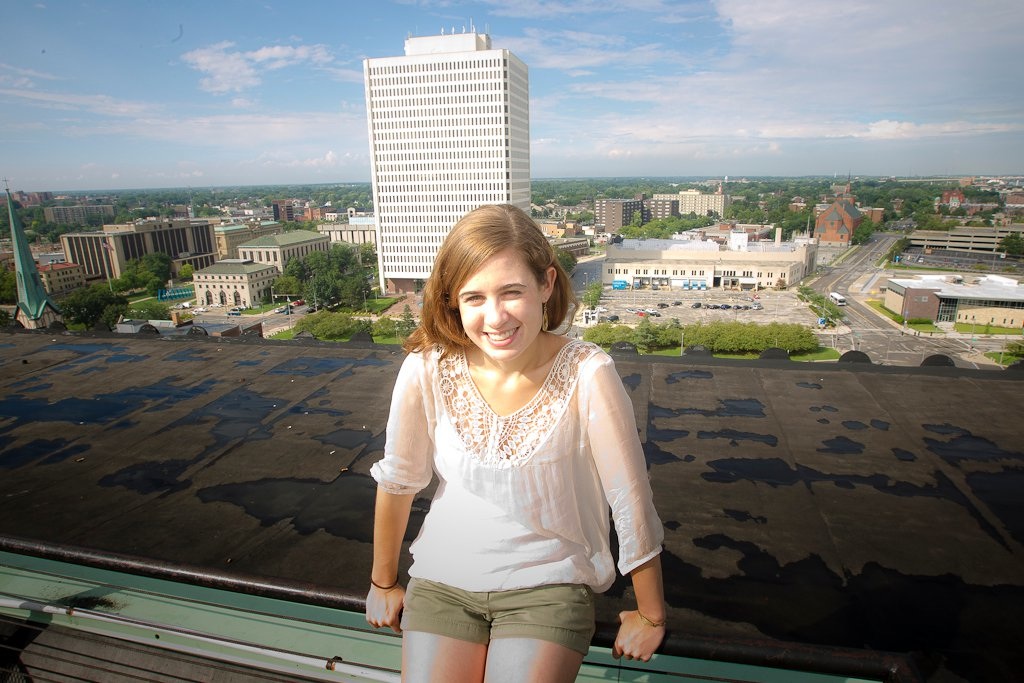
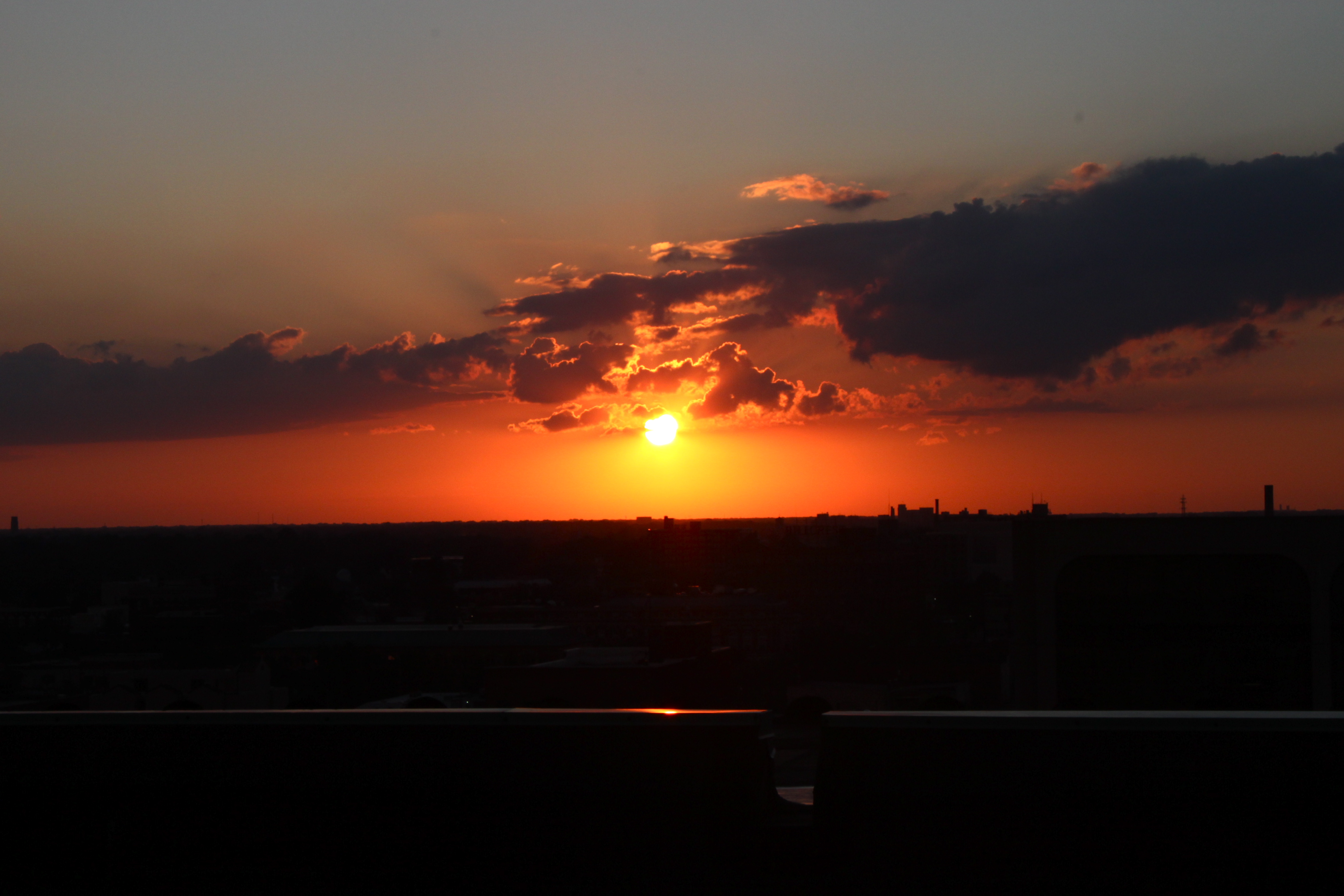
From the rooftop of my apartment building in Toledo. Photo courtesy of Enoch Wu.

When I first arrived in Toledo I had a difficult time getting a sense for the city. I saw oversized banks, tall buildings, and wide streets. I saw litter rolling through the roads and candy wrappers melting into the tar. I saw crooked “For Sale” signs hanging in dusty windows.

I did not see people.

I soon realized that downtown Toledo is a divided area. People who arrive in suits at 9 a.m. are privileged. People hanging out at the bus stops, on benches or in front of the library are not. The downtown empties out after 6 p.m. — the suits file into their cars, turn down the road and go off to their respective suburbs. In an hour, the banks are just looming, vacant towers, too big and strong for the city. The parking lots are open spaces filled with broken glass — like no one was ever there.

Parking lot between The Blade and my apartment building.

Since my apartment was downtown, I straddled the boundary between those who work in Toledo and those who actually live there. Sometimes after working a late shift I’d walk the two blocks home, past people with ripped backpacks sitting indefinitely on bus stop benches. I walked briskly but couldn’t escape the stares — my pencil skirt and heels gave me away from the moment I stepped onto the sidewalk. It was pretty clear what “side” I was on.

Here are some things I didn’t expect from Toledo:

Safety issuesBefore coming to Toledo I knew it wasn’t the safest of places. My mom had done her fair share of research and her fair share of worrying. But I knew I wasn’t as naive as she thought — as long as I was careful everything would be fine.

While everything was fine, and I lived in the nicer area of downtown, I didn’t expect to have to be on guard every time I was walking alone after dusk or early in the morning. I’ve lived in places with crime before, but I usually felt safe as long as there were people around. The lack of people in Toledo was pretty unsettling.

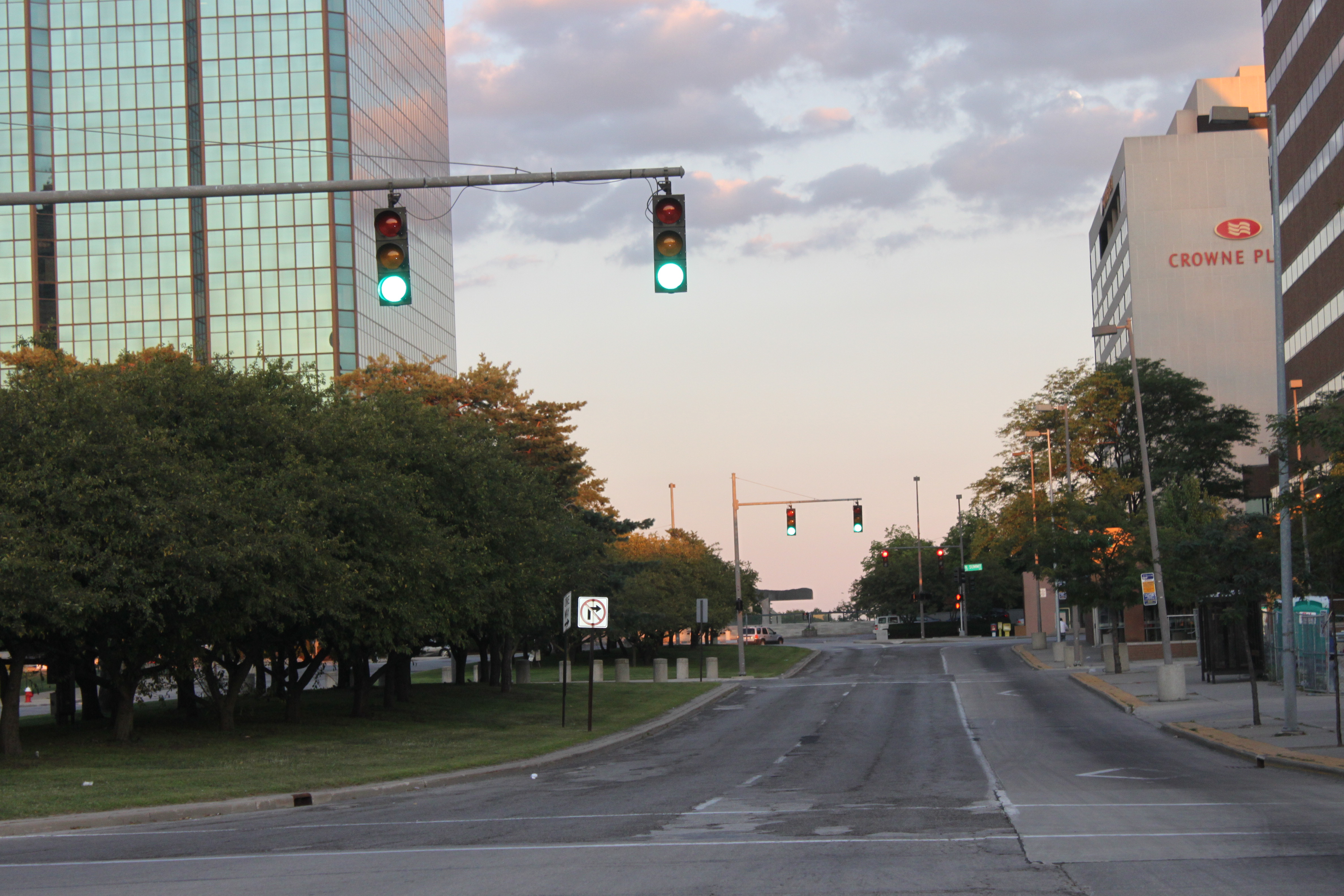
A major street in downtown Toledo at 8 p.m. No cars in sight.

For some time my roommate would go on runs outside our apartment — in broad daylight during the work day — until a complete stranger approached her in the apartment elevator and told her to stop. It was too dangerous. We were pretty shocked the woman had gone out of her way to say that. After that we rarely walked anywhere within a few blocks of our apartment, and definitely did not walk around at night.

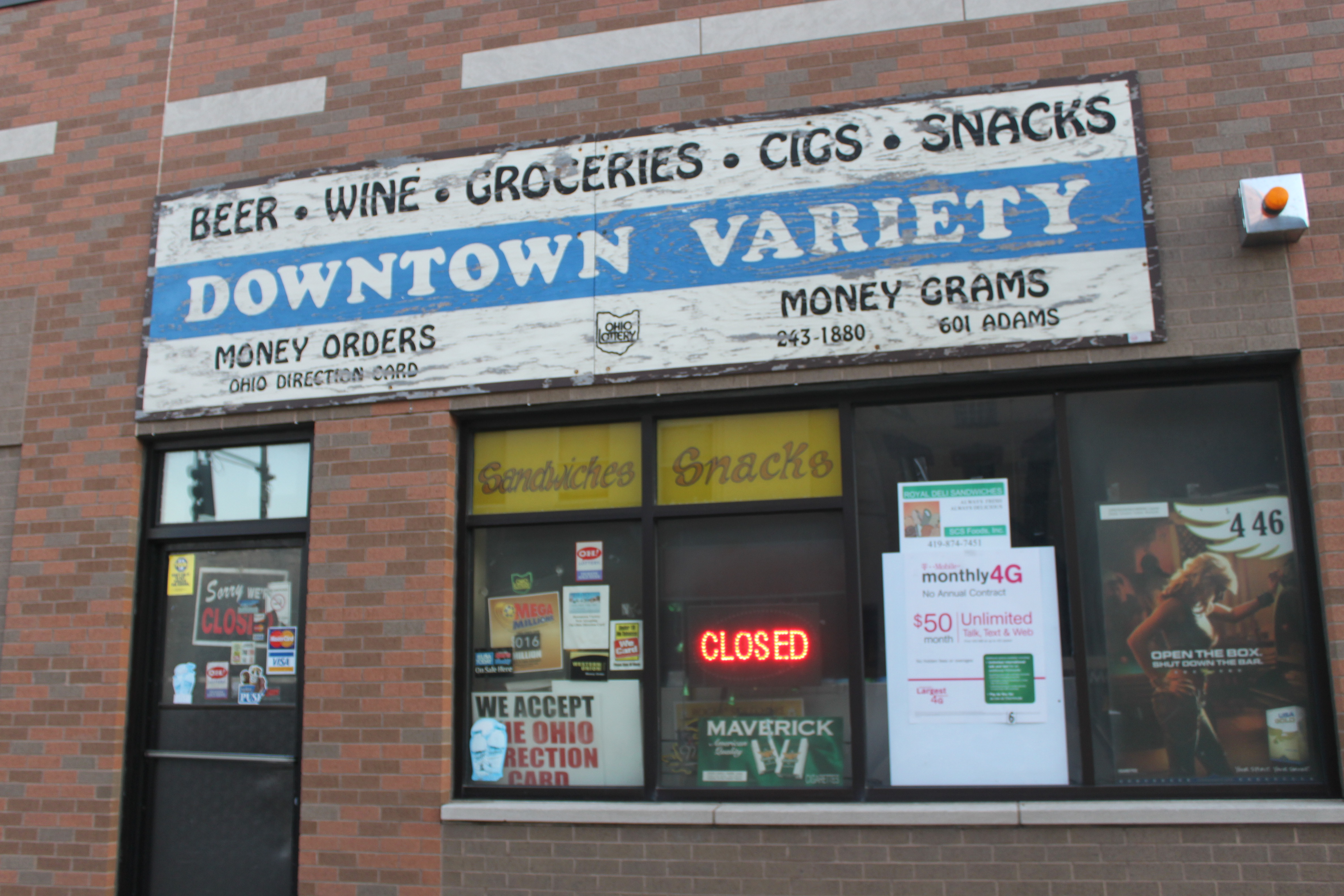
No grocery stores. I lived in the downtown, the center of the city, and there was not a single grocery store within walking distance. The closest things were little shops that sell candy, soda, bread, and canned goods.  These mini marts don’t have meat, produce, eggs, or milk, are only open during weekdays, and have kind of irregular hours.

“Real” grocery stores (Walmart, Meijer, Kroger, and Target) are all a fifteen minute drive away.

The mini mart across the street from my apartment.

While living in Toledo I saw firsthand the irony of  “food deserts,” or areas lacking healthy, affordable food. Northwest Ohio is one of the agricultural centers of the country, yet some Toledoans living just miles from the farms had no access to fresh food, surviving off high calorie, processed foods and 95 cent Burger King burgers. At 29.6%, Ohio has the 13th highest obesity rate in the country, according to an annual report put out by Trust for America’s Health and the Robert Wood Johnson Foundation. Food deserts like Toledo’s certainly don’t help that situation.

Boredom. My definition of “bored” is not being busy. I don’t think I understood what true boredom was until I had to drive through poorer parts of Toledo, where I saw that boredom wasn’t a state of mind but a state of being. People live for each day because there isn’t a future . The swimming pools in Toledo were closed a few years ago to prevent gang violence, but now young people have nowhere to go in the thick of the summer. Instead they drink outside mini marts and walk leisurely right in front of cars. They sit on their front porches in silence, shirtless and shoeless, watching the sky change from blue to gray to black.

Taken while on assignment at an arson fire in Toledo. Arson flared up in East Toledo this summer but also has spread to other neighborhoods.

In the newsroom, the scanner day after day called out shootings, robberies, and arson fires. The cops reporter was constantly running in and out of the office. There were 27 shootings during the month of June alone.

It’s been a hot summer. There are no jobs. Sweat and boredom are a deadly mix.

So much news. Toledo may feel like a small city but there was always something going on. Working for the City Desk I covered a range of stories, including robberies and shootings, a poetry festival, car show, gay pride march, controversial city investments and school board meetings. My job took me through bad areas, nice areas, to beautiful islands, the shores of Lake Erie, and sleepy towns I’d never heard of. I drove through miles and miles of  flat land and cornfields. I got lost, but my GPS always took me back.

I may have been out of my comfort zone, but that only made me a better reporter. I was homesick but would never trade the experience.

Sunset from the rooftop of my apartment building.

On May 25 I arrived. On August 12 I left. Lots of articles, interviews, coffee, crime, heat, hamburger joints, farmland, and a pretty cool newspaper experience in between.

Thanks to all the wonderful people I met along the way — you’ve given me a lot to write about.

You can check out my Toledo Blade story archive here.

#realworld

Many of you have been asking to see my apartment…so, here it is!  It’s huge, which I wasn’t expecting — I pretty much gasped when I opened the door for the first time. It’s probably twice the size of my flat in London, and for only two people.

Then again, this isn’t London, so there’s a tradeoff.

My building used to be an 11-floor Macy’s store, so the apartment is a converted loft style with exposed piping. It’s not decorated at all right now, but I really love the high ceilings — I think they’re what make the space so conducive to writing. I usually feel too cramped and distracted to write in my own room, but I’ve been so focused here.