Constantly in motion: How New York City’s waters shape its identity and culture

“Yonkers Esplanade, Municipal Pier, George Washington Bridge, Airborn Friends” by Peter, https://shorturl.at/hBWss. License at https://creativecommons.org/licenses/by/2.0/

“Yonkers Esplanade, Municipal Pier, George Washington Bridge, Airborn Friends” by Peter, https://shorturl.at/hBWss. License at https://creativecommons.org/licenses/by/2.0

On foggy days clouds wrapped the bridge in a thick, wooly blanket, blocking the view except for scattered lights strong enough to punch through the fabric. But on clear days my eyes drifted toward the skyline to take in the tall buildings that stood proudly at the water’s edge.

As a child I loved peering out the window at the Hudson River as we crossed the George Washington Bridge on the way to my grandparents’ house on Long Island. Passing over the congested bridge always took longer than expected; I sometimes wondered if I’d get to the other side faster by swimming.

“It’s rougher than you think,” my mom would say. “Strong currents would sweep you out to sea.” I quickly became fearful of the river, seeing it as a threatening being, one we could pass over or under but never get close to. I imagined anyone who dared jump into the water would be immediately swept away and consumed by the great mouth of the Atlantic. 

Still, I always felt sorrow on the way home as I saw Manhattan’s lights twinkling in the water. I knew it could be months before we’d return and I’d get to see the river and the buildings in all their grandeur.

The island I’d cross through on childhood trips from New Jersey to Long Island is now my home. In my ten years of living in New York City, my relationship to the river has become less symbolic and more intimate. Whenever I need to make a decision, I’m drawn to the water—it provides a vantage point from which to gaze out beyond the nearest phone or traffic light or computer screen.

I believe the waters around New York City are the silent architects of our history, culture, and daily lives. Think about it: life along its shorelines started with indigenous tribes. The water around us has been a source of commerce and transportation for thousands of years. And our world-famous skyline wouldn’t be possible without the Hudson River, which stops us from endlessly widening this concrete ecosystem. We rarely pause to recognize the waters’ significance, but doing so can deepen our connection to nature and help us find serenity in our everyday routines.

The Lenape people who first inhabited Manhattan called the Hudson River Mahicantuck, which means “great waters in constant motion,” because of the way the tide shifts directions throughout the day. Each day the river continues this way, moving both upstream and downstream at the same time. I believe the waters connect our past and present, grounding us in who we are.  


My father grew up in the 1960s in Brighton Beach, a Brooklyn neighborhood named after the coast of England and situated in the shadows of Coney Island. Despite living one block from the ocean, my father and his family rarely spent time there. Each summer they escaped for two months up to the Catskills, trading sandy city beaches for the fresh mountain air.  

Still, the water was the backdrop of their lives. Until high-rise condominiums sprouted up and blocked the view, my father could see the ocean from nearly every window of his sixth-floor apartment. And at night, when the ocean blended into the sky, rendering the view imperceptible, he could still hear the far-off sound of the waves. It was comforting to listen to, especially after a rough day.

Living by the water, my father had more open space than the typical city child. He wasn’t wedged into a busy urban environment since his apartment building was the last one on the block before the beach. As a young adult, he’d run the boardwalk all the way to Coney Island and back the other way to Manhattan Beach. He remembers passing elderly people chatting on benches and lively characters dancing unabashedly to the loud music of their boom boxes.  

Life was freer there, by the ocean.

Like many New Yorkers of the early 20th century, my great-grandparents arrived in the U.S. by way of the Atlantic Ocean, from Ireland on my mother’s side and Eastern Europe on my father’s side. My father’s family came from Galicia, a historic region that spans what is now Southeastern Poland and Western Ukraine. Eastern European Jews like my great-grandparents eventually settled in Brighton Beach to escape the overcrowded conditions of the Lower East Side and breathe clean air by the water.1 In the 1940s, the area was also a haven for Holocaust survivors and refugees seeking a primarily Jewish neighborhood.

In the mid-1970s, the neighborhood saw a large influx of Ashkenazi Jews from Russia and Ukraine, eventually earning the nickname “Little Odessa” after the Ukrainian port city on the Black Sea.2 Even as immigration slowed in the following years, the Eastern European influence held strong, with shop signs in Cyrillic and the scents of Georgian flatbreads and Russian sweets making their way into the streets. In that small corner of beach on the other side of the world, my relatives and others like them created a sense of home.

The beaches of Little Odessa face the south and get sun throughout most of the day. That orientation led the Lenape who lived in the region to refer to it as Narrioch, or “land without shadows.” I like to think the people from all over the world who’ve settled in that area of Brooklyn share a few things: a desire to turn toward the light and a sense of belonging from living beside the water.


I like to think the people from all over the world who’ve settled in that area of Brooklyn share a few things: a desire to turn toward the light and a sense of belonging from living beside the water.


The Lenape people had a reverence for water that we’ve largely lost in modern society. This is reflected in their vast and varied language, which has at least 35 different ways of describing water, including sukëlàntpi,or “rainwater”; mushpèkàt, or “clear water”; shawpèkunk, “place at the edge of the water”; and hikahële, “a creek or river that has run dry.”3

Before Dutch settlements, the Lenape who lived in villages along the Hudson River shifted locations with the seasons to take advantage of the available natural resources. Some sources say there were between six and twelve thousand people living in small groups on the lower estuary, connected by and surviving off the river.4

What did we lose when water became a source of power and commerce, not just a source of life? While our legal system today focuses on individual rights and structured political processes, the Lenape Laws were more of a guide on how to exist communally in the world, with one of the laws stating, “We are all relatives. Respect all relations.”

“This Lenape value stresses the interconnectivity of all things,” said Joe Baker, co-founder and executive director of the Lenape Center and an enrolled member of the Delaware Tribe of Indians, in a talk at the Brooklyn Public Library. “Indeed, the land, the sky, and all life exist as an interdependent, interconnected web where no single element or being was void of its own place and embodied spirit.”5

Of course, our survival is no longer tied to the river. But we should all learn from the idea of interconnectedness that Baker spoke of. Today, individuality governs our actions and puts up artificial barriers between us and the nature surrounding us. And with the erasure of that connection came the erasure of Lenape history and their access to home.

The arrival of European settlers upheaved the Lenape way of life. Although history books cite Dutch merchant’s Peter Minuit’s purchase of the island for goods valued at 60 guilders (then about $24), the “purchase” of Manhattan is mythical, more of a forced displacement than a true exchange. After all, the Lenape did not understand or abide by the concept of land ownership. Over time, many of the Lenape people were forced to move out to reservations in Oklahoma, and their ancestors today ache for a homeland they may never have set foot on.6

The idea of owning an element of earth was completely foreign. As Baker and his co-authors wrote in Lenapehoking: An Anthology, “How could the entirety of the vast Earth, ocean and sky, clouds, streams, rain and wind be reduced to a sheet of paper? It would not have been any different than someone today laying claim of ownership to the sun.”7


Recently I learned that the Hudson River’s journey is 315 miles long.8 It starts at Lake Tear of The Clouds in the Adirondacks as fresh water, rushes over rapids and waterfalls, and then flows past small towns and cities, mixing with salt water before it comes to an end in New York City.

Through all the changes on land, the river still flows in both directions, just like it did thousands of years ago. It’s a strip of the natural world in New York City that seems relatively untouched, save for ferries and boats and bridges that interact with the water but can’t contain it.

The Hudson River, the Atlantic Ocean, the East River, and all the bays, streams, coves, reservoirs, and straits define us as much as the streets and buildings do. They are active participants in urban life—or rather, we are active participants in their ongoing cyclical journeys. Perhaps city life isn’t as individualized as it seems. We just need to think beyond ourselves, appreciate our place in the natural world and properly understand the history of those who came before us. We must recognize that before this city was a city, it was “Man-hatta,” a “hilly island” rich with natural resources, a homeland.

There’s a promenade where I can watch the tides move north and south as seagulls take flight from the river railing. Looking across the water to New Jersey, I’m reminded that nothing is still; nothing is permanent, and everything is connected.  

Nature is here, all around me. These Great Waters Constantly in Motion.


References:

[1] “Brighton Beach.” Brooklyn Jewish Historical Initiative, https://brooklynjewish.org/neighborhoods/brighton-beach/. Accessed 23 Jun. 2024.

[2] “Neighborhoods.” Brooklyn Jewish Historical Initiative, https://brooklynjewish.org/neighborhoods/. Accessed 23 Jun. 2024.

[3] Delaware Tribe of Indians. Lenape Names for Other Terms for Water. Delaware Tribe of Indians, 2024, https://delawaretribe.org/wp-content/uploads/Lenape-Names-for-other-terms-for-water.pdf.

[4] “The First People of the River.” Riverkeeper, Riverkeeper, Inc., www.riverkeeper.org/hudson-river/hudson-river-journey/the-first-people-of-the-river/. Accessed 9 Mar. 2024.

[5] “The Land We’re on: Living Lenapehoking | Live from NYPL.” YouTube, New York Public Library, 7 Mar. 2023, http://www.youtube.com/watch?v=ycGoioaKpxQ.

[6] “True Native New Yorkers Can Never Truly Reclaim Their Homeland.” Smithsonian Magazine, Smithsonian Institution, 15 Aug. 2018, www.smithsonianmag.com/history/true-native-new-yorkers-can-never-truly-reclaim-their-homeland-180970472/.

[7] Baker, Joe, Hadrien Coumans, and J. Whitney, editors. Lenapehoking: An Anthology. Brooklyn Public Library, 2022. Brooklyn Public Library, https://discover.bklynlibrary.org/item?b=12581674.

[8] Madelone, Jake. “Can You Swim in the Hudson River?” Waterfront Alliance, 29 June 2023, https://waterfrontalliance.org/2023/06/29/can-you-swim-in-the-hudson-river/.
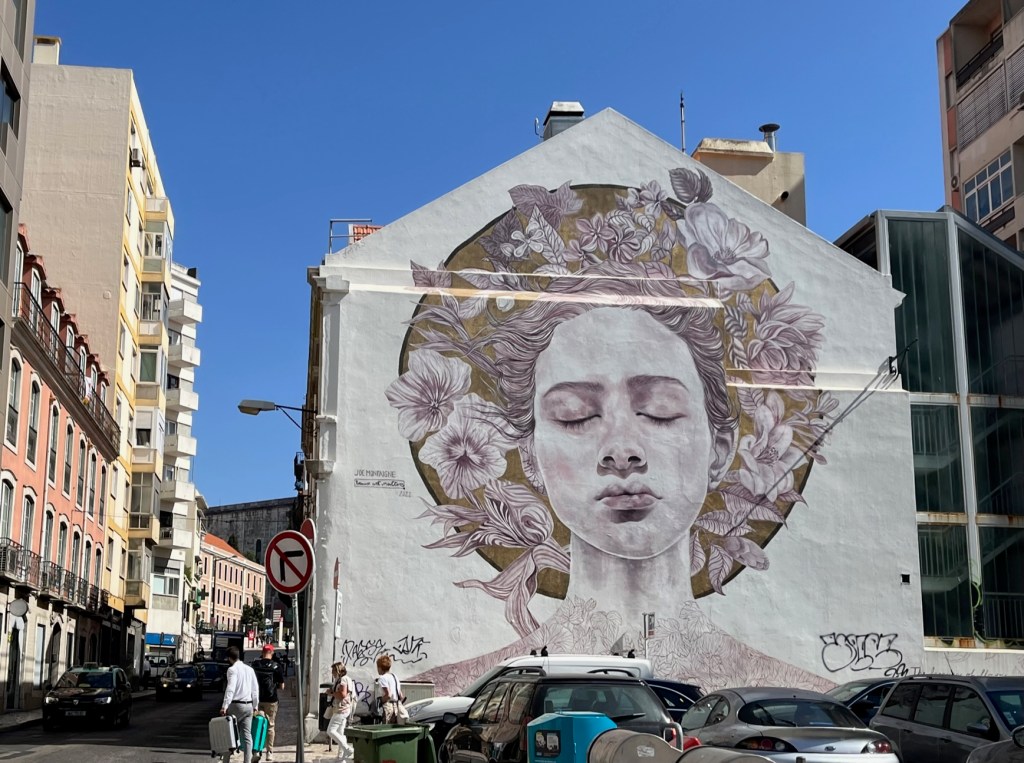
Where did she go?

Sometimes, the stress and chaos of everyday life results in a chasm of creativity. And even if these chasms are short-lived, they can have a powerful effect on happiness. This prose poem explores the feeling of losing access to inner peace and an important sense of knowing yourself, but remembering how it felt when your identity was whole and creativity abundant.

The image below is a photograph of the Lisbon mural ”The Language of Flowers” by Jacqueline de Montaigne, a work of street art I always found beautiful in its silent , self-reflective melancholy.

—–

Where did she go?

I need to feel more. Feel deeply. The kind of feeling that brings tears to your face so quickly you’re not sure if they’re happy or sad, or something even more elemental.

All the focus and the attention directed outward leaves the inside bare. Staring at Zoom screens, Google Maps, New York Times alerts, FaceTime calls; collecting and storing passwords the way people used to guard their jewels. It’s like the edges of me have blurred into the speeding subways, the rush of emails, the blazing billboards, pieces falling into those sad construction zones that sit idle for years. Where does the city start and I begin? 

I wasn’t built this way, to blur around the edges. I was built to turn inwards, toward the core myself, turning ideas over in my mind like shells brushing against the sea floor – until they’re smooth, polished, ready to land on shore, having journeyed long out of sight before their arrival.  

I’m furious in my dreams lately, cramming creativity into sleep where it doesn’t show up while I’m awake. Turning pages of imaginary books with the backs of my eyes and traveling to jagged, Picasso-like places until I wake up and get ready, trying to match the outline of myself with who I really am. 

I get lonely quickly but still need to be alone. Crave it. That sense of losing and finding myself again in the words of a good book, a meal carefully prepared over hours, a journal filled with scribbled handwriting I’ll one day make sense of. It’s a vital energy source – looking inward, imagining.

I was built to wear my ideas proudly like a colorful patchwork coat. I’ve always done that; I used to that. And yet I show up every day in gray.

I need me.

Where did she go?

Seen in Astoria…

A couple sits
In the corner of a dive bar
She’s smiling
Absentmindedly pushing around
Scrabble pieces
Rearranging the letters
Admiring her work.

He hardly notices what she’s doing
Because his eyes never leave hers
And in her presence
Everything else is a blur

Suddenly he checks his watch
They jump off their stools
And run out of the bar

Left behind are words unseen:

YOU
CHANGED
EVERYTHING

What happened to dreaming small?

Ireland is just over there my grandfather said to me as we stood on the shores of the Atlantic, when I was about six years old. I strained my eyes but hard as I tried I could not see Ireland, just an expanse of water and thin blue line where ocean met sky.

As a child, the “end of summer” always seemed just as far away. If June was the shore, September was land on the other side – and an ocean of time and space lay between now and then.

To fill this mass of time I took on what I call “small challenges”.

One of my favorites, and in retrospect most ridiculous, was the Pogo Stick Challenge of 1999. I’d gotten one for Christmas and enlisted my good friend and neighbor Annabeth to join me in the challenge of reaching 1500 consecutive hops. In the heat of August, using a toy that had rusted over the winter months, this took some perseverance. But all summer long we worked on our goal, stopping only to refuel on cookies and lemonade.

Bounce. Creak. Bounce. Creak. At the end of August I finally hit the magic number – 1500 HOPS! We shrieked and clapped and moved on to a much quieter hobby – making jewelry. I’m sure the neighbors were thankful.

Two summers later, when I was 11, my challenge was writing a book of poems. Looking back, I’m amazed at my productivity before self-criticism got in the way. I’d wake up in the morning and write a poem in my notebook, then type it up on the old Dell after lunch. At the end of the summer I printed out all my poems, brought them to school to be bound and considered myself “published”.

I always dreaded running in gym class, so the summer I turned 13 my challenge was to build endurance. It started as two laps around the block that became three, four and five. I liked the way running toned my body and decided to pair exercise with a diet. At our Labor Day barbecue I refused to eat dessert, and my “small challenge” turned into an obsession that grew cancerously through fall and winter and spring.

That summer I realized it’s possible to take challenges too seriously, self-improvement too far.

Wonderful as they were – summer has always been my favorite season – they’d never again be vast as an ocean. Future summers were filled with reading lists, sports practices and college applications. Read 10 books! Learn to code! Write five short stories! Small challenges got bigger and I started feeling guilt for everything I hadn’t accomplished, rather than pride in what I had.

Now, as a young professional in New York City, summer months aren’t technically different from any other part of the year. I am working five days a week and time is limited. But I still associate the period from June to August with self-reflection and goal-setting. The thing is, because there’s so little time, every challenge feels like it should have some greater purpose. If your friend is going back to school for a Masters degree, you don’t want to be working towards the mid-20s equivalent of pogo sticking. In this city, there are no isolated goals, only goals that help you become a more successful version of yourself.

What happened to small challenges, of taking on random endeavors simply for one’s own enjoyment? Is it possible to do something entirely for you and not for your Instagram?

I’ll always be ambitious. But in a city that constantly shouts think big! dream big! I want to go back to dreaming small, just for one summer.


Image of Atlantic Ocean by jfleischmann

The Uber Positive Uber Driver

It was about 5pm one of the first sunny Saturdays of spring. I stood outside Brooklyn Bridge Park waiting for an Uber over to a party in Williamsburg after a long, mimosa-filled picnic brunch.

“Miss Sara! Hello! How are you? It’s such a beautiful day, isn’t it?” Shamraiz, my driver, exclaimed as I slid into the back seat. “Days like this, everyone’s mood changes, everyone walks with their heads held high!”

In just a few minutes I learned Shamraiz has five kids, one named Sara like me but she spells it with an “h”.  He loves his wife more than anything – she’s the reason he left Pakistan for America. I learned he’d driven a yellow cab for 14 years and switched over to Uber last year. He likes the newfound flexibility.

“If you work hard, and stay positive, good things will come to you,” Shamraiz said as we snaked our way through Brooklyn. “It’s nice to be important, but it’s more important to be nice.”

“Absolutely,” I agreed. “You should really write a book with all these sayings.”

“Either write something worth reading or do something worth writing,” he promptly spouted, proud of himself for recalling such a relevant quote. “That one’s Benjamin Franklin.”

I laughed. I realized in New York, I don’t blink an eye at extreme negativity. But extreme positivity is intriguing, makes me question whether the person has a motive or simply looks at the world in a different way. With Shamraiz, it was clearly the latter. But why in New York is positivity suspicious, while negativity’s the norm?

“Well, here you are,” Shamraiz said when we reached my destination. I thanked him and got out, but moments later he rolled down the window.

“Learn from the past, live for today, dream for tomorrow!” he shouted over the bar music, before speeding away.

Calling Yaya

This essay was awarded honorable mention in Notre Dame Magazine’s 2015 Young Alumni Essay Contest. It was originally published at magazine.nd.edu.  

Everyone on Dallas Avenue knew Yaya’s high-pitched cackle.

My grandfather would walk home from the train station each night and hear her laugh from a block away. That’s Dorothy, he’d think to himself. She was usually on the phone. She was usually telling a story.

The phone connected Yaya to everyone she wanted to talk to and everywhere she needed to be. Even before coffee, the first thing she’d do each morning was roll over and check her stocks by punching in numbers. She wore out three keypads in just a few years of checking and trading those stocks. And she made my grandfather buy 25-foot-long cords for all phones in the house so she could chat away from absolutely anywhere.

From an early age I loved talking on the phone with Yaya and begged her to tell me the stories I knew and loved. Like the time in high school the nuns caught her smoking in the bathroom, so she filled her mouth with powdered soap to mask the smell but ended up with foam bubbling out of her mouth as she explained herself to the principal. Those stories reached a level of pure absurdity it seemed only Yaya could concoct.

We had serious conversations, too, she lying on her bed in Long Island, me on mine in New Jersey. One summer when I was around 13, a girl my age died in a tragic jet-skiing accident. A few of my friends knew her, and her death deeply affected me. I spent the night writing a poem for the girl and read it to Yaya, and then we talked about death and dying until our conversation slowed to a standstill. She was always straightforward about the topic, saying “when I die” or “will you do this for me when I’m gone, baby?” as if it were inevitable. I always hushed her and changed the subject.

***

I was 17 when Yaya passed. It was obvious her health was deteriorating. Months earlier she’d stopped dyeing her hair that signature red, a sign of defeat too painful for me to admit. Her weight had dropped below 100 pounds, her bones were brittle and her spine was collapsing inch by inch. Despite all this, her death felt sudden because I never got to say good-bye.

She died in February, the coldest part of winter. My younger sisters cried in my bed, not understanding how a person goes from being here to being gone. I thought I was old enough, mature enough, to understand her death and help my siblings properly mourn. But 17 wasn’t old at all, and since emerging on the other side of college and moving to New York City I’ve started missing her in a new way.

Yaya was a city girl, a trait that skipped a generation and landed on me. Papa often tells the story of their 1970s summer house in Greenport, Long Island, where Yaya stayed inside all day, depressed. The town was too quiet and the nearest phone was a quarter mile away. Papa says she’d press her face to the window, longingly watching car lights pass on the main road — the closest sign to civilization. All night she’d gaze at those lights, smoking her cigarettes in silence.
My grandmother needed to be around people. The house had been her idea, but within a decade they sold it.

Yaya grew up in the 1930s and ’40s in the South Bronx Irish tenements, the daughter of first-generation Irish immigrants. When she was 14 her father died suddenly of appendicitis. So her mother took a job as a housemaid at the Waldorf Astoria and moved the family out to Pelham Bay.

Yaya’s father, who’d been a carpet salesman at the flagship Macy’s store in Midtown, instilled in her a strong work ethic and sense of pride in being busy. In her 20s, she was the secretary to a high-powered lawyer at General Motors. Yaya loved showing up to the big building on Broadway, working for the big shots and going out to lunch with the other girls for special occasions. They’d pick a fancy spot like the Russian Tea Room, Tavern on the Green or an Italian place called Patsy’s that Frank Sinatra used to frequent. Birthdays and engagements never went uncelebrated.

Yaya was just around my age when she worked for GM. Even though she never told me about her 20s in Manhattan — maybe she thought I was too young — little things around the city remind me of her. My favorite photograph was taken at the Copacabana nightclub, shortly after Papa proposed to Yaya in 1959. Every time I pass the Copacabana in Times Square I think of the original Upper East Side club and my grandparents at a table inside, looking so glamorous and in love. I have the photograph saved in my phone so I can pull it up and imagine how she’d tell me the story.

My phone can tell me all about the Copacabana’s history, play videos from the nightclub’s heyday, even show me my very last email from Dorothy Coyne. But for all it’s capable of, it can’t connect me to her.

Seven years since Yaya died, I still can’t get past the urge to call her. Sometimes I feel like the helpless 5-year-old who would erupt into tears when my grandparents left after a weekend visit. I’d sit sullenly on our stoop, eyes watering as their car backed out of the driveway and escaped at 60 miles per hour down the highway.

Then I’d go back inside and wait for the phone to ring.

15 Things I Learned My First Year In New York

January 31 marks my one-year anniversary of moving to New York. This time last year I wrote about the thrill of signing my first New York City lease, of smiling as I walked up 9th Avenue knowing I’d soon have my own pocket of space in the big city. I was about to leave behind the daily monotony of commuting, the packed buses and frantic dash through Times Square. Signing that lease was a pure, fleeting moment of truly making it.

Growing up 20 miles from Midtown Manhattan I’ve always identified with the city but knew you’re not a true New Yorker until you’ve lived here. At college in the Midwest I envied friends’ ability to say, “I’m from Chicago” despite living hours from the actual downtown. The same just doesn’t apply to the New York metro area – my proximity to the city and love for its fast-paced nature didn’t translate to being a New Yorker, as much as I wished it did.

The truth is, when you’re here – day to night to day – you start to notice things about the pulse of the city and the people who live here that didn’t present themselves before.

Here are 15 things I’ve learned after one year in New York:

1. The city never sleeps but it sometimes rests

NYC

When I was commuting, the New York I knew was the rush of Midtown between Port Authority and Rockefeller Center, and the Lower East Side swarming with people late at night. I never experienced those rare New York quiet moments when the city settles down and seems to belong to you alone. The last time it happened was Thanksgiving morning as I left to head home to New Jersey. Stepping out of my apartment around 8 a.m., 9th Avenue was quiet save for the hum of empty cabs, and I didn’t see another soul for 10 blocks in either direction. I don’t pine for these moments but love when they appear.

2. Strangers will brighten your day

quietmoment

Last year I wrote about Geoff, the newspaper hawker who told me to “have a great day, young lady!” every day for a year when I passed him on 42nd street. Geoff’s smile was contagious and it brightened my day each morning. While they’re not all as visible or vocal as Geoff, I’ve found other strangers are willing to help out when the subway turnstile blinks “insufficient fare” or you stumble on an unsalted sidewalk. The “cold, hardened New Yorker” stereotype is true, but that doesn’t mean people aren’t good at heart.

3. But…sometimes they’ll totally irritate you

STRANGERS

The woman who doesn’t thank you for holding the door open as she saunters out of the store. The biker who disregards rules of the road. The people who walk in a horizontal line on the sidewalk. The occasional “manslamming” (yes, it happens). You try not to take it personally – they’re strangers, after all.

4. Family history comes to life

IMG_4947

My family history on both sides is rooted in New York City. My mother’s father (Papa) grew up in an Irish tenement in Brooklyn, my father’s father in a Jewish neighborhood of the Lower East Side. This past summer I visited Katz’s Deli with my grandfather, right around the corner from the luncheonette his family owned. He described the Lower East Side he knew, filled with shoppers and street peddlers, not people heading to bars or brunch. And for years I’ve traveled in with Papa, spending days in parts of Brooklyn and Manhattan, but find it’s different now that I call the city home. It’s an amazing experience exploring the city with my grandparents, seeing the streets transform through their memories and realizing how much has changed.

5. You’ll spend more time online looking for restaurants than you spend actually in them

IMG_0797

Birthday? Where’s a restaurant that’s centrally located, accommodates groups, has a cool atmosphere and isn’t too pricey? First date? How about a not-too-casual, not-too-upscale spot with good food if you get hungry but also lets you just have wine? Family coming in? Where’s a Theater District eatery with an array of vegetarian options that takes reservations so you can get to the show at exactly 7:30?

I’ve spent hours on Yelp and NYMag.com looking for restaurants that fit very specific criteria. Because New York has so many great options, there’s more pressure to find a place ideally suited to a particular night – and not return to somewhere you’ve already tried.

6. Most things are really expensive but certain things are forever fixed in price

IMG_2200

When I go home to New Jersey – or really anywhere – I’m amazed at how much cheaper food items are. Pricey food is pretty much a given in New York. But certain things here, like 99-cent pizza, shock my friends from other cities. They wonder how the same city that charges $15 or more for cocktails serves pizza for less than a dollar. It’s a New York thing, I guess.

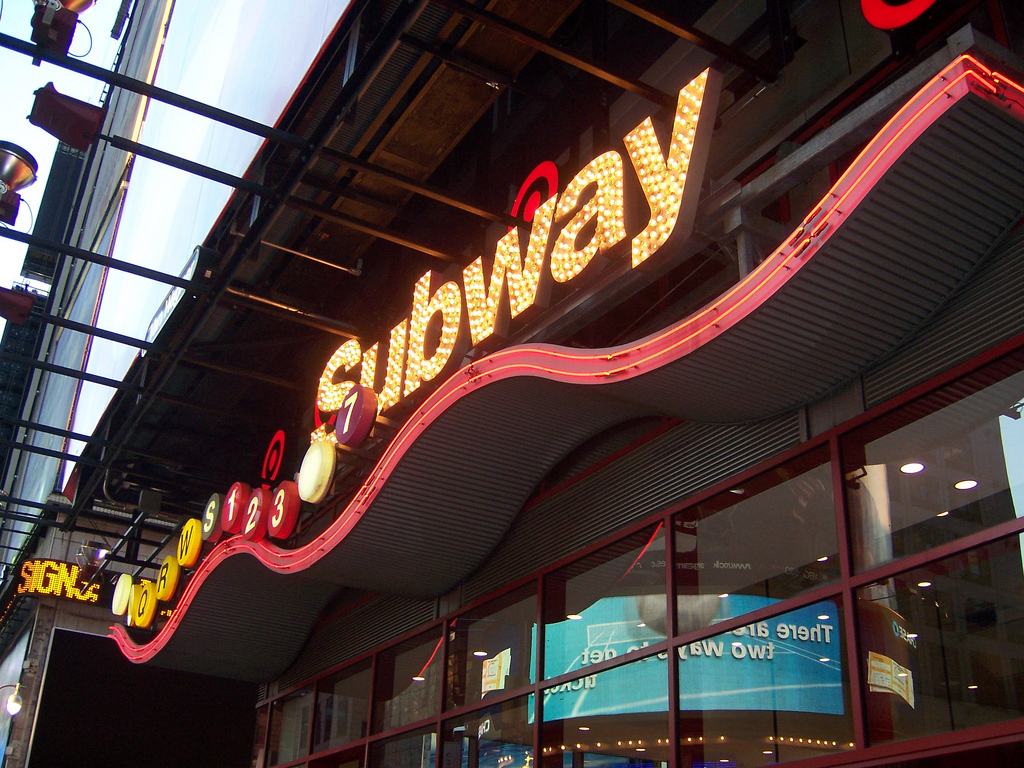
7. The subway is your best friend and your worst enemy

subway

I’m simultaneously fascinated, terrified, grossed out by, and extremely thankful for the New York subway system. For a fixed price you can go almost anywhere in Manhattan, Queens, Brooklyn or the Bronx. I love that on a Saturday or Sunday with nothing to do, I can take off on a train and explore a new neighborhood. That being said, the subway can be an unreliable friend who cancels at the last moment, leaving you stranded with no plans. I’ve learned to tack on an extra 15-30 minutes to trips to account for subway delays.

8. You won’t get through the summer without an AC
Tried that. Won’t ever try it again.

9. Stories are everywhere

IMG_4205

No wonder so many writers are based in New York – not only is it a cultural center, it’s a breeding ground for stories. The city is full of interesting, diverse people and lively conversation is happening around you at all times. I keep a running document of quirky phrases and bits of conversation I overhear on the streets – it’s all fodder for fiction.

10. Port Authority will always be the worst

PORTAUTHORITY

If there’s one place in New York I’d be happy never to set foot in again, it’s that dreadful bus terminal. In fact, all of 8th Avenue between 34th and 50th Street for me is tainted by memories of pushing through Midtown crowds to make the 6pm bus. And the building itself, the busiest bus terminal in the world, badly needs a renovation. I don’t have nostalgia for my commuting days and never will.

11. Good luck finding that perfect coffee shop

IMG_0796

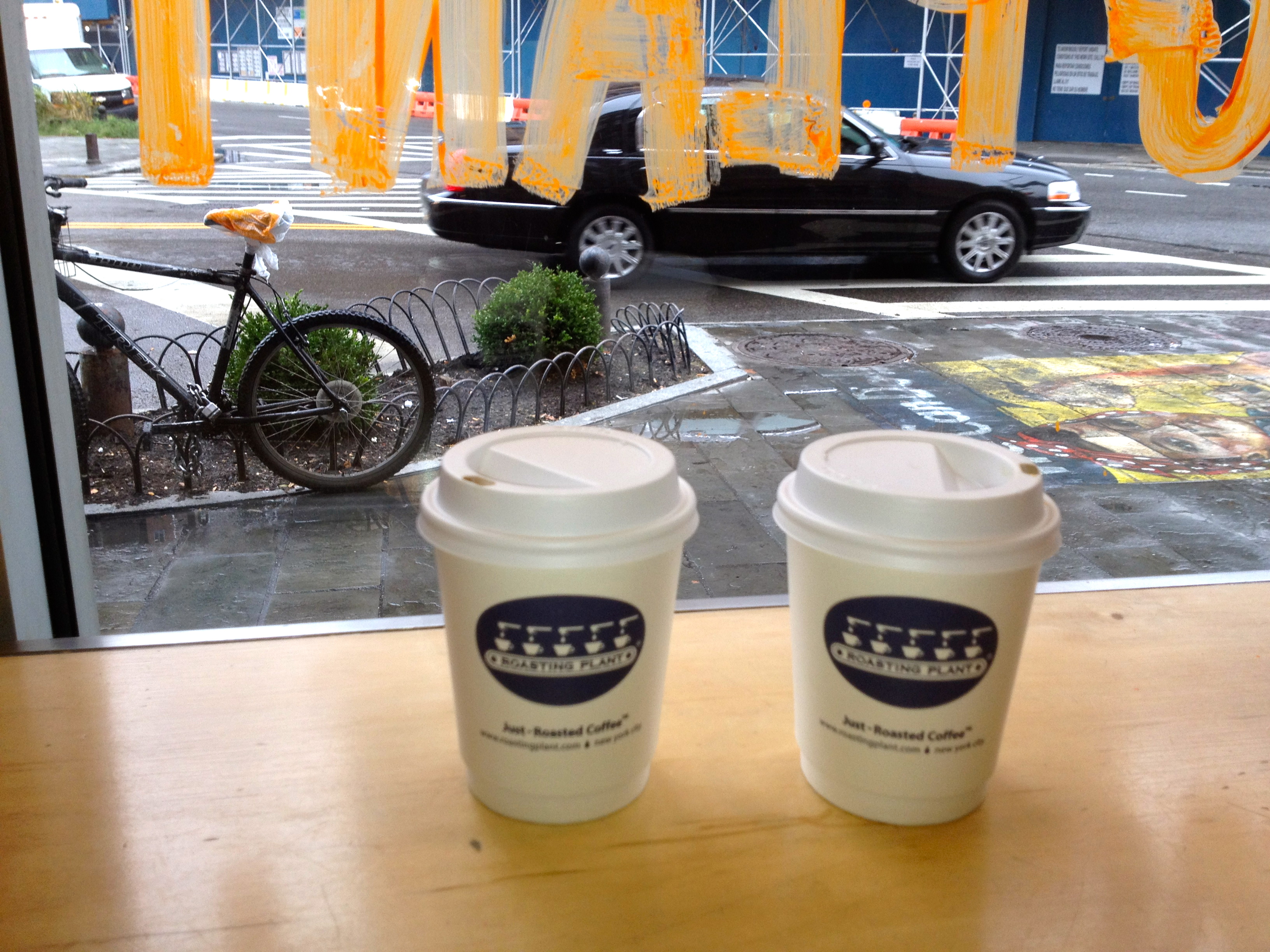
Finding the perfect coffee shop in New York is like finding the perfect apartment. You’ll never get everything you’re looking for (space, location, price) but you might get two of the three. I’ve found coffee shops with working wifi and good coffee but no space, and shops with good coffee and space but no wifi. For now I’ve decided to sacrifice coffee quality for wifi and space, but I’m not giving up. One day I WILL find the perfect coffee shop – and it won’t mean going to Brooklyn.

12. You’ll be more aware of what you’re wearing

IMG_3721

You can wear almost anything you want in New York City without attracting much attention. But if you’re not looking to stand out, and just looking to look good, there’s pressure to have a personal style here. There’s pressure to be unique, put together, or purposely not put together. The above billboard says it all.

13. Friends will become family

IMG_2696

Most New Yorkers are fiercely independent, but in a large and daunting city, we all need to strip that façade from time to time. Whether it’s help moving furniture, someone to check in on you when you’re sick, or someone to share Sunday night dinner with, friends play the role of family and I’m incredibly grateful for them.

14. The city is constantly changing and you’ll be nostalgic for “how things used to be”

IMG_3725

When I first moved to New York I told friends and family “don’t worry about the address, we’re the apartment above the Coldstone.” Six months in, the apartment-identifying Coldstone closed. Other restaurants in Hell’s Kitchen have closed down, replaced by new hotspots just slightly more upscale than their predecessors. My gym, which held a 25-year tenure in Midtown, closed only a week after notifying customers through a paper sign taped to the entrance.

When these places shut down it feels personal, like a breakup. Yeah, I know rents went up, but can’t you make it work? For me?

15. You’ll start building your own version of the city

IMG_0932

You’ll deal with small apartments, soaring prices and smelly summers because “there is no place in the world like New York.” And it’s true. There is no place like this city. But within New York itself are millions of smaller New Yorks, and you’ll start building your own to add to the mix. The invigorating potential to make what you want of yourself and your surroundings is what draws people here. As Colson Whitehead wrote, “the New York City you live in is not my New York City, how could it be?”

An Unlikely Moment At Trader Joe’s

Anyone who’s shopped at a New York City Trader Joe’s knows the checkout line can be a nightmare.

Such was the case last Sunday around 2 p.m. I had gathered up my usual TJ items and took my place among the long line of groaning New Yorkers waiting to get on with their days.

A cheery sign assured us: “Thinking twice about waiting in this line? Well with 29 registers…You’ll be in front of them in no time!” But “no time” seems like hours when a sunny Sunday waits just beyond the doors.

Then I saw a little old lady move up through the line. She was led by a Trader Joe’s associate who looked like a college student—there had to be 70 years between them but they talked like good friends.

“April 21st, 1922 I was born,” the lady said proudly as she walked past me, her voice much stronger than her body.

This statement caught the attention of some other people on the line. What’s happening? Where is she going? Curiosity got the better of us and we craned our heads to see what was going on. We watched as the associate led the lady around the snaking line and brought her right up to the first open cash register.

Then something happened that I rarely see on checkout lines: people smiled. Not just to their friends and spouses but to strangers, too. We admired the good deed and the lady’s vitality, sharing a moment before returning to the pressing needs of our iPhones.

I wondered why the old lady shops here as opposed to the less crowded stores of the Upper West Side. She appeared to only be buying for one, after all. But then I imagined her, in her younger days, rushing around a market or going from butcher shop to dairy shop in a crowded neighborhood of Brooklyn. I could see her haggling, yelling her order, pushing through crowds.

Maybe, to her, the chaos is home.

Ninety-two and still kickin’. I wanted to know this woman’s story, to find out her name, but alas she was on her way up the escalators with a bag in each hand as I stood there surrounded by produce, stuck in time.

Where Stories Begin

A bold statement for New York, right?

I love stories, so even seeing the word written out is enough to catch my eye.  I noticed this phrase on my walk home from an event tonight, written in simple white text on the glass of a well-known New York City building. Can you guess which one?

The 42nd Street Hawker

mcdonalds

Author’s Note: This essay received honorable mention in Notre Dame Magazine’s 2013 Young Alumni Essay contest. It was first published at magazine.nd.edu.

I have walked past Geoff nearly every day for a year.

After getting off the bus in Midtown Manhattan, I need to cut two avenues east and seven blocks north. I always choose the path that goes down 42nd Street that passes Geoff.

Forty-second Street at 9 a.m. is one of the black diamonds of New York terrain. Commuters and tourists alike unload from buses at Port Authority — the busiest bus terminal in the world — and mix like oil and water on the streets. They mostly move in one direction, streaming through the city’s concrete arteries towards Times Square, its thumping heart.

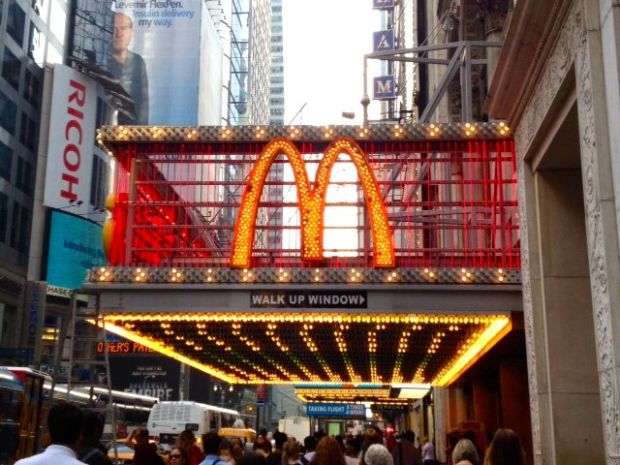
I hit my stride as I walk down 42nd, expertly swimming through the crowds, spying then slipping into open pockets of space. I pass a glorified McDonald’s with a glittering golden arch, breakfast lines spilling onto the sidewalk. Pop music blasts from the “Ripley’s Believe It Or Not!” museum and larger-than-life video screens compete with the morning sun.

pics2

But as I approach the corner of 42nd Street and Seventh Avenue, a single man’s voice soars above the drone of music, cars and construction.

“Haaaave a great Monday! Enjoy that job!”

It’s Geoff, standing there in his usual spot beside the 42nd Street subway entrance. He’s handing out AM New York, a free daily newspaper popular with commuters. Geoff is a hawker, stationed at this high-traffic location and paid to deliver the paper to anyone who walks by.

“Enjoy your work, young lady! Have a great morning on your job!”

Geoff is different from other hawkers, though. He’s never aggressive, never thrusts the paper at your face, and always tells you to have a good day.

Geoff puts his entire body into the greeting, first making eye contact, then smiling and bouncing on his feet before shaking his fist in a way that says go tackle that day.Sometimes, I wonder if he thinks his job is getting New Yorkers to smile.

“Happy hump day! Knock out your work!”

Geoff looks to be in his mid-forties. He wears a red vest and baseball cap and sets his eyeglasses perched precariously on his forehead. He’s never fazed by the swarms of people coming out of the subway or the pounding music from nearby tourist traps. For hours he yells over it all.

subway
Photo by HelveticaFanatic http://www.flickr.com/photos/helveticafanatic/

“Only eighteen hours till Friday! Come on, you know it. That’s all we got.”

The smiles Geoff gives often go unrequited. Once in a while, someone will emerge from the subway and greet him. How ya doin’, my man? How bout them Giants? But many ignore him — absorbed in phone conversations — or take a paper without saying anything at all.

Months after I started passing “the man who hands out the papers,” I finally asked his name. It was one morning in August when the clouds hung thickly overhead but the crowds on the street were thin. People anxiously gripped their umbrellas, prepared for the oncoming downpour. It seemed like the right time to approach him, but I felt nervous for some reason, nervous to go from just another young lady to an acquaintance.

He handed me the paper.

“Thanks,” I said. “Excuse me, what’s your name?”

“Geoff,” he replied, a slight questioning tone in his voice.

“Geoff, thanks for being so…” I didn’t immediately have words to describe what I was thanking him for, but he understood. He smiled and fist-bumped me. After a few moments I turned around and looked back through the bustling crowds, catching Geoff’s eye. He was still smiling and waving at me from 50 yards away.

The scene is so absurd. It’s 9 a.m. in New York City and thousands of people rush, straight faced, to wherever they need to be. And then there’s Geoff, relentlessly happy, sending sparks of enthusiasm to anyone who walks by. For the most part, those greetings fall short of passersby, evaporating quickly on the hot, hostile concrete. But every once in a while, someone turns and smiled.

One day, a little old man, no taller than five foot four, struggled to make his way east down 42nd Street. Surrounded by Times Square lights, this man’s life just seemed dim. Briefcases, heels and tourists in matching T-Shirts rushed by him — yet he and his wobbling cane seemed to exist alone in the crowd.

“Have a great day, young man!” Geoff called out from beneath the subway awning.“Have a great day!” The man didn’t look up. He didn’t react. He just kept pushing forward, step by step by step.

I waited to see if he would turn around. He was likely a veteran New Yorker who had long ago learned to ignore the white noise of hawkers.

New Yorkers like him don’t believe in acknowledging hawkers. Street salesmen are everywhere, calling the same things, blending into the drone of the city. Maybe he feared letting in one hawker meant letting in them all, and he was too old, too weak to fend off these intruders of personal space.

He never turned.

I wondered how many people like Geoff I pass each day, but disregard in my hurry — how many faces and voices get lost among the city’s sights and sounds.

City girl

Source: michaelminn.net
Ninth Avenue. Source: michaelminn.net

I signed my first New York City lease about three weeks ago.

I was walking up Ninth Avenue before work, around 8:45 a.m. It was a slight detour from my usual walk east from Port Authority towards Sixth Avenue, and I loved the change of pace. Instead of passing flashing screens and packs of tourists like most mornings, I passed cafés, bars and bakeries with unique storefronts. Restaurant staff carefully etched the day’s specials into street-side chalkboards. People walked out of nearby apartment buildings, coffee in hand, keys jangling.

Clearly I wasn’t a New Yorker yet, because I broke out smiling.

I probably looked like an idiot, but I couldn’t help it. I was happy, exhilarated. I’ve been coming into the city every day for over a year and a half, and on occasion for my whole life, but today was different. Signing this lease would mean formally crossing over into a new phase.

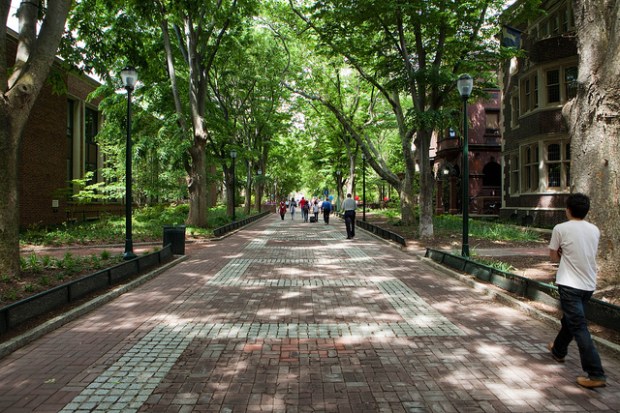
University of Pennsylvania's Locust Walk. Source: Alan Turkus.
University of Pennsylvania’s Locust Walk. Source: Alan Turkus.

The moment reminded me of another time in my life, about eight years ago, when I took a tour at the University of Pennsylvania with my parents. It was the very first college visit I made, the very first time I crossed a campus and thought in a few years I could be part of this. I remember loving the fast-paced campus where professors and students filed in and out of buildings, talking. I loved the intellectualism and sense of opportunity. The university had an energy I’d never experienced before, one that I’d go on to find at a number of other campuses.

After we finished the tour I said to my parents, “Let me go ahead for a minute. I want to feel like I’m in college.”

So I walked briskly and blissfully down Locust Walk, the main campus pathway, acting like I was a student. (I’m sure my wide grin and calculated stride gave my age away.) After a few seconds I turned and looked back at my parents, who were also smiling.

“You look like a real college student,” they said.

“Thanks,” I said, wanting to believe it but knowing I had a few years to go.

I felt the same excitement walking down Ninth Avenue a few weeks ago. But while Locust Walk spans a few hundred yards, New York City avenues go for miles. And this time, there were no parents to look back on. I was totally and completely on my own.

I smiled because I’d soon be part of this city full of lights and people and endless stories. I’d soon be part of this city I’ve loved since I was a kid, finally opening up to me, no longer just out of reach.