I sometimes forget the world runs on small kindnesses
like the one I saw on the train from Seville to Madrid.
An old man across the aisle went to the café car
and returned with a ham sandwich and two beers.
Carefully, he flattened the cardboard container to make a plate,
peeled off the outer layer of paper from the sandwich
and gave the larger half to his wife.
She didn’t react, used to these displays of kindness,
decades of shared meals and daily life
captured in this single action.
They took little bites from the sandwich and put it down
as if chipping away patiently at life
while they sipped their cervezas in silence.
Tag: poetry
The Sun Always Finds Us
It was one of the honors of my life to write a poem for my brother Dan and his wife Giselle’s wedding ceremony back in June. When they first asked me to read at their wedding I was nervous about coming up with something meaningful enough. After about an hour reflecting I knew – for such an adventurous, fun-loving couple, the theme had to be sunlight and the simple, joyful times they share together. Read my poem below.

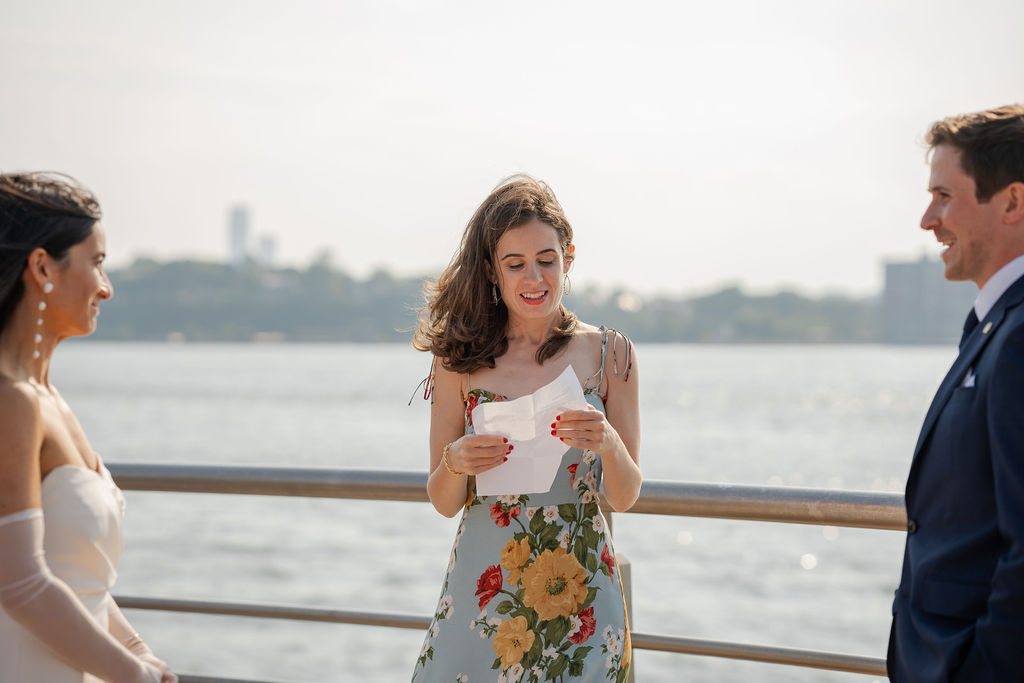


The Sun Always Finds Us
Hand-in-hand on the shores of the Atlantic
Or hiking the Hudson riverside
Standing before the Santa Monica mountains
Our windows down on a Catskills drive
Wherever we are in the world
The light seems to find us
On rugged Irish shores
And quaint Paris streets
Through the trees of Central Park
Landing on our faces and feet.
Wherever you are in the world
The light seems to find you, my dear
But the rays are strongest right here, right now
When I stand on this river beside you
And love you more than ever, somehow.
Know that I’ll never stop looking over with pride
In those soft, sunny mornings when all is calm
And you’re by my side.
A Smile
Every day I saw you
Straight-faced
Tight-lipped
I’d smile, say hello
Nothing
So I decided
Why should I bother?
I didn’t notice
When you were gone
Then they told me
You were sick for months
Finally succumbing
To a disease
That caused so much pain
And I thought to myself
You never really know
What someone’s going through
I thought to myself
What could it have hurt
To smile once a day
Knowing I wouldn’t get
A smile in return.
After Stella
Seen along the East River pathway near Carl Schurz Park, after Winter Storm Stella.
walking the winding
east river path
just after snowfall
a few people
scattered here and there
weak, distant lights
straining to be seen
right where the path turns
i see a ballerina
dancing alone,
seizing solitude,
her arms fighting
the pull of the wind
though she has no audience
empty benches
line up to watch her
and the river reflects
her every move
as i approach her stage
she catches my eye
stopping, for a moment
then completing her pirouette
twirl, bend, twirl, bend, twirl
moving gracefully into the night
no music
just the silence of the city
and the crunch of the snow
beneath her feet
Pozie poems: moving poetry, inspiring messages

“moving poetry made with loving hands and minds in NYC“
Hard economic times typically spur dismal messages by struggling artists, but the artists behind Pozie poems want to set optimism in motion.
The idea for these brightly-colored mobile poems was born out of the 2008 financial crisis, founders Rion and Kay Merryweather said.
“The mood was very somber in NYC and we knew we had to do something to help,” said the husband and wife team.
Words like “bold,” “confident,” “enjoy” and “love” are painted on colorful wooden boards and linked together to create inspiring messages that change slightly as the mobiles move. At about $30, these Pozie poems make beautiful, simple and creative gifts or conversation pieces. And the top part is a chalkboard for you to write whatever word (words) you want!
You can purchase and view Pozie poems here on Etsy.

Tribute to Yaya
In honor of my grandmother Yaya’s birthday — April 2, 1936 — I’m posting a poem I wrote about her that I read in this year’s Notre Dame Literary Festival.
Today, Yaya would have been 76.
My grandmother, Dorothy Coyne, was one of the best people I’ve ever known. She wasn’t a stereotypical grandmother– we weren’t greeted in her house by the smell of baking cookies (she rarely baked) and her voice wasn’t hushed and gentle. She loved dancing and the bustle of cities. She hated the beach and staying on the phone any longer than was necessary. She was spunky, stylish and confident, and when she had an opinion she made sure it was heard. I admired those things about her.
I can look back to countless nights sitting around my grandparents’ kitchen table with my siblings or spread out across her plush brown carpet, listening to Yaya tell story after crazy story. Like the time in 9th grade the nuns caught her smoking in the bathroom, and she and her friends filled their mouths with powdered soap to mask the smell but ended up with foaming, bubbling mouths as they explained themselves before the principal. Somehow, her stories always reached a level of pure absurdity; she’d have our entire family keeling over with laughter.
Those stories brought us together. Those stories were the best.
But above everything else, Yaya was a beautiful and loving woman, deeply committed to her family. Four years later, sitting around the kitchen table or spread out across that carpet, trying to imitate the high-pitched inflection of her voice, her stories still leave us hysterical with laughter.
We love and miss you, Yaya.
Yaya
There are times I wonder:
had you dyed your hair
that mahogany-red
one last time,
would you still be
alive today?
Because once you let
that hair go dead and gray,
everything else followed.
spunky-bright cheeks
turned pale in submission,
spine collapsed beneath
the winter sky,
and withered fingers hung
from your hands like
dead leaves.
Yaya, if I could trace the
tracks of your spider-veins
back to the start of this nonsense—
I would.
Then, you could tell me
about the time
you poured shampoo
on Billy’s pancakes,
or when the
hair-dye
turned your hair
“freaking eggplant”
Ted Kooser
Ted Kooser is a brilliant poet.

I stumbled upon his collection, “Delights & Shadows,” a few years ago and it has influenced my writing ever since.
Kooser, an Iowa native who was the United States Poet Laureate from 2004 to 2006, writes poems that show glimpses of daily life. He has a way of making the mundane fascinating, of making everyday events awe-inspiring.
Kooser maximizes meaning in minimal words. He proves that economy of language is extremely effective. Kooser’s clear, simple, beautiful language is something to be emulated in all writing forms– creative, academic or journalistic.
Listen to an interview Kooser did in 2005 with NPR.
Here’s on of my favorite poems:
A Rainy Morning
by Ted Kooser
A young woman in a wheelchair,
wearing a black nylon poncho spattered with rain
is pushing herself through the morning.
You have seen how pianists
sometimes bend forward to strike the keys,
then lift their hands, draw back to rest,
then lean again to strike just as the chord fades.
Such is the way this woman
strikes at the wheels, then lifts her long white fingers,
letting them float, then bends again to strike
just as the chair slows, as if into a silence.
So expertly she plays the chords
of this difficult music she has mastered,
her wet face beautiful in its concentration,
while the wind turns the pages of rain.
Writer’s Block
Like I said, lately I’ve been thinking a lot about my next longer piece of fiction. This is always the hardest part, coming up with an idea. “It’s not about what you write– it’s how you write it” might be a writer’s anthem, but still, there’s definitely merit in writing that presents a fresh, new idea.
How do you make an old story fresh, or a new story relatable? How do you avoid writing what hundreds of people have already written?
One thing I know for sure is that I want to write in the vignette style. Some of my favorite works of fiction are written this way– Jhumpa Lahiri’s Interpreter of Maladies and Sandra Cisneros’s The House on Mango Street. I love how vignettes allow for multiple perspectives on a common theme, and let the writer flip through time effortlessly. There’s also something poetic about a series of vignettes, because each one is pretty brief. Sometimes a never-ending chunk of text, no matter how amazing the writing, is exhausting. Vignettes let the reader and writer breathe.
I’m a fan.
But what to write about?
Right now I’m at that stage when ideas are still forming; for a moment they’re immensely exciting and I can’t wait to put pen to paper. Then the feeling fades. What was I thinking? I can’t write about that. Whoosh. Off to the trash.
When I was younger, I always saw fiction as a total escape from my suburban life, a chance to travel outside the bubble. I wrote about things I had no experience with: flappers from the 1920s, a drug-abusing mother, children with mental disabilities, a quirky New York City coffee shop. I want my new work to fall closer to home. I’ve found that good fiction writing always involves opening up somewhat. Fiction doesn’t have to be based on your life, but on some level it has to be based on your experiences.
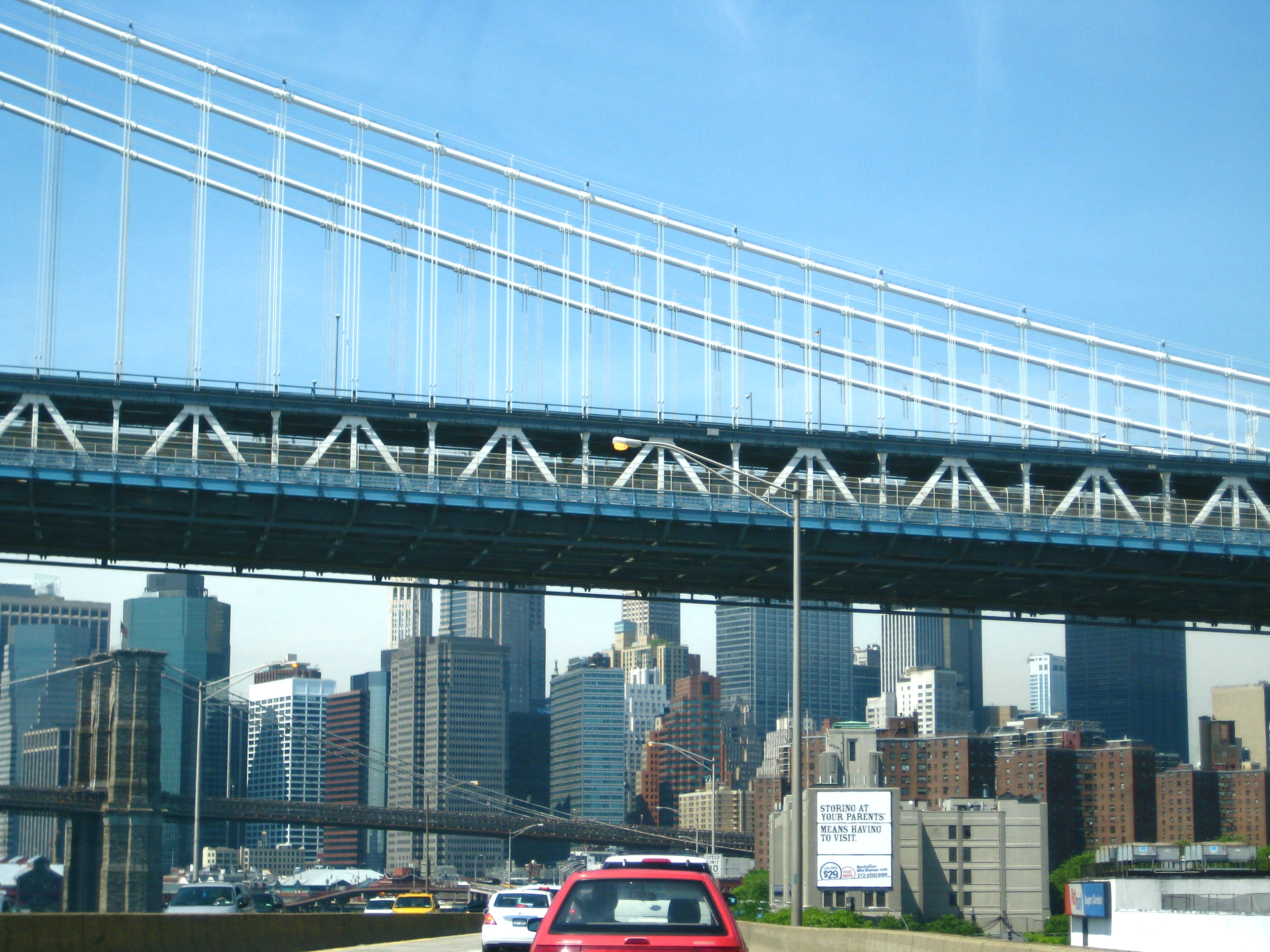
Much of my family history lies in Brooklyn, N.Y. My grandfather (mother’s father) grew up in an Irish tenement in Brooklyn in the 1930s and 40s. My father grew up in Brooklyn Heights in a Jewish neighborhood in the 50s and 60s. People usually think of Brooklyn through its context with Manhattan, but for those who grow up there, Brooklyn is its own entity, harboring a history and character independent of “The City.”
When I think of Brooklyn I think of rising housing prices, veganism, the Brooklyn Bridge, trendy bars, artists’ studios, and hipsters. The Brooklyn I see is totally different from my father and grandfather’s Brooklyns. My story would be set only partly in Brooklyn, and would not be focused on history, but it would be interesting to somehow show the area’s development through the lense of a modern-day 20-something-year-old.
Sparknotes of a book that’s not written:
Vignettes/Flashbacks. Brooklyn. Manhattan. Midwest. Social Networking. Newspapers. 9/11.
I’ll elaborate on the other themes in a later post. Vague, I know, but let’s see where this takes me…
 SKETCHING A STORY