ND students’ thoughts on Facebook Timeline

“Tell your life story with a new kind of profile.”

This is Facebook’s advertising slogan for the new Facebook Timeline, a different profile format that offers users the opportunity to sort and highlight life events chronologically.

Students at Notre Dame — many of whom have been Facebook users since the site’s inception in 2004 — have mixed feelings about the new profile.

Sophomore Marisa Iati recently switched over to Timeline. She said that while she likes the appearance of her profile, the new format also “feels invasive.”

“It bothers me that anyone can see things I posted in 2008 just by clicking one or two buttons,” Iati said. “I don’t like how easy it is to dig into someone’s past…It has actually made me consider deleting my Facebook page altogether.”

Sophomore Adam Lllorens agreed Facebook Timeline forces users to be more transparent about their pasts. Embarrassing or regrettable moments are no longer covered up by layers upon layers of wall posts — they are now accessible with the click of a button.

“I don’t like that it is in fact better organized,” Llorens said. “The organization is a blessing and a curse. Some Facebook friends of mine whom I may have not talked to in months can look at everything I have ever done.”

But Iati said Timeline has definite upsides, especially in its visual appearance.

“I really liked the large cover photo at the top, and I thought Timeline’s layout was more attractive than the old layout,” Iati said. “It’s more eye-catching and clean-looking.”

Senior Elissa Cmunt said she also likes the banner photograph at the top of the page.

“I think it’s neat and gives you yet another way to show a part of yourself.”

Senior Grace Concelman, who still has the old profile, said Timeline is much too public. She said she is toning down her Facebook usage.

“I got annoyed with all of the changes, especially the changes to privacy settings and email notifications that adjust with each new version but require me to manually change them back to the level of privacy and notification that I had before the new versions came out,” Concelman said. “I also decided that I just don’t need to spend my time looking at pictures and statuses that I’m perfectly happy not to see.”

Cmunt said she thinks Timeline is just one of Facebook’s many changes, and that most students have overreacted to it.

“I don’t have the Timeline yet and I don’t plan on getting it…It will be eclipsed by some other change in a few months,” Cmunt said. “I don’t think it is all that different than the current Facebook home page, which is basically organized by date anyway.”

While Timeline makes it easier for others to look into her past, Iati said, it has also caused her to be more aware of the digital footprint she leaves on Facebook.

“It has made me more conscious of what I post because I know that people will be able to easily see it years from now,” she said.

What I Don’t Know

Published in The Observer

Last week, a friend told me light roast coffee has more caffeine than dark roast.

“Um, that can’t be true,” I said as I frantically turned to Google to verify my preconceived understanding of the beverage. It’s a Wikipedia-confirmed fact, however, that caffeine content is actually burned off during the roasting process. In most cases, the darkest roasts are the least stimulating.

I tried to justify why I’d assumed the opposite, but came to no conclusions. Everything I thought I “knew” about coffee was shaken. I was a victim of the placebo effect.

This incident got me thinking about all the things I “know” and “don’t know.” About the many things I have always assumed to be “true,” without ever consciously arriving at their truth.

In a college environment like Notre Dame, we’re constantly revising, molding and adding to our perspectives on truth. The process is both exciting and uncomfortable. It reminds us of how little we know.

In an introductory history class my sophomore year, I assumed the entire semester a girl I had befriended was a freshman, simply because almost everyone was. On the second to last class day, she arrived wearing an engagement ring and brought up her plans to get married after graduation.

She was a senior? And getting married? I couldn’t believe it.

My views on her were turned entirely upside down. I realized she had knowledge I didn’t have — about relationships, Notre Dame and life in general. I didn’t know how to relate to her because I was no longer the older one.

I felt ridiculous for making that assumption, because while other characteristics might have led me to realize her age, the fact that she was in a freshman class overruled them all. First impressions do matter — I had closed my mind off to revisions after that first class day.

As a senior English major, I’ve realized the liberal arts education is as much about changing one’s way of thinking as it as about studying texts. The liberal arts education forces students to be cautious about making assumptions.

Every point must be supported, every thought defended. Reasoning and critical thinking are essential. These skills are applicable not only in the job world but in everyday life, and I’d argue that’s what makes a liberal arts education so strong.

Over my four years, I’ve gained a wide range of knowledge, some of which I’ve retained and some which is stored in some locked part of my memory.

But my English major education has also encouraged me to be comfortable with the unknown.

It’s a terrifying thought that in a few months, I’ll be leaving a place of comfort, a place that was home for four years. But it’s also it’s thrilling. There are so many things I don’t know.

Facebook breaks wall between digital, real life

Published in The Observer

Take a photo. Photoshop. Upload to Facebook.

The steps sound simple, but Notre Dame professors said more thought goes into the process than most people realize.

Jessica Collett, assistant professor of sociology, said we are much more “intentional” in our online interactions with others.

“It’s not that we want to put up an image of ourselves that is untrue or inaccurate,” Collett said. “[But people] are going to look for clues about who you are. Because we only have that split second, that first impression … we’re going to choose pieces of information to put up there that we think reflect who we really are.”

As a result, the effects of Facebook can extend far beyond online profiles and into people’s lives and relationships.

She said others will often treat us according to the image of ourselves we present on Facebook. In turn, we act according to how we are treated.

“If we have a preconceived notion about somebody, then we’ll interpret any kind of information in ways that support that [notion],” she said.

Collett said Facebook also prompts us to define and categorize ourselves based on our interests.

“Facebook is really about us putting forth our identities,” she said. “That when we say that we like a particular [TV] show, we’re not just trying to say that ‘This is what I watch,’ we’re saying something about … the kind of person we are.”

Susan Blum, a professor of anthropology who has studied the effects of new media on the “self” for the past decade, said Facebook can function to prove or validate occurrences in our lives.

“People are very aware of the way they’re being seen,” she said. “I’ve heard people say, ‘Oh, wait until I post this on Facebook.’ So as they’re acting, they’re simultaneously conscious of the fact that their real-life action will become almost ‘realer’ when it’s posted.”

Dangers to identity

Blum said one of the potential downsides to using Facebook, or any similar social media site, is that it causes people to perform an exaggerated identity that may or may not be real.

“I think there’s plenty of motivation to do that in our lives anyway, and so Facebook increases that tendency,” she said.

Collett said these exaggerations of identity can trigger anxiety as relationships transition from the digital world to the real world.

“Sometimes you can believe that what you’re presenting isn’t accurate … maybe you choose your most flattering picture, and then you meet people who maybe you haven’t even met in person yet, and then there’s just this stress [of] living up to expectations,” she said.

Facebook use also becomes risky, Collett said, when digital identities are too calculated.

“I think it can be dangerous … if people get too caught up in the way that they’re presenting themselves, and don’t have a space where they feel like they can be their authentic selves,” she said.

Blum said she questions whether online interaction makes face-to-face interaction even more “scary” than it already is.

“Facebook, you can control because you do it at your own pace. You can almost post something, and change your mind,” she said. “In speaking, there’s all this sort of uncontrollable stuff that happens, which is why human speech is so powerful.”

But Blum said interactions on social networking sites can actually augment real life interactions.

“There’s been what sociologists call ‘moral panic’ about social media, [concern about] the fact that people are more comfortable interacting digitally than they are face to face,” she said. “But there was a recent study from the Pew [Research] Center [that shows] the more active people are in social media, the more real life interactions they have as well.”

Public sphere

Anita Kelly, a professor of psychology who has researched the effects of public versus private self-representation, said what we choose to say publicly has a much greater impact on our identity than what we say privately.

She said the public nature of Facebook is what makes it so influential.

“To the extent that Facebook is more public, it has great potential to help or harm that identity,” she said. “Once you think others have this view of yourself, you feel you have to behave in a way that [confirms] those views.”

Collett said that on Facebook, we must live up to a multitude of identities because different “types” of friends see us in different ways.

“You have this clash of worlds … and it can incite drama,” Collett said. “So, it’s not just your Notre Dame friends, but it’s your high school friends … and it’s your friends from back home and it’s your grandmother and your aunt.”

The question is, who will see that wall post or status update?

Blum said college students usually think of their intended audience as their peers despite having a wide range of Facebook friends.

“You’re creating a persona, as we do all the time in our real life, but you have time to create it and you’re aware of all the eyes that will be seeing it,” Blum said. “Although if you have 1,000 friends, that’s a lot of eyes.”

Kelly said people should be more aware of just how much Facebook profiles impact the way others view us.

“People should be more careful,” Kelly said. “There’s a mentality of ‘it doesn’t matter what people think,’ but no one [really] believes that,” she said.

She said negative images posted on Facebook can be forgotten, but not if they are vivid.

“People remember things that are prototypes of a broader category, [for example] dancing on a tabletop without clothes, that fits the prototype of wildness,” she said. “It’s hard to undo that.”

Past, present and future 

Blum said the extent of the cyber footprint we leave on Facebook is striking.

“There’s a sort of a digital self that’s out there, and even though Facebook only started seven or eight years ago, it’s going to predate itself [for example] by finding our baby pictures that people have posted, so pretty soon our whole life and biography will be digitally mapped,” she said.

She said psychologists and sociologists have conducted extensive research on the way Facebook affects identity, but the enormous amount of data Facebook houses is used in other settings as well.

“It’s an interesting idea that there is all this data out there … which is somewhat terrifying,” Blum said. “And Facebook, like Google, can analyze it and organize it with no volition on our part, no intention on our part.”

Collett said the new Facebook Timeline profile, which offers users the opportunity to sort and highlight life events chronologically, also makes it easier for users to look back on the past.

And sometimes, looking back on the past lies outside our comfort zones.

“We like to be selective about what it is that we remember, in the same way that we like to be selective about what it is we put forth [on Facebook],” Collett said. “I do think the Timeline is about people suddenly feeling, ‘Oh my goodness, am I defined by this page?'”

But regardless of how Facebook is formatted, Collett said the site still reflects our identity in much the same way.

“[People] are reacting against the fact that [Timeline] feels like it’s defining your life for you, but ultimately actually that’s what we’ve been doing for a long time,” she said. “I would argue that for a long time Facebook has been representing who we are, as far as our identities go.”
Farewell, Toledo.

On May 25 I arrived in Toledo,  Ohio, a city where I knew no one and didn’t remotely know my way around.  On August 12 I left, knowing the city more intimately than I could have imagined, but not coming close to feeling like it was “home.”

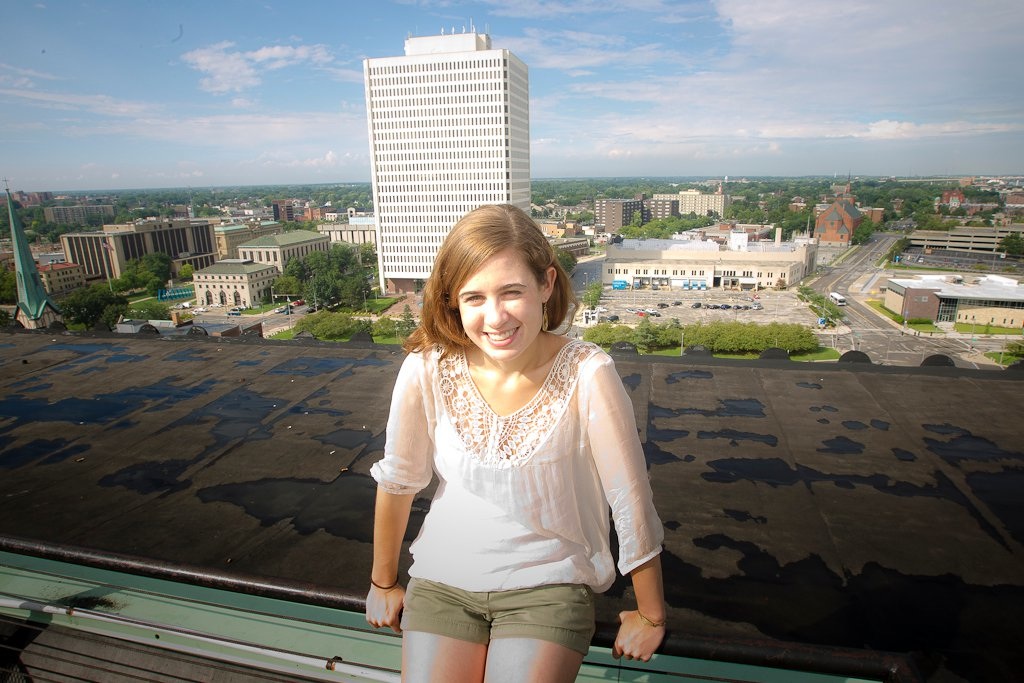
From the rooftop of my apartment building in Toledo. Photo courtesy of Enoch Wu.

When I first arrived in Toledo I had a difficult time getting a sense for the city. I saw oversized banks, tall buildings, and wide streets. I saw litter rolling through the roads and candy wrappers melting into the tar. I saw crooked “For Sale” signs hanging in dusty windows.

I did not see people.

I soon realized that downtown Toledo is a divided area. People who arrive in suits at 9 a.m. are privileged. People hanging out at the bus stops, on benches or in front of the library are not. The downtown empties out after 6 p.m. — the suits file into their cars, turn down the road and go off to their respective suburbs. In an hour, the banks are just looming, vacant towers, too big and strong for the city. The parking lots are open spaces filled with broken glass — like no one was ever there.

Parking lot between The Blade and my apartment building.

Since my apartment was downtown, I straddled the boundary between those who work in Toledo and those who actually live there. Sometimes after working a late shift I’d walk the two blocks home, past people with ripped backpacks sitting indefinitely on bus stop benches. I walked briskly but couldn’t escape the stares — my pencil skirt and heels gave me away from the moment I stepped onto the sidewalk. It was pretty clear what “side” I was on.

Here are some things I didn’t expect from Toledo:

Safety issuesBefore coming to Toledo I knew it wasn’t the safest of places. My mom had done her fair share of research and her fair share of worrying. But I knew I wasn’t as naive as she thought — as long as I was careful everything would be fine.

While everything was fine, and I lived in the nicer area of downtown, I didn’t expect to have to be on guard every time I was walking alone after dusk or early in the morning. I’ve lived in places with crime before, but I usually felt safe as long as there were people around. The lack of people in Toledo was pretty unsettling.

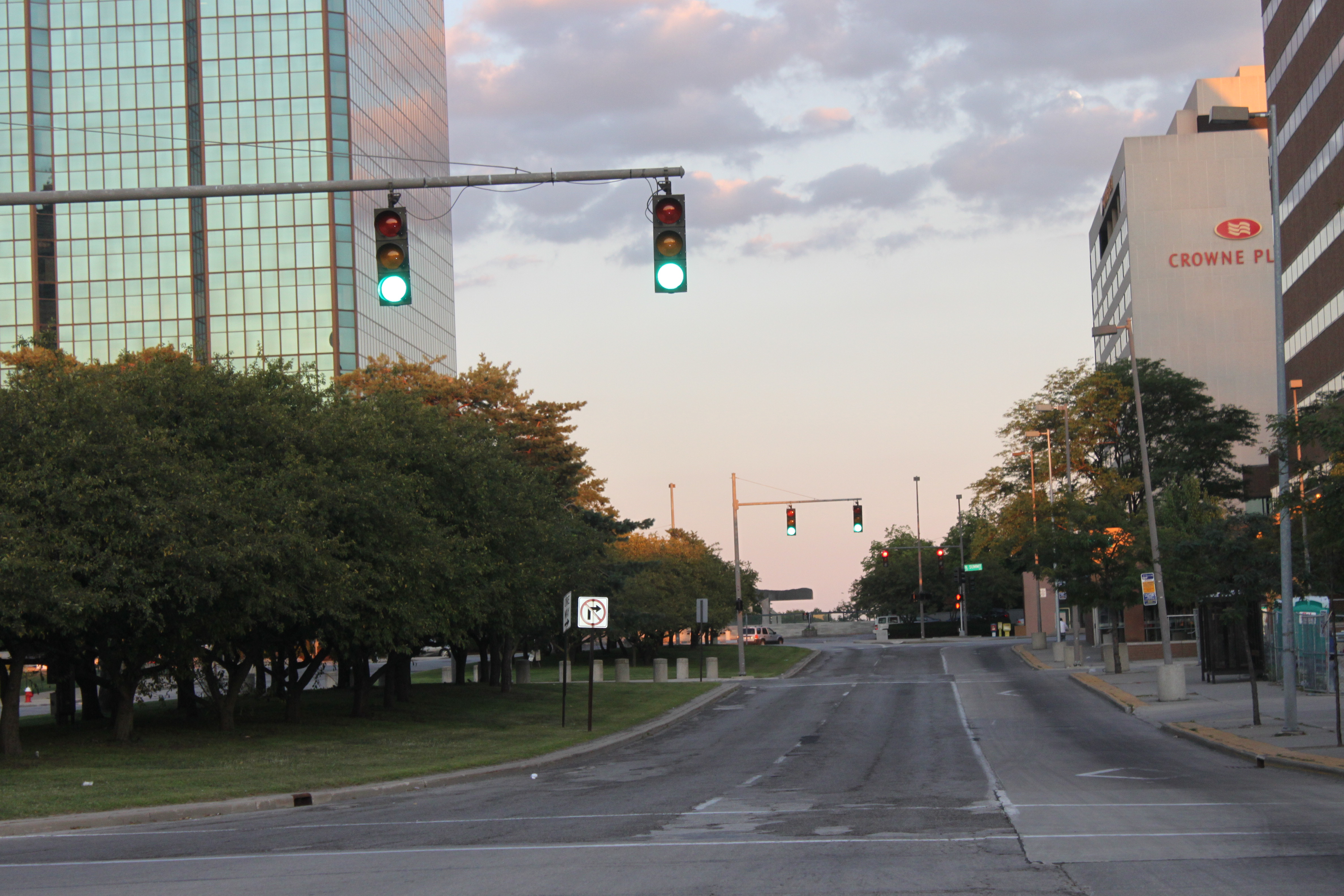
A major street in downtown Toledo at 8 p.m. No cars in sight.

For some time my roommate would go on runs outside our apartment — in broad daylight during the work day — until a complete stranger approached her in the apartment elevator and told her to stop. It was too dangerous. We were pretty shocked the woman had gone out of her way to say that. After that we rarely walked anywhere within a few blocks of our apartment, and definitely did not walk around at night.

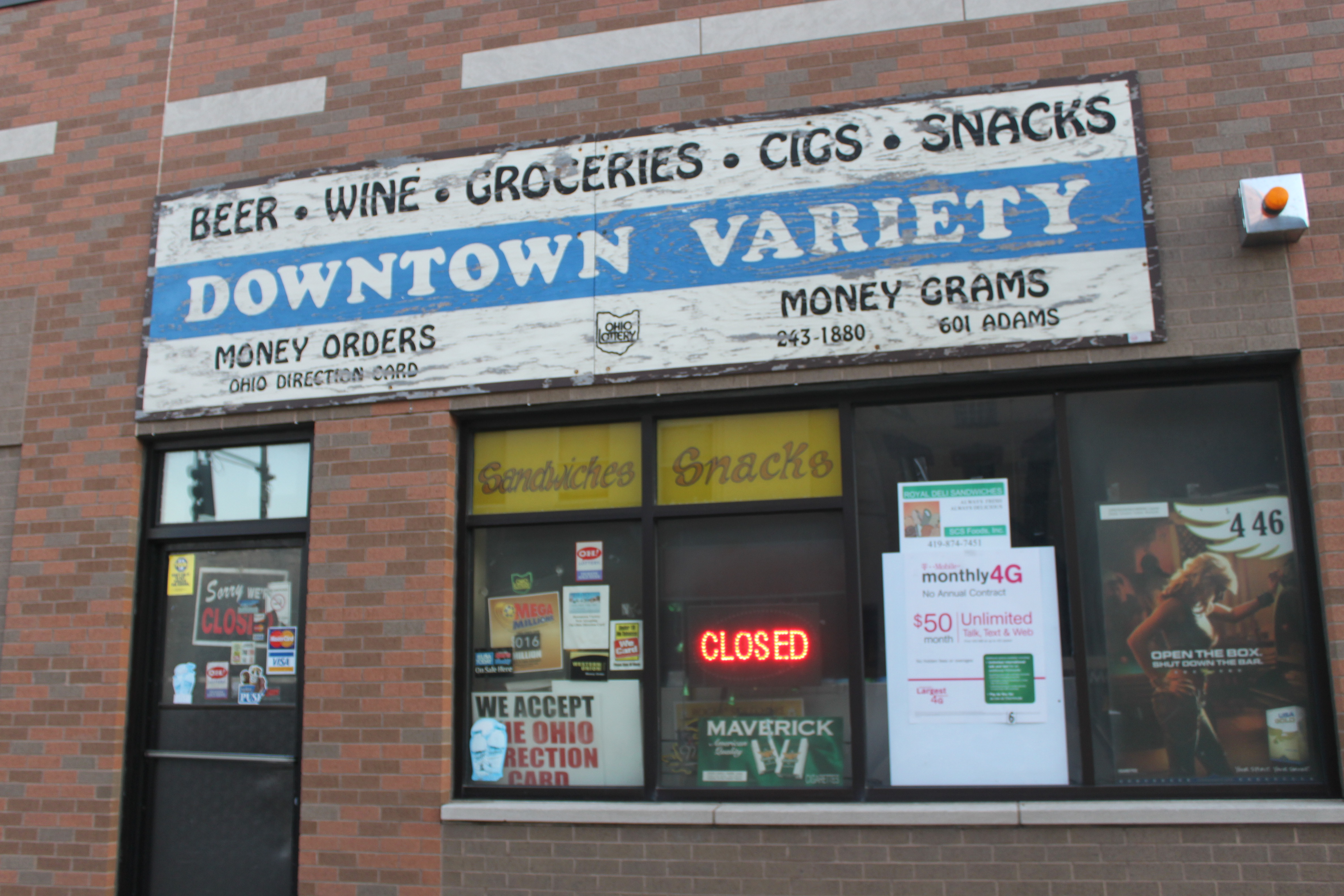
No grocery stores. I lived in the downtown, the center of the city, and there was not a single grocery store within walking distance. The closest things were little shops that sell candy, soda, bread, and canned goods.  These mini marts don’t have meat, produce, eggs, or milk, are only open during weekdays, and have kind of irregular hours.

“Real” grocery stores (Walmart, Meijer, Kroger, and Target) are all a fifteen minute drive away.

The mini mart across the street from my apartment.

While living in Toledo I saw firsthand the irony of  “food deserts,” or areas lacking healthy, affordable food. Northwest Ohio is one of the agricultural centers of the country, yet some Toledoans living just miles from the farms had no access to fresh food, surviving off high calorie, processed foods and 95 cent Burger King burgers. At 29.6%, Ohio has the 13th highest obesity rate in the country, according to an annual report put out by Trust for America’s Health and the Robert Wood Johnson Foundation. Food deserts like Toledo’s certainly don’t help that situation.

Boredom. My definition of “bored” is not being busy. I don’t think I understood what true boredom was until I had to drive through poorer parts of Toledo, where I saw that boredom wasn’t a state of mind but a state of being. People live for each day because there isn’t a future . The swimming pools in Toledo were closed a few years ago to prevent gang violence, but now young people have nowhere to go in the thick of the summer. Instead they drink outside mini marts and walk leisurely right in front of cars. They sit on their front porches in silence, shirtless and shoeless, watching the sky change from blue to gray to black.

Taken while on assignment at an arson fire in Toledo. Arson flared up in East Toledo this summer but also has spread to other neighborhoods.

In the newsroom, the scanner day after day called out shootings, robberies, and arson fires. The cops reporter was constantly running in and out of the office. There were 27 shootings during the month of June alone.

It’s been a hot summer. There are no jobs. Sweat and boredom are a deadly mix.

So much news. Toledo may feel like a small city but there was always something going on. Working for the City Desk I covered a range of stories, including robberies and shootings, a poetry festival, car show, gay pride march, controversial city investments and school board meetings. My job took me through bad areas, nice areas, to beautiful islands, the shores of Lake Erie, and sleepy towns I’d never heard of. I drove through miles and miles of  flat land and cornfields. I got lost, but my GPS always took me back.

I may have been out of my comfort zone, but that only made me a better reporter. I was homesick but would never trade the experience.

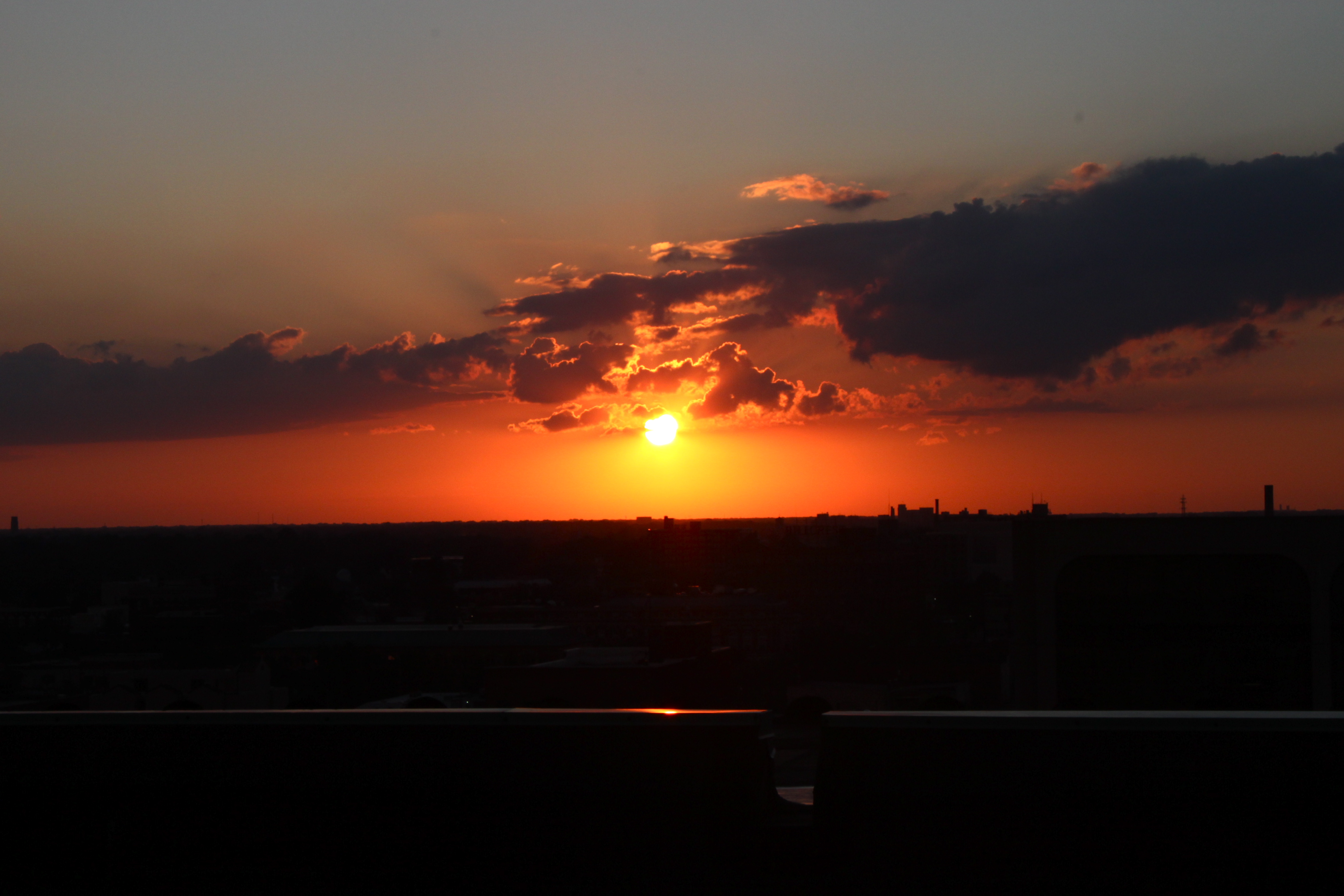
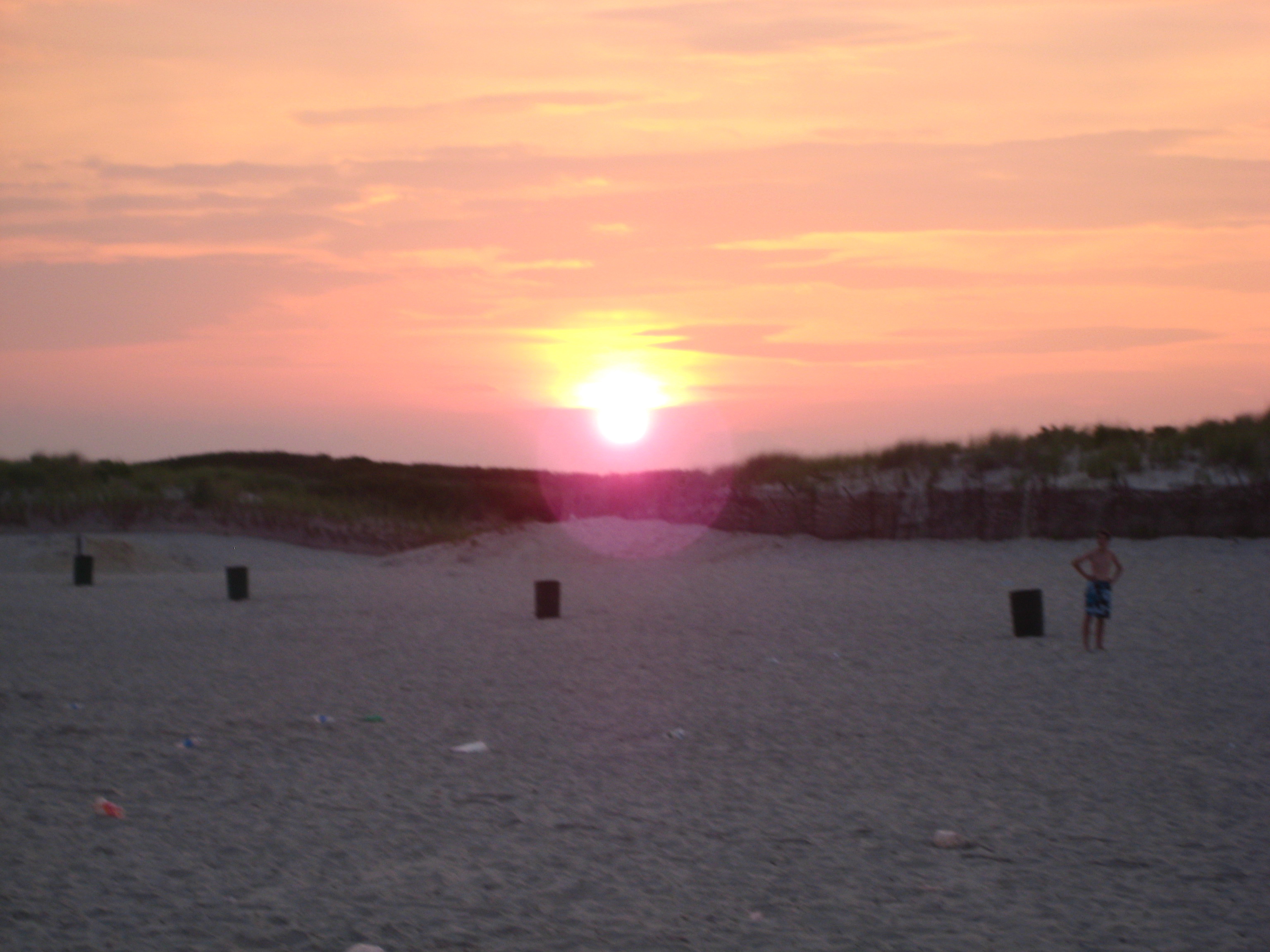
Sunset from the rooftop of my apartment building.

On May 25 I arrived. On August 12 I left. Lots of articles, interviews, coffee, crime, heat, hamburger joints, farmland, and a pretty cool newspaper experience in between.

Thanks to all the wonderful people I met along the way — you’ve given me a lot to write about.

You can check out my Toledo Blade story archive here.

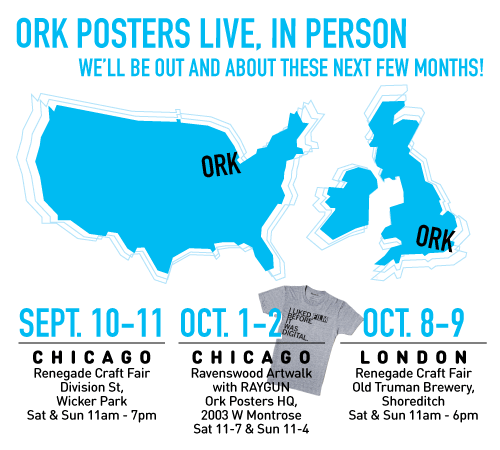
ORK Goes Global!

I wrote about Ork Posters in a previous post and was excited to see they’ll be making a trip across the pond in October to attend the first Renegade Craft Fair in London! It’s fun following the progress of this small company that stays away from selling out to larger companies and sustains itself on just a few excellent designs.


The craft fair will take place at the Old Truman Brewery, a place in East London I visited a few times during my semester there. The indoor showcase will feature the best indie-craft and DIY artisans from around the world. Shoppers can anticipate an array of independently designed jewelry, clothing, paper goods, home and garden goods, posters, artwork, plush objects, and bath and body products.

Oh, how I miss London…

The Old Truman Brewery, taken on a visit to Brick Lane

The Renegade Craft Fair differs from traditional arts and craft fairs by focusing on DIY and indie-craft culture. Each individual fair is juried from hundreds of applications to feature a range of emergent designers producing original and handmade goods in a wide variety of media. Fairs take place each year in Austin, Brooklyn, San Francisco, Los Angeles and Chicago.

You can check out their blog here.

When it rains it hails … in August??

Video taken where my Grandpa lives in New Hyde Park, Long Island. He’s lived there for almost fifty years, and in the NYC area his entire life, and has never seen anything like this before…

Hail the size of golf balls hit parts of Long Island and Queens Monday, denting cars, shattering windshields, and pummeling the roofs of homes. The Long Island Railroad experienced severe delays due to a lightning strike, but no one was injured.

Residents were largely at a loss for words to describe the storm. “Shocking,” “wild,” and “incredible,” seemed most adequate.

Not a beach day, to say the least.

Why Jersey’s Fabulous

Because this is my blog, and because I’m from Jersey, and because the debate never ends, here’s further proof as to why my state’s fabulous.

If you need more convincing than this video (seriously, watch it!) I’ve come up with ten common misconceptions about New Jersey. Read on, skeptics.

1. Jersey is one big slab of turnpike.

NOT TRUE! Jersey is actually 15% farmland, and its nickname, the ‘Garden State,’ isn’t just a joke. The Pine Barrens, a densely forested area in southern Jersey, makes up 22% of the state. The turnpike is one of the most heavily traveled highways in the U.S., and the sites alongside it aren’t NJ’s best. But most people who have this conception of NJ have never driven OFF the highway. I could say the same thing about any other state, if all I did was pass through.

2. What exit are you from?

Yeah, I’ve maybe heard that one twice in my life, and it was because someone was asking me for directions.

3. The Jersey Shore is actually like the “Jersey Shore”

Wrong, again. The Jersey shore encompasses 127 miles of beautiful coastal land along the Atlantic. Most of it is filled with summer homes, restaurants, and hotels– it’s a huge family vacation destination. Seaside Heights, where “Jersey Shore” is filmed, is a 0.8 square mile borough, hardly representative of the shore as a whole. And maybe you’ve heard that only two of them are actually from Jersey.

The "real" Jersey Shore.

4. No one of cultural relevance comes from New Jersey.

Frank Sinatra, Thomas Edison, Yogi Berra, Bruce Springsteen, Brian Williams, Meryl Streep, Jon Bon Jovi—you guessed correctly. They are all Jersey born and raised.

5. “Joisey.”

No. Just, no.

6.  Jersey’s main industry is oil refineries. 

If you’re an avid Sopranos watcher, I can understand why you’d think this. But New Jersey is actually an economic powerhouse– the second richest state in the nation and a leader in telecom, pharmaceuticals and agriculture. The economy also heavily depends on, gasp, tourism!

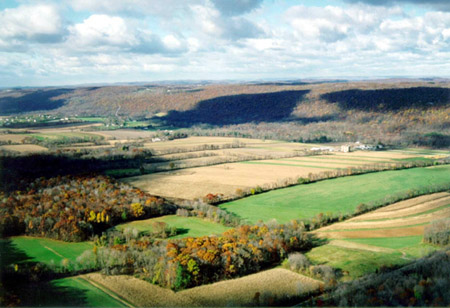
Look at all that farmland! Washington Township, Morris County

7. New Jersey drivers are the worst.

Substitute “New York” in the above statement and it becomes true.

8. The only people who like living in NJ grew up there.  

False. New Jersey has the highest population density of any state in the nation, and for a reason. The state is also one of the most diverse. People come here from all over the world for our schools and vibrant metropolitan area. If you live in New Jersey, at least four major cities are easily accessible: New York, Philadelphia, Boston and Washington, D.C.

9. You don’t have to pump your own gas. 

100% true! Love it.

10. Other things you might find interesting…

The first baseball game ever was played in Hoboken, New Jersey, and the first college football game was played in New Brunswick between Rutgers and Princeton. Over 100 Revolutionary War battles took place in the state. New Jersey has more shopping malls and diners than any other place in the world. It is also the birthplace of the drive-in movie, the boardwalk, the postcard, the zipper, the light bulb, and FM radio.

Jersey may not be perfect, but it’s got a lot to offer. So before you judge, actually go there.

I’ll meet you at exit 163.

Dear Photograph

My friend Laura introduced me to the blog Dear Photograph, which showcases pictures taken of pictures from the past in the present.

Photo Courtesy: Dear Photograph

Some are funny: There’s a reason we had to paint those stairs blue.

Some are cute: The bike I have now goes a little faster.

Some are just touching: Thank you for everything we ever had.

But all the photographs make you think about the relationship between time and place, how quickly people grow and change while places can stay exactly the same.

In a CBS interview founder Taylor Jones said:

“What I’ve learned from blogging is people relate with emotion so if you’re making a blog it has to be good content, content that is going to be able to spread.”

He said he’s gotten “tons of emails” from people who say the blog  has given them a reason to see their parents and look through old photographs together.

To submit, upload your photos to  http://dearphotograph.com/submit  or email them to DEARPHOTOGRAPH@GMAIL.COM

© All Rights Reserved by Dearphotograph.com and the original owners.

Classics & Cocktails

In honor of my 21st  birthday I’m dedicating this post to two vastly different but wonderfully related things: classic literature and classic cocktails.

It’s no secret that 20th century writers of the World War II era were about as dedicated to their drinking as they were to their novels.  Cigarettes and alcohol fueled expatriates like Hemingway and Stein as they scribbled down the beginnings of what would later become American classics.

According to David A. Embury in his 1948 book, The Fine Art of Mixing Drinks, (a classic in its own right) there are six basic cocktails: Martini, Manhattan, Old-Fashioned, Daiquiri, Side Car, and Jack Rose.

I had the pleasure of trying a few of them last night…

The Hemingway Daiquiri

The famous author is known for his minimalist style, short sentences, and of course his Daiquiri drinking. Hemingway might have sipped this drink from his apartment while looking over the Paris streets. Here’s how you make it:

1 1/2 oz light rum

1/4 oz maraschino liqueur

3/4 oz lime juice

1/4 oz grapefruit juice

Shake with ice and strain into a chilled cocktail glass.


Jake’s Jack

Another Hemingway-related favorite is the Jack Rose cocktail, famous from its appearance in The Sun Also Rises.  Jake, the narrator, drinks a Jack Rose in a Paris hotel bar while awaiting the arrival of Lady Brett Ashley.

1 1/2 oz apple brandy

1 tsp grenadine syrup

juice of 1/2 limes

Shake all ingredients with ice, strain into a cocktail glass, and serve.

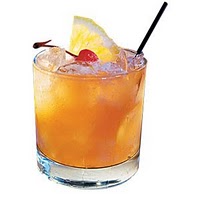
 Sherwood Anderson’s Old Fashioned

Faulkner and Hemingway looked up to Anderson as a literary role model; they also took up his fondness for cocktails. Anderson called the Old Fashioned his “personal poison,” which turned out to be tragically true. He died after swallowing a toothpick at a cocktail party, eventually causing a fatal infection in his stomach.

2 oz blended whiskey

1 sugar cube

1 dash bitters

1 slice lemon

1 cherry

1 slice orange

Combine the sugar cube, bitters, and 1 tsp. water in an old-fashioned glass. Muddle well, add blended whiskey, and stir. Add a twist of lemon peel and ice cubes. Add slices of orange and lemon and top with the cherry. Serve with a swizzle stick.

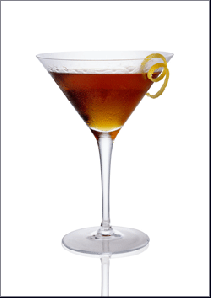
Gatsby’s Manhattan

“I believe that on the first night I went to Gatsby’s house I was one of the few guests who had actually been invited. People were not invited– they went there.” 

F. Scott Fitzgerald had a talent for displaying the lives of the fabulously rich, and the hidden moral decay behind them. In The Great Gatsby, parties held every weekend on Long Island offer a glimpse into that fantastic, unattainable lifestyle. The blurring nature of drunkenness fits right in to Fitzgerald’s themes of disillusionment and an out-of-reach American Dream.


1 1/2 ounces 100-proof rye whiskey

1 3/4 ounces sweet vermouth

1/2 ounce Grand Marnier

3 dashes Angostura bitters

1 lemon twist, for garnish

Pour the whiskey, vermouth, liqueur, and bitters into a mixing glass. Add large cold ice cubes and stir for 40 revolutions. Strain into a chilled cocktail glass. Garnish with the lemon twist. Drink the Manhattan post haste.

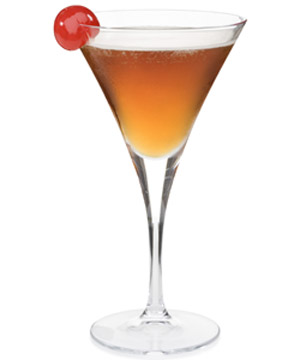
The Sidecar

.

Gatsby’s partygoers might have also enjoyed a citrusy Sidecar, one of the most popular cocktails to emerge from the Prohibition era.

1 1/2 oz bourbon, Cognac or Armagnac

3/4 oz Cointreau

1/4 oz lemon juice

Pour the ingredients into a cocktail shaker with ice cubes. Shake well. Strain into a chilled cocktail glass.

Dorothy Parker’s Martini

 There’s a certain sophistication about a martini that can’t be found in any other cocktail. Martinis have always been a drink of class. But the classic martini is easy to make and equally easy to ruin. It’s also easy to drink too many, as Dorothy Parker admits…

“I love to drink Martinis, two at the very most, three I’m under the table, four I’m under my host.”

 2 oz. gin

1 oz. dry vermouth

2 dashes orange bitters

Ice cubes

Stir ingredients briskly with ice, then strain into a chilled glass. Twist a small strip of lemon peel over the drink.

Writer’s Block

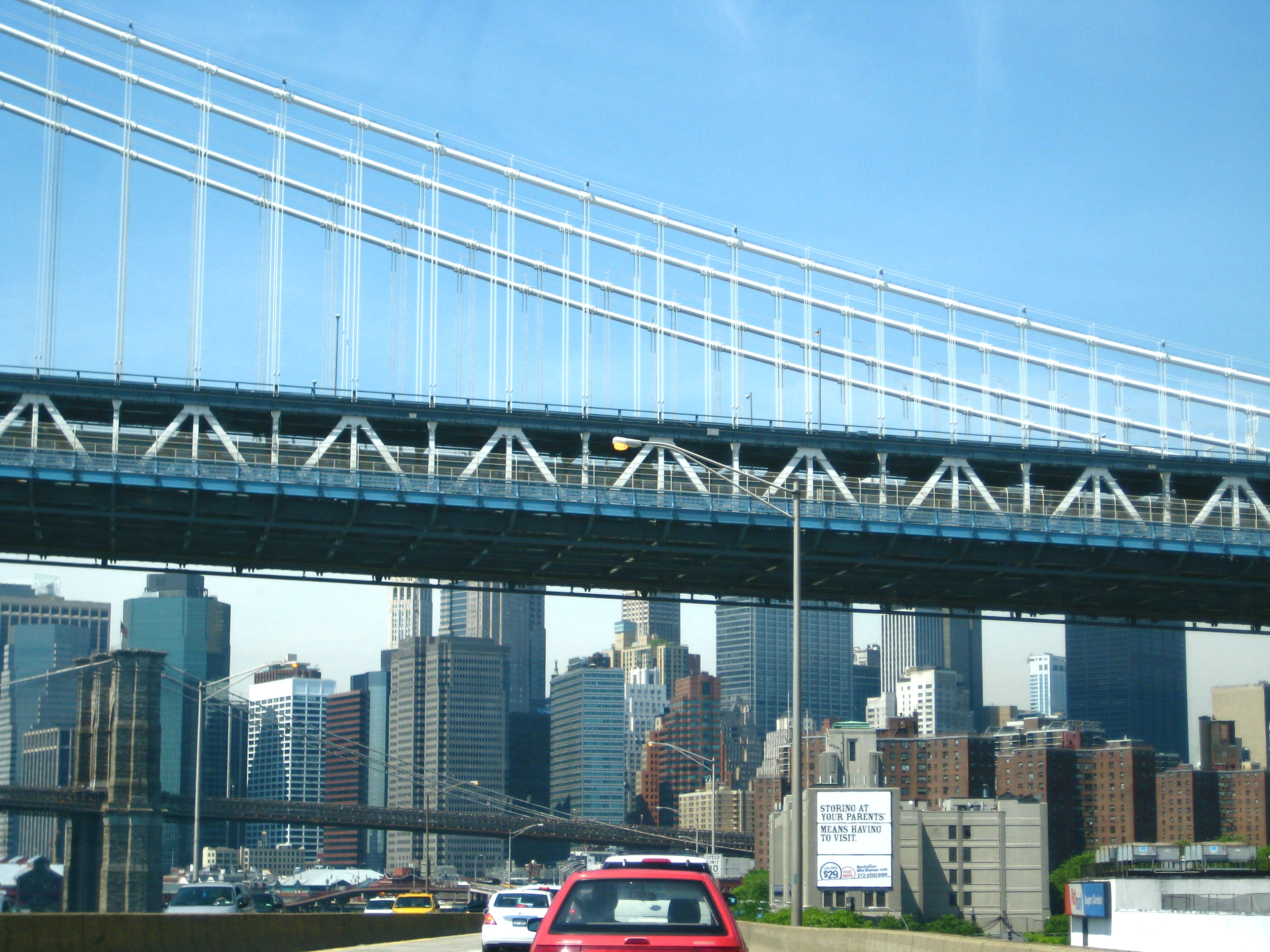
Taken on FDR Drive on my way to Brooklyn!

Like I said, lately I’ve been thinking a lot about my next longer piece of fiction. This is always the hardest part, coming up with an idea. “It’s not about what you write– it’s how you write it” might be a writer’s anthem, but still, there’s definitely merit in writing that presents a fresh, new idea.

How do you make an old story fresh, or a new story relatable? How do you avoid writing what hundreds of people have already written?

One thing I know for sure is that I want to write in the vignette style. Some of my favorite works of fiction are written this way– Jhumpa Lahiri’s Interpreter of Maladies and Sandra Cisneros’s The House on Mango Street. I love how vignettes allow for multiple perspectives on a common theme, and let the writer flip through time effortlessly. There’s also something poetic about a series of vignettes, because each one is pretty brief. Sometimes a never-ending chunk of text, no matter how amazing the writing, is exhausting. Vignettes let the reader and writer breathe.

I’m a fan.

But what to write about?

Right now I’m at that stage when ideas are still forming; for a moment they’re immensely exciting and I can’t wait to put pen to paper. Then the feeling fades. What was I thinking?  I can’t write about that. Whoosh. Off to the trash.

When I was younger, I always saw fiction as a total escape from my  suburban life, a chance to travel outside the bubble. I wrote about things I had no experience with: flappers from the 1920s, a drug-abusing mother, children with mental disabilities, a quirky New York City coffee shop. I want my new work to fall closer to home. I’ve found that good fiction writing always involves opening up somewhat. Fiction doesn’t have to be based on your life, but on some level it has to be based on your experiences.

Much of my family history lies in Brooklyn, N.Y. My grandfather (mother’s father) grew up in an Irish tenement in Brooklyn in the 1930s and 40s. My father grew up in Brooklyn Heights in a Jewish neighborhood in the 50s and 60s. People usually think of Brooklyn through its context with Manhattan, but for those who grow up there, Brooklyn is its own entity, harboring a history and character independent of “The City.”

When I think of Brooklyn I think of rising housing prices, veganism, the Brooklyn Bridge, trendy bars, artists’ studios, and hipsters. The Brooklyn I see is totally different from my father and grandfather’s Brooklyns. My story would be set only partly in Brooklyn, and would not be focused on history, but it would be interesting to somehow show the area’s development through the lense of a modern-day 20-something-year-old.

Sparknotes of a book that’s not written:

Vignettes/Flashbacks. Brooklyn. Manhattan. Midwest. Social Networking. Newspapers. 9/11.

I’ll elaborate on the other themes in a later post. Vague, I know, but let’s see where this takes me…

Waiting in Hoboken

Lately I’ve been thinking a lot about my next work of fiction, going through old stories and poems for inspiration. I stumbled across this poem in my files, and it seems appropriate since the ten year anniversary of 9/11 is approaching.  After 9/11 my family and I went to Hoboken to see the Tribute in Light  and I remember feeling emptier after going than I had before– I wondered how people found comfort in lights that could be switched on and off in a second. Back then, I couldn’t understand the point of a tribute that only drew attention to what was lost, and the eeriness of those blue-light towers has always resonated with me.

Waiting in Hoboken

Dusty nighttime,

two blue columns

from another world

pierce the sky and draw

long, swaying paths

in the charcoal water.

a woman gasps

well isn’t that extraordinary

I feel

so close I could swim,

I feel

as long as these

blue lights can float

atop the river,

I can follow them back

to the

get on defense!

call of my soccer coach

and the

dog-walking hey kiddo!

of my next door neighbor,

escape the debris,

and I hear their voices

scuttling cross the Hudson.

it’s a school night, let’s go

say good-bye

to the river

home

the towers have fallen,

and no one speaks

my language.